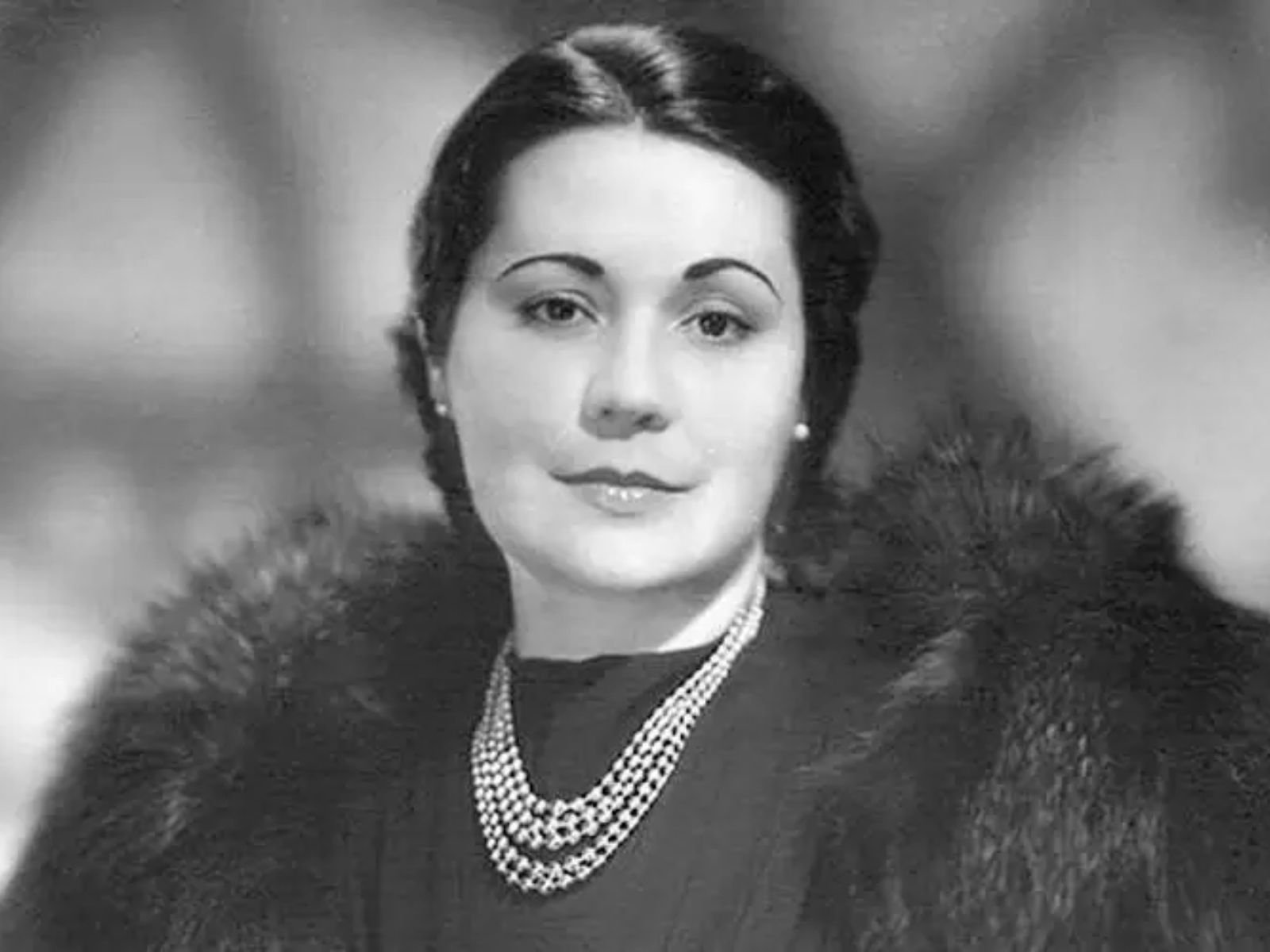
Amid the darkness that fell over Europe with the rise of Nazism, when indifference and fear paralysed entire nations, a Brazilian woman stood out as a beacon of courage and humanity. Aracy de Carvalho Guimarães Rosa, known as “the Angel of Hamburg”, defied direct orders from her own government and risked her life to save hundreds of Jews from the relentless persecution of the Third Reich. Her story, long wrapped in the discretion that was characteristic of her, reveals one of the most remarkable undertakings of individual heroism during the Holocaust, a powerful testimony to the capacity of a single person to confront tyranny.
Aracy de Carvalho Guimarães Rosa: A Woman Ahead of Her Time
Born in Rio Negro, in the state of Paraná, in 1908, Aracy de Carvalho was a pioneering figure. At a time when women in Brazil had little autonomy, Aracy took a radical decision in the 1930s: she separated from her first husband and, in 1934, moved to Germany with her young son Eduardo in search of independence. A polyglot, fluent in German, French and English, she found work at the Brazilian Consulate in Hamburg, where in 1936 she was appointed head of the Passport Section. Her position, unusual for a woman at the time, would become the instrument of her silent resistance.
A Dark Context: The Secret Circular and Kristallnacht
To grasp the scale of what Aracy did, one has to look at the political climate of the period. In Brazil, the government of Getúlio Vargas, while maintaining an appearance of neutrality, had sympathies for authoritarian regimes and put in place a restrictive immigration policy with a clear antisemitic bias. In 1937, the Brazilian foreign ministry issued Secret Circular no. 1,127, an infamous document instructing Brazilian consulates to systematically deny visas to people of “Semitic origin”. That inhuman policy closed Brazil’s doors to thousands of Jews desperately seeking an escape route from Europe.
In Germany, the situation was deteriorating fast. The persecution, which had begun with discriminatory laws, turned into open violence. On the night of 9 to 10 November 1938, known as Kristallnacht (the Night of Broken Glass), synagogues were burned, Jewish shops were destroyed and dozens of Jews were murdered in a state-orchestrated pogrom. It was against that backdrop of mounting terror that Aracy, then head of the passport section at the Brazilian consulate in Hamburg, took the decision that would define her legacy.
The Silent Courage of a Civil Servant
Aracy de Carvalho was not a spy or an armed fighter. Her weapon was her position in the bureaucracy, her pen and an unshakeable courage. Knowing that the consul general, Joaquim de Souza Leão, disliked reading the paperwork he signed, Aracy devised a risky and audacious method to get around the orders of her own country. She prepared visas for Jewish families, leaving out any mention of their origin, and slipped them skilfully into piles of routine documents. The impatient consul signed everything, without realising that he was authorising the rescue of dozens of lives.
Her help, however, went far beyond issuing visas. Aracy hid people in her own flat, transported their belongings in her private car, which enjoyed diplomatic immunity, to prevent confiscation by the Nazis, and accompanied them personally to the port, making sure they boarded safely. She never accepted any payment for what she did, moved solely by a deep sense of justice and compassion. Asked years later about her motivation, her answer was simple and powerful:
“I did it because we are all brothers.”
Aracy and João Guimarães Rosa: A Love Born in Adversity
In 1938 a new deputy consul arrived in Hamburg: João Guimarães Rosa, who would become one of the greatest writers in Brazilian literature. João quickly noticed Aracy’s clandestine activities and, instead of reporting her, became her accomplice and later her great love. Sharing the risk and the humanitarian purpose forged a deep bond between them. They married in 1940, and Guimarães Rosa would immortalise his admiration for his wife in the dedication of his masterpiece, “Grande Sertão: Veredas“: “To Aracy, my wife, Ara, this book belongs”.
Righteous Among the Nations: Recognition of a Legacy
For decades, Aracy’s heroism was known only to those she saved and to a close circle of family. On 3 June 1982, however, Yad Vashem, the Holocaust memorial in Israel, granted her the title of “Righteous Among the Nations”, the highest honour given to non-Jews who risked their lives to save Jews during the Holocaust. Aracy de Carvalho Guimarães Rosa remains to this day the only Brazilian woman to receive that distinction, a fact that underlines how singular her courage was.
Her name is inscribed on the Wall of Honour in the Garden of the Righteous in Jerusalem, alongside other heroes such as Oskar Schindler and Irena Sendler. Aracy saved lives and, in doing so, safeguarded the honour of a nation that had officially chosen to look away from barbarism. She remains the only Brazilian woman inscribed on the Wall of Honour in Jerusalem, and that solitude says a great deal about a country she represented better than its own rulers did.
Read Also
Bibliographic References
- “Aracy Carvalho de Guimarães Rosa.” Yad Vashem — The Righteous Among the Nations Database. https://www.yadvashem.org/righteous/stories/carvalho.html.
- “A história e a família do ‘Anjo de Hamburgo’.” Revista Morashá, 2008. https://www.morasha.com.br/holocausto/a-historia-e-a-familia-do-anjo-de-hamburgo.html.
- “A época em que o Brasil barrou milhares de judeus que fugiam do nazismo.” BBC News Brasil, 2019. https://www.bbc.com/portuguese/brasil-46899583.