In the photograph, the chaplain Luis María Padilla walks into the middle of the street, at the spot known as La Alcantarilla, in Puerto Cabello, during El Porteñazo, to rescue a wounded soldier at the height of the shooting, taking him into his arms to try to help him.
The photograph, taken by Héctor Rondón for the newspaper La República, won the 1963 Pulitzer Prize for Photography. The image was distributed by the Associated Press and appeared in many magazines around the world, including the cover of Life magazine (Spanish edition) shortly after the incident.
El Porteñazo: The Puerto Cabello Uprising
The revolt took place under the democratic government of Rómulo Betancourt (Acción Democrática party, AD), the first president elected after the fall of the dictatorship of Marcos Pérez Jiménez. Betancourt’s government faced strong opposition from disaffected military circles and from radicalised left-wing groups (linked to the Communist Party of Venezuela, PCV, and to the Movement of the Revolutionary Left, MIR), which had formed the Armed Forces of National Liberation (FALN) and were waging armed struggle.
El Porteñazo was led by rebel officers (mainly from the Puerto Cabello naval base) with the support of left-wing civilian militants. The aim was to overthrow Betancourt’s government, which they regarded as subservient to foreign interests and repressive. The rebels seized control of the naval base and of strategic points in the port city. The central government reacted swiftly, sending loyal forces (Army, Air Force and Navy) to put down the insurrection. There was intense fighting in the streets of the city and inside the naval base, including aerial bombardment and artillery.
The Cold War Context in Venezuela
Venezuela in the 1960s sat within the wider context of the Cold War, in which left-wing movements across Latin America drew inspiration from the Cuban Revolution of 1959. Fidel Castro’s success had shown that it was possible to overthrow a government through armed struggle, inspiring revolutionary groups across the continent. The Venezuelan FALN, formed in 1962, followed that strategy of urban and rural guerrilla warfare, receiving logistical and ideological support from Cuba.
The Confrontation
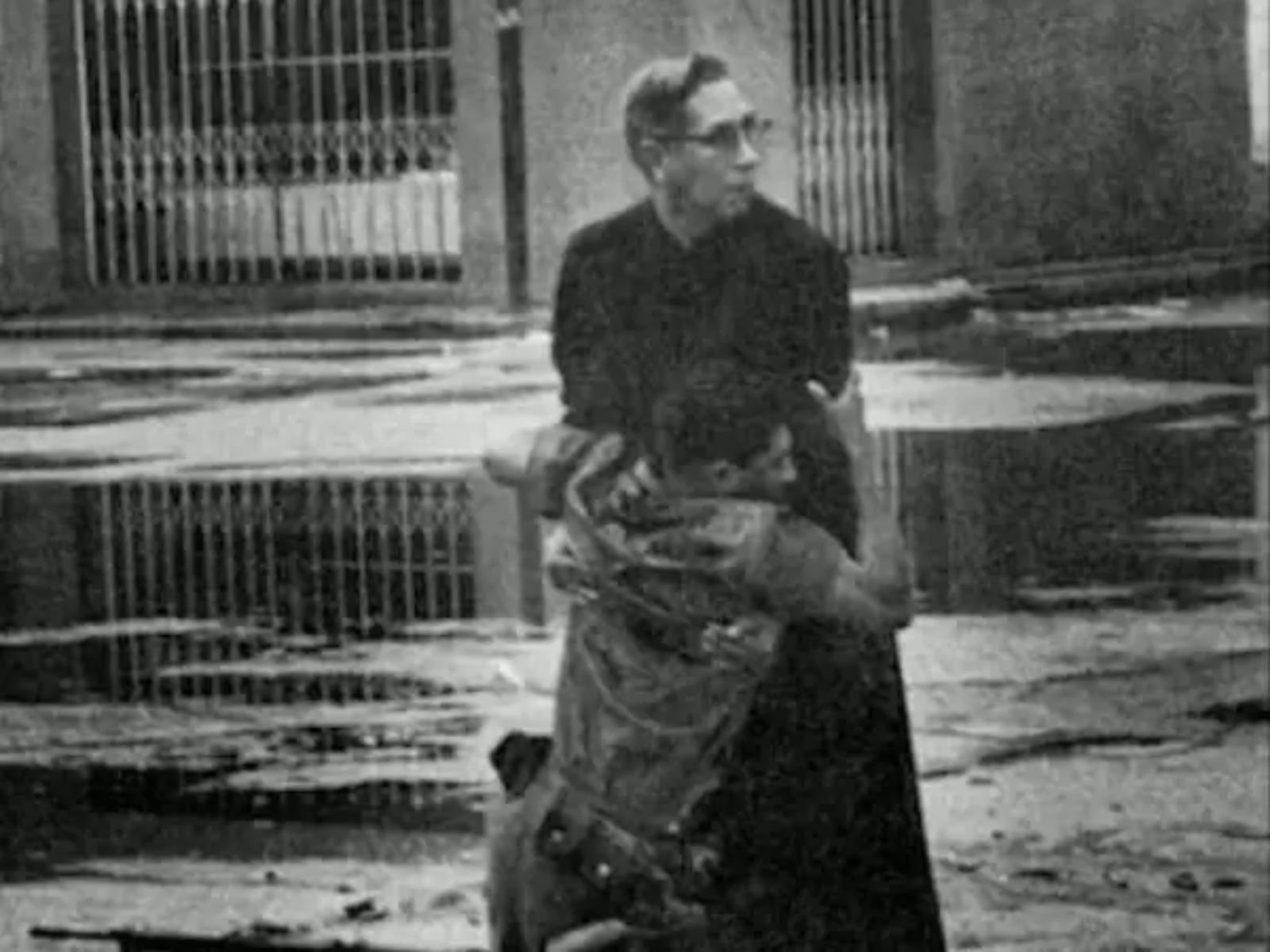
The iconic photograph of El Porteñazo has been shown in countless historical exhibitions, a mark of its lasting impact as a visual document of Venezuelan history. The image, which won the 1962 World Press Photo as well as the Pulitzer Prize, was republished in more than 50 countries and generated more letters from readers than any other photograph published that year. The exhibition places the event within the period of internal armed conflict that Venezuela endured during the 1960s, when guerrilla groups inspired by the Cuban Revolution sought to overthrow the democratic government through violence.
El Porteñazo, or the “Puerto Cabello Uprising”, was a revolt at the naval base of Puerto Cabello, in Venezuela. In the early hours of 2 June 1962, a rebellion led by the officers Manuel Ponte Rodríguez, Pedro Medina Silva and Víctor Hugo Morales broke out at the naval base. Government troops fought head-on against the marine battalion of the rebel forces of General Rafael Urdaneta (who had joined the revolt of the officers and men of the naval base, along with civilian groups they had armed) and the troops of the Carabobo battalion, loyal to the Venezuelan government, which had moved in from Valencia under the command of Colonel Alfredo Monch.
Chronology of Events
The fighting began at 3.30 in the morning of 2 June 1962, when the rebel officers took control of the naval base and the arsenal. At the same time, armed civilian groups occupied strategic points in the city, including the local radio station, from which they broadcast revolutionary proclamations. Betancourt’s government, alerted by the intelligence services, had mobilised loyal troops the night before.
During the first hours of the conflict the rebels managed to control roughly 60% of the port city. The arrival of the Carabobo Battalion troops, supported by military aviation, changed the course of events. Aerial bombardment of rebel positions began on the morning of the 2nd, causing significant destruction to urban infrastructure.
The Role of Chaplain Luis María Padilla
Father Luis María Padilla, then 29 years old, was the military chaplain of the naval base and had become a figure respected by soldiers and civilians alike. During the fighting, the chaplain decided to go out into the streets to help the wounded, regardless of their political or military allegiance. His courageous action was witnessed by dozens of people and documented by the photographer Héctor Rondón.
The moment captured in the photograph took place on the afternoon of 2 June, when the fighting had intensified in the area known as La Alcantarilla. The wounded soldier Padilla carries in his arms was a young man of about 20, whose name remains unknown in the historical record. Witnesses reported that the chaplain stayed in the area for more than two hours, helping to rescue the wounded from both sides of the conflict.
The uprising was brutally put down by government forces after several days of fighting. The repression was severe, leaving a high number of dead and wounded, both civilian and military. On 3 June the Venezuelan Interior Ministry announced that the armed forces loyal to the government had put an end to the rebellion, which had left more than 400 dead and 700 wounded. Three days later, after the capture of the leaders of the revolt, the last rebel stronghold fell, Fort Solano. The involvement of politicians linked to the Communist Party of Venezuela in the events of El Porteñazo was later established.
Political Consequences
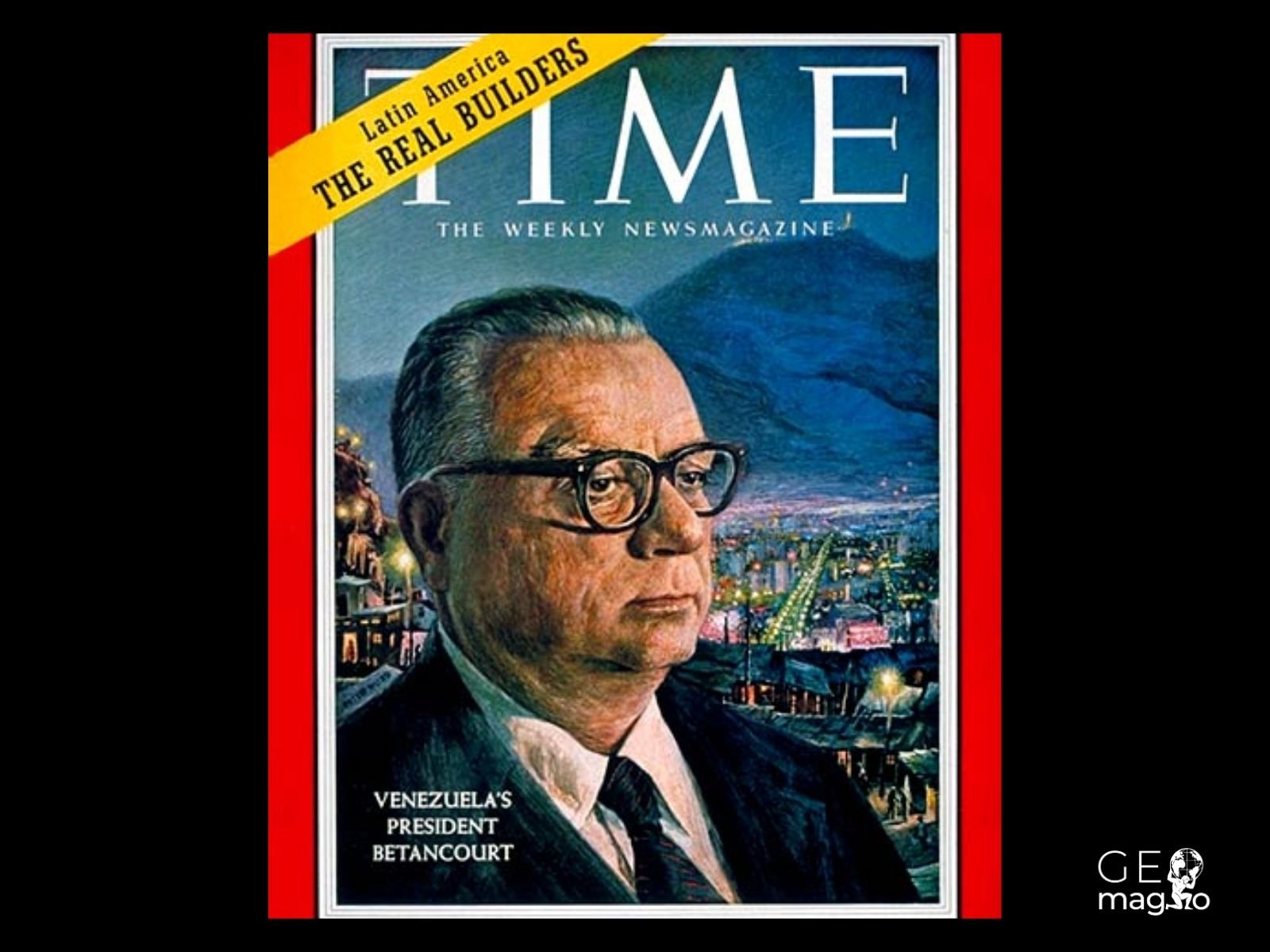
Cover of TIME magazine of 8 February 1960, featuring Rómulo Betancourt as “Venezuela’s Democratic Betancourt”. The international publication recognised Betancourt as a crucial democratic leader in Latin America during the Cold War, positioning Venezuela as a democratic alternative to the Cuban revolutionary model. The magazine highlighted his efforts to modernise the country through social and economic reforms while resisting pressure both from conservative military groups and from left-wing revolutionary movements seeking to overthrow his government. Source: TIME Magazine.
The failure of El Porteñazo marked a turning point in the strategy of Venezuela’s armed opposition groups. The brutal repression demonstrated the Betancourt government’s determination to maintain democratic order, but it also radicalised the left-wing movements further. Many survivors of the uprising later joined the rural guerrillas of the FALN, prolonging the internal armed conflict into the mid-1970s.
The event also consolidated Betancourt’s standing as a defender of Venezuelan democracy, winning international support, especially from the United States, which saw Venezuela as a bulwark against the spread of communism in Latin America. The American government significantly increased military and economic aid to Venezuela after El Porteñazo.
Historical Significance
El Porteñazo, together with the earlier uprising known as El Carupanazo (May 1962), stand as landmarks of the challenges faced by Venezuelan democracy in its early years and of the beginning of a period of internal armed conflict. The famous photograph of Father Luis María Padilla became a visual icon of that event and of the violence of the conflict.
In a poem dedicated to Puerto Cabello, the writer and poet Juan Camarasa Brufal included some lines devoted to the scene in the photograph (original in Spanish):
“En medio de tu dolor,
un ángel te mandó Dios,
que sin miedo ni pavor,
era solo…, y el herido dos
Sus alas fueron dos brazos
levantando los heridos;
las balas respetaban sus pasos,
al oír los tristes gemidos
Eres tú, capellán Padilla,
un ángel de paz y amor;
que germine esta semilla,
y no habrá tanto dolor.”
Translation
In the midst of your sorrow,
God sent you an angel,
who without fear or dread,
was only one… and with the wounded man, two
His wings were two arms
lifting up the wounded;
the bullets respected his steps,
on hearing the sorrowful moans
It is you, chaplain Padilla,
an angel of peace and love;
may this seed take root,
and there will not be so much sorrow.
Author’s Comments
The image gives the viewer the immediate brutality of the conflict. These are not representations but direct records of destruction, of imminent danger and, above all, of the violence of war. The atmosphere of tension, the presence of armed soldiers and the signs of destruction convey the suffering and the fear inherent in a situation of urban warfare.
Yet the photograph also reveals something deeper: the human capacity to transcend ideological and political divisions in the name of compassion. In the middle of the gunfire, Padilla stopped protecting himself in order to hold a soldier who was dying. The photograph records neither a religious nor a political gesture: it records the instant in which one man decided that another’s life was worth more than his own safety.
[NOTE] The photograph above is wrongly described on various blogs and websites around the world as the exact moment in which the soldier kneels and asks the priest for forgiveness.
Read Also
Bibliographic References
- “Hector Rondon.” The Pulitzer Prizes. https://www.pulitzer.org/winners/hector-rondon.
- “El Porteñazo.” Wikipedia, The Free Encyclopedia. https://en.wikipedia.org/wiki/El_Porteñazo.
- “The Priest and the Dying Soldier: The Story of an Iconic Photo from 1962.” Rare Historical Photos. https://rarehistoricalphotos.com/priest-dying-soldier-1962/.
- “Hector Rondon Lovera.” World Press Photo. https://www.worldpressphoto.org/collection/photo-contest/1963/hector-rondon-lovera/1.