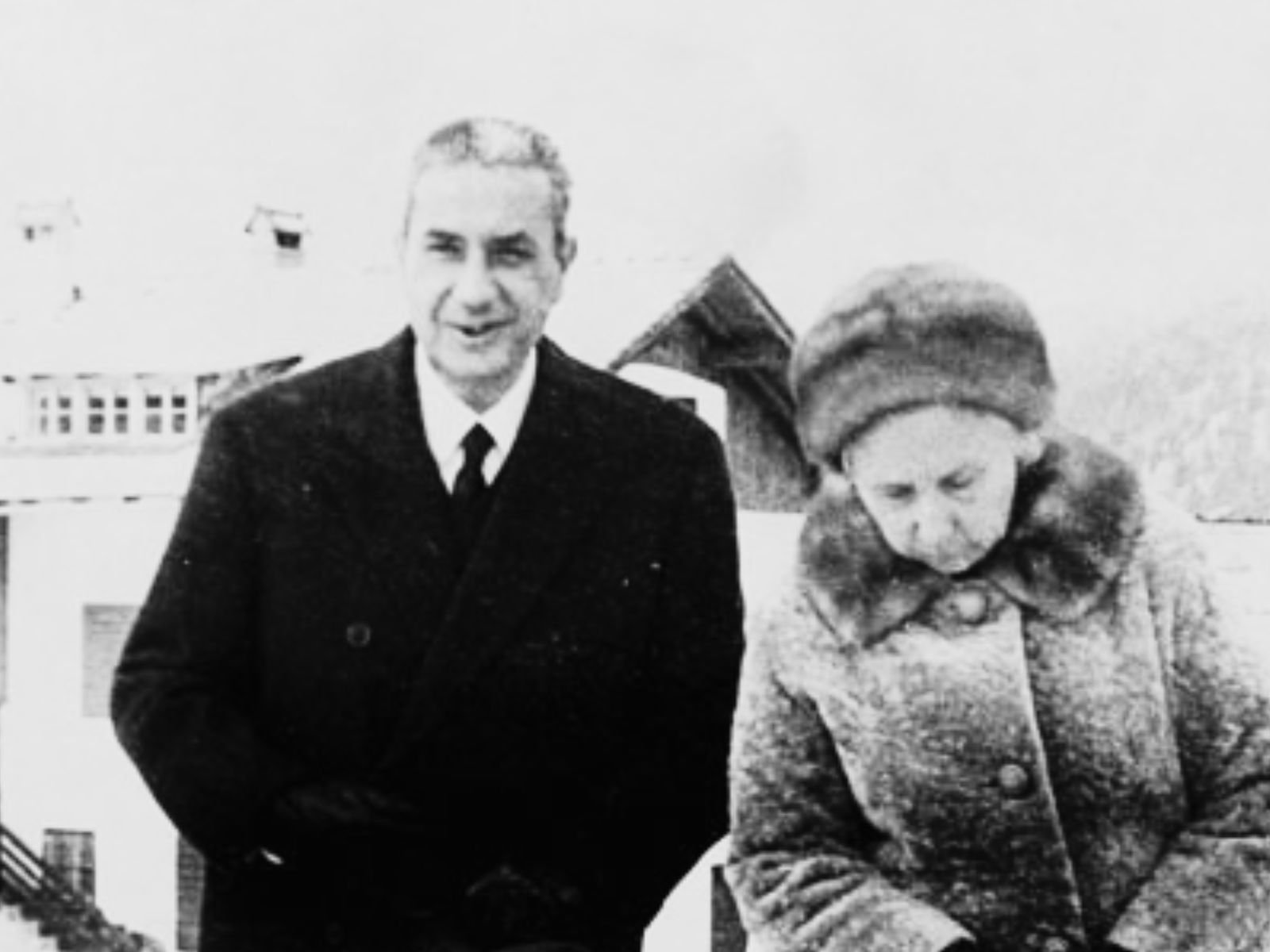
On the morning of 16 March 1978, Italy awoke to a nightmare that would last 55 days and mark the soul of the nation for ever. Aldo Moro, the architect of the “Historic Compromise” and one of the most respected statesmen in Europe, was kidnapped in a brutal ambush that left five of his bodyguards dead.
The kidnapping, orchestrated by the Red Brigades, was not merely an act of terrorism; it was an attack on the heart of Italian democracy, a human drama that paralysed a country and exposed the fragility of a political system under siege. The tragedy of Aldo Moro is the story of an abandoned man, of a nation in crisis and of the moral bankruptcy of an ideology that promised liberation through blood.
The Years of Lead
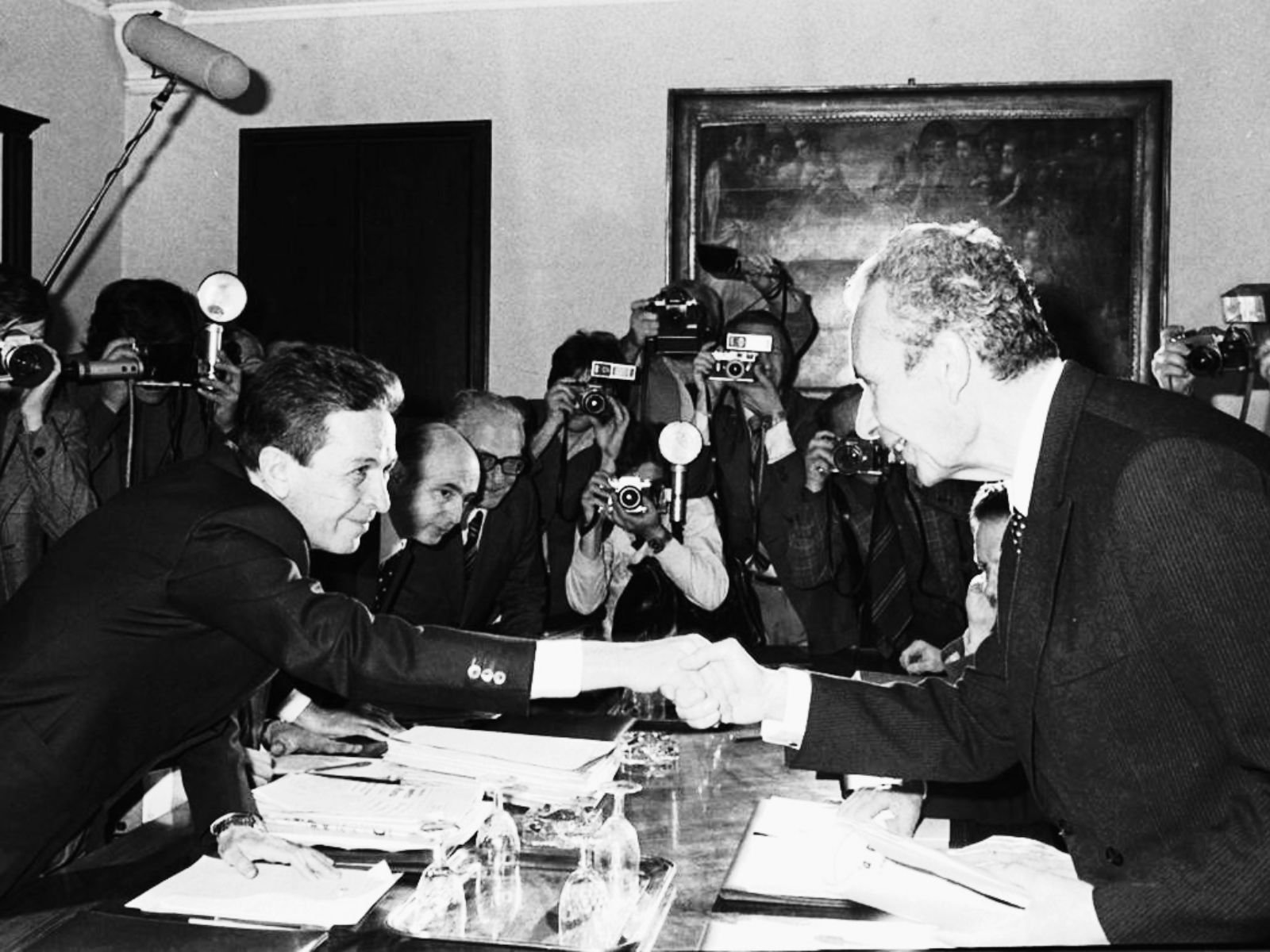
Moro was not merely a politician; he was a refined intellectual, a professor of constitutional law, a man of dialogue who believed deeply in the capacity of politics to transcend ideological divisions. His vision of the “Historic Compromise”, an unprecedented alliance between Christian Democracy and the Italian Communist Party, was revolutionary for its time, seeking stability in an Italy torn apart by the “Anni di Piombo” (Years of Lead).
The Italy of the 1970s was a cauldron of political tension. The “Anni di Piombo” (Years of Lead) were marked by endemic violence, with far-left and far-right terrorist groups waging a secret war in the streets. The Red Brigades, a Marxist-Leninist organisation, emerged as the most dangerous group, seeking to destabilise the capitalist state through kidnappings, assassinations and bombings.
Yet amid that chaos a fragile hope was emerging: the “Historic Compromise“, an unprecedented alliance between Aldo Moro’s Christian Democracy (DC) and Enrico Berlinguer’s Italian Communist Party (PCI). This collaboration, seen as a betrayal by the radical left, aimed to guarantee Italy’s stability at a time of economic and social crisis. It was against this backdrop of hope and hatred that the Red Brigades decided to strike at the supreme symbol of that compromise: Aldo Moro.
The Ambush on Via Fani: 90 Seconds of Terror
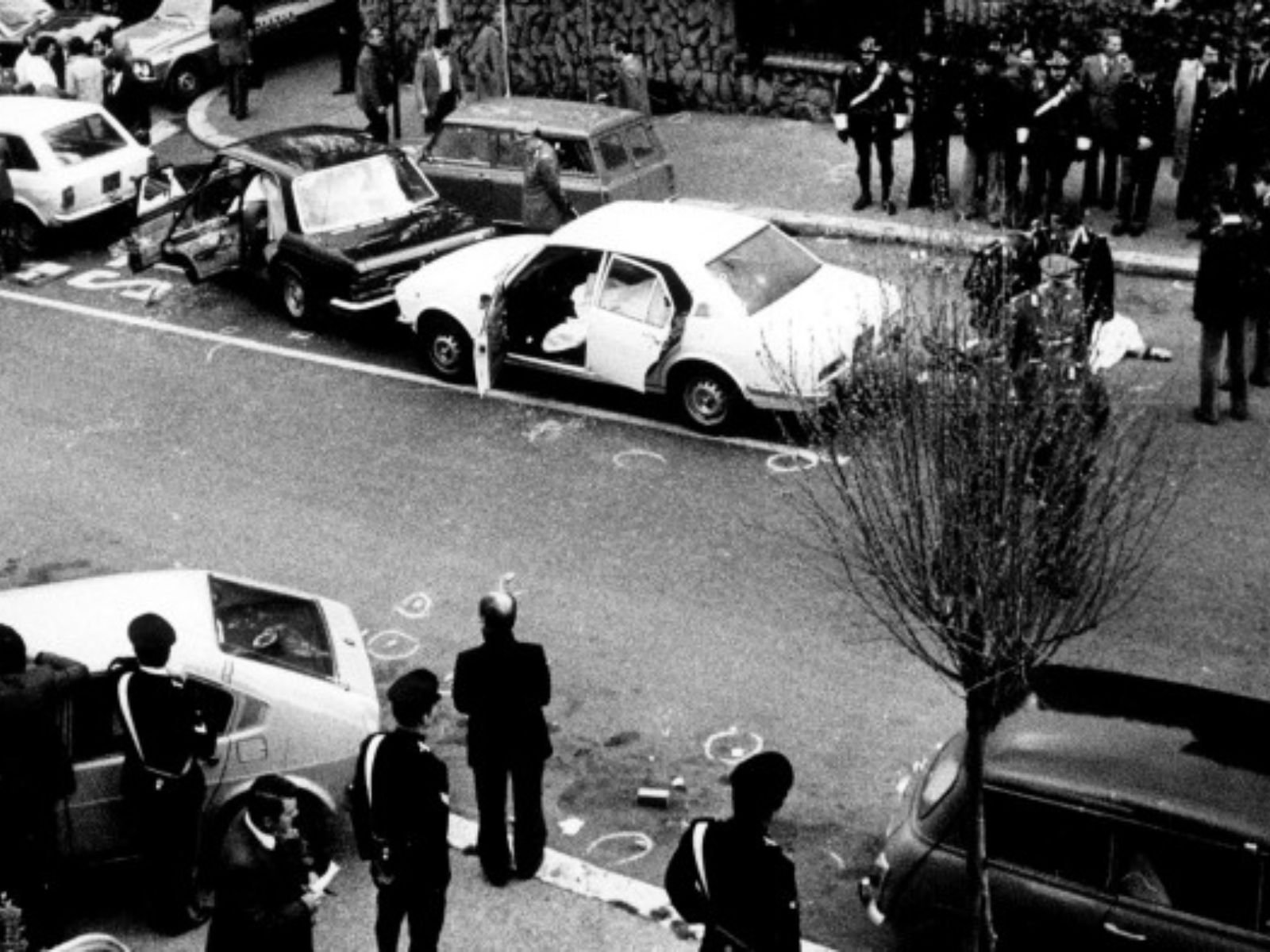
A commando of 12 terrorists, disguised in Alitalia airline uniforms, blocked Aldo Moro’s convoy in a quiet residential street. The terrorists used Skorpion machine pistols and handguns, executing the guards with shots to the head to make sure there were no survivors. Moro, physically unharmed but in deep shock, was dragged into a car and disappeared into the streets of Rome.
The operation was carried out with terrifying military precision. At 9.02 in the morning, on Via Fani in Rome, a commando of 12 terrorists blocked Moro’s convoy. In less than 90 seconds, 91 shots were fired, killing Moro’s five bodyguards: Oreste Leonardi (aged 51), Domenico Ricci (43), Francesco Zizzi (29), Raffaele Iozzino (24) and Giulio Rivera (23).
The brutality of the attack shocked Italy. The terrorists, disguised in Alitalia uniforms, dragged Moro into a car and vanished into the streets of Rome. The nation was in a state of shock. The man who symbolised the hope of reconciliation had been kidnapped, and his guardians murdered in cold blood. Italy held its breath, not knowing that the worst was still to come.
55 Days of Agony: The Letters from Captivity
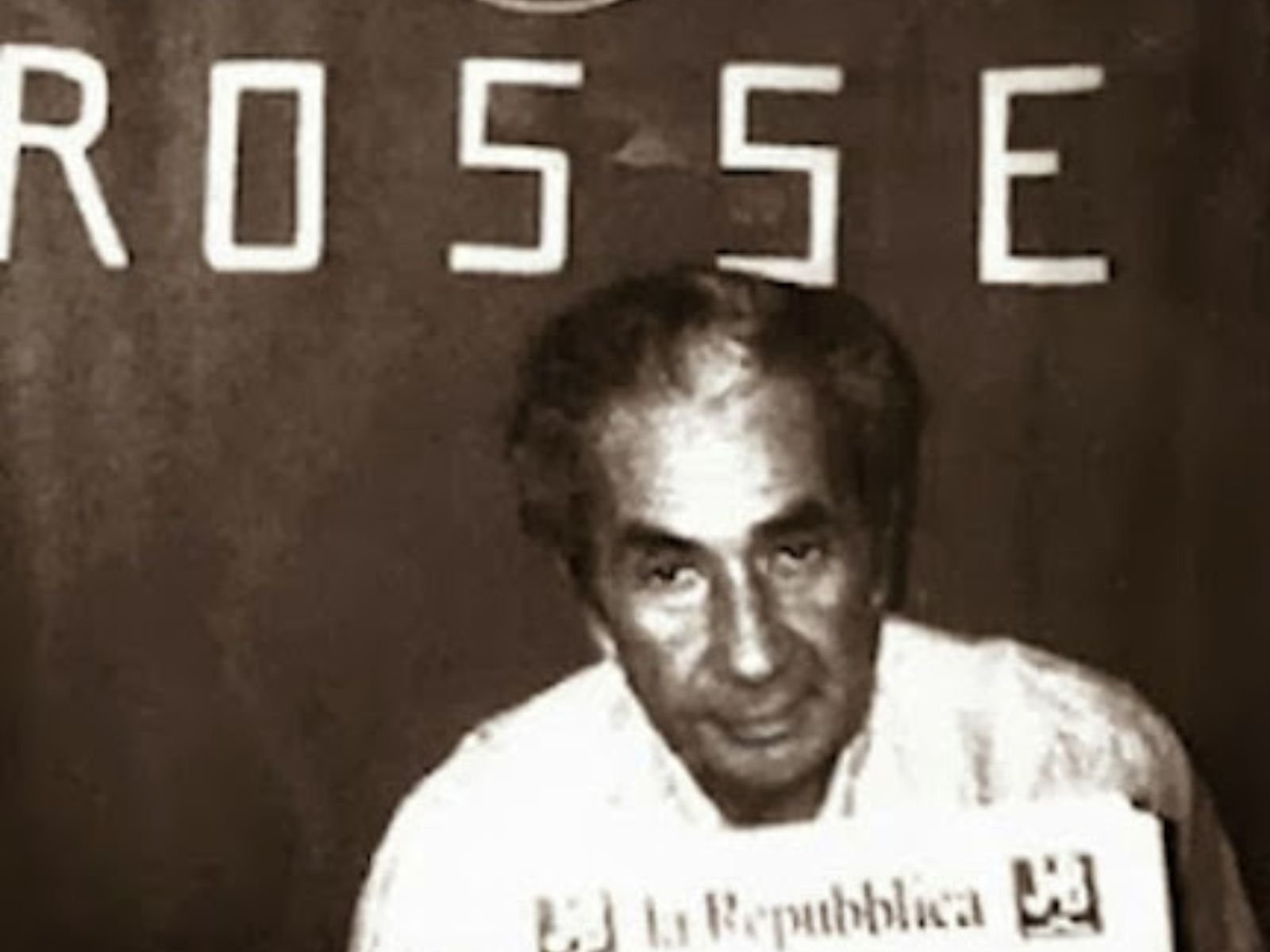
Aldo Moro in captivity, holding an edition of the newspaper “La Repubblica” with the headline about his own kidnapping. This photograph, released by the Red Brigades, shocked the world. Moro appears thin, aged, with a look of deep sadness and resignation.
Aldo Moro’s captivity was a psychological torture for him and for the nation alike. The Red Brigades subjected him to a “people’s trial” and demanded the release of 13 of their imprisoned members. During those 55 days, Moro wrote 86 letters to his family, to politicians and to Pope Paul VI. The letters, at first full of hope, grew progressively more bitter and desperate. Moro felt abandoned by his own party, which, under the leadership of Giulio Andreotti and with the support of the PCI, adopted the “line of firmness”: the state does not negotiate with terrorists.
In one of his letters Moro wrote: “Why must an innocent man be slaughtered?”. Moro accused his party colleagues of “cowardice and weakness” and vowed that, if he came out alive, he would leave Christian Democracy. Moro’s letters are the testament of a betrayed man, a leader sacrificed in the name of a reason of state that proved inhuman.
Letter to Interior Minister Francesco Cossiga – 26 March 1978 (Easter Sunday)
Excerpts in Italian:
“Caro Francesco, mentre t’indirizzo un caro saluto, sono indotto dalle difficili circostanze a svolgere dinanzi a te, avendo presenti le tue responsabilità (che io ovviamente rispetto) alcune lucide e realistiche considerazioni. Prescindo volutamente da ogni aspetto emotivo e mi attengo ai fatti. Benché non sappia nulla né del modo né di quanto accaduto dopo il mio prelevamento, è fuori discussione — mi è stato detto con tutta chiarezza — che sono considerato un prigioniero politico, sottoposto, come Presidente della D.C., ad un processo diretto ad accertare le mie trentennali responsabilità.”
Translation:
“Dear Francesco, as I send you a warm greeting, I am led by these difficult circumstances to set out before you, mindful of your responsibilities (which I naturally respect), some lucid and realistic considerations. I deliberately set aside every emotional aspect and confine myself to the facts. Although I know nothing of the manner of it, nor of what has happened since I was taken, it is beyond question — I have been told with complete clarity — that I am considered a political prisoner, subjected, as President of the DC, to a trial aimed at establishing my thirty years of responsibility.”
Letter on His Situation in Captivity
Text in Italian:
“Nelle circostanze sopra descritte entra in gioco, al di là di ogni considerazione umanitaria che pure non si può ignorare, la ragione di Stato. Soprattutto questa ragione di Stato nel caso mio significa, riprendendo lo spunto accennato innanzi sulla mia attuale condizione, che io mi trovo sotto un dominio pieno ed incontrollato, sottoposto ad un processo popolare che può essere opportunamente graduato.”
Translation:
“In the circumstances described above there comes into play, beyond every humanitarian consideration which nonetheless cannot be ignored, the reason of state. Above all, in my case this reason of state means, returning to the point touched on earlier about my present condition, that I find myself under full and uncontrolled domination, subjected to a people’s trial that can be conveniently graduated.”
Farewell Letter to His Wife Eleonora (Norina) – 7 May 1978
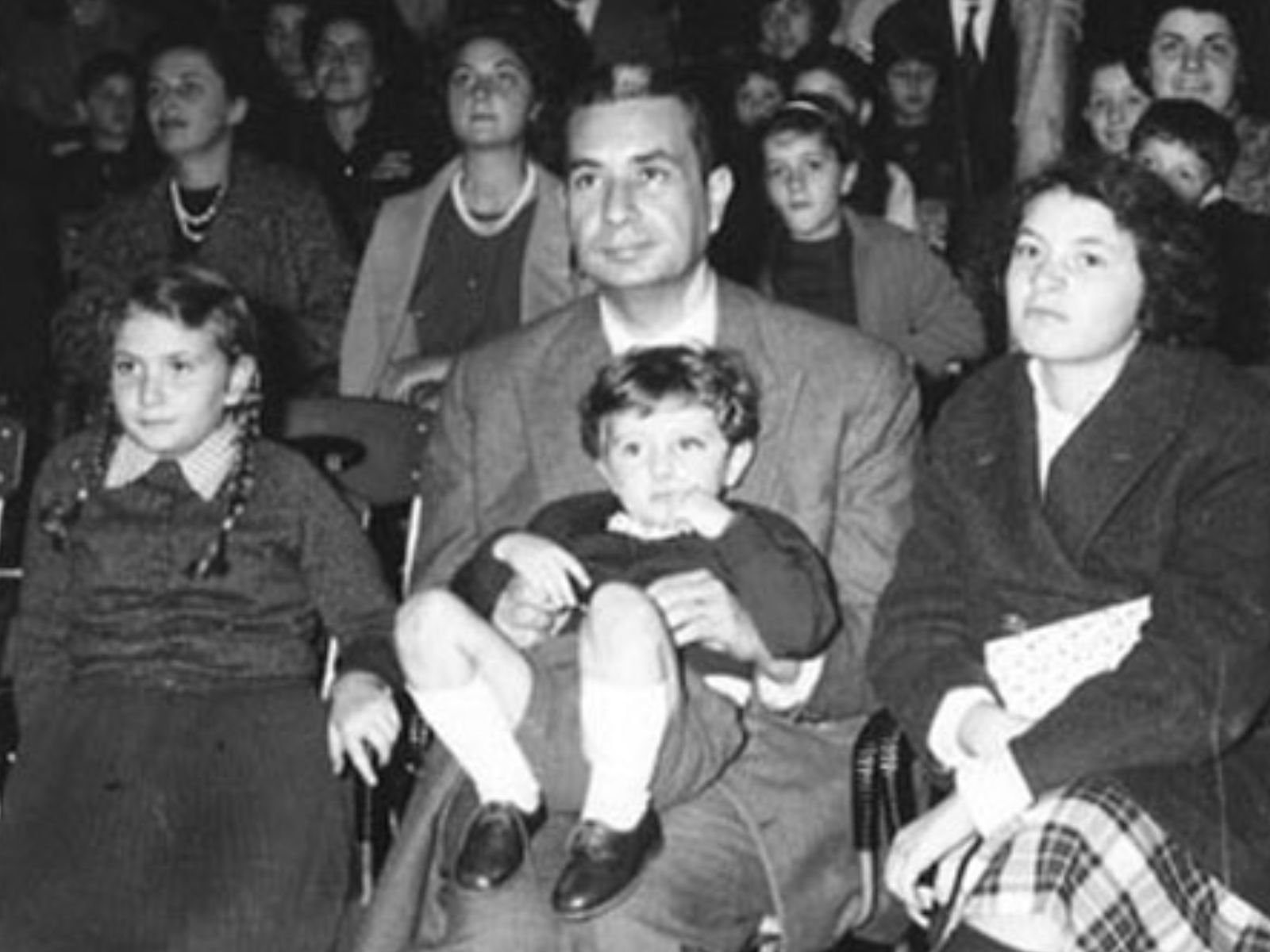
Aldo Moro with his children at a public event, in a rare moment of family ease. Moro and Eleonora had four children: Maria Fida, Agnese, Anna and Giovanni. This photograph shows Moro not as the architect of the Historic Compromise or the leader of Christian Democracy, but as a loving father, holding one of his children on his lap while another sits beside him. To his children, Aldo Moro was not a statesman: he was simply “papà”, the man who came home after long sessions in Parliament, who helped with homework, who believed the family was the sacred refuge from the storms of politics. During the 55 days of the kidnapping, Moro’s children lived through a nightmare. They watched, helpless, as their mother begged the government to save their father.
Original text (Italian):
“Cara Norina, mi hanno detto che fra poco mi uccideranno. Ti bacio per l’ultima volta, bacia i bambini.”
Translation:
“Dear Norina, they have told me that they will kill me shortly. I kiss you for the last time, kiss the children.”
Abandonment: The Loneliness of a Statesman
The Italian government’s decision not to negotiate with the Red Brigades remains, to this day, one of the most controversial aspects of the Moro affair. While Moro’s family begged for a negotiation that might save his life, the political establishment locked itself into an intransigence that many saw as a death sentence.
Pope Paul VI, a personal friend of Moro, made a public appeal to the “men of the Red Brigades”, asking for Moro’s release “without conditions”. Yet not even the Pope’s intervention was enough to move the government. Moro, the skilled negotiator, the man of dialogue, found himself isolated, betrayed by those he had served all his life. The “line of firmness” was not a show of strength but a confession of impotence, an abandonment that sealed Moro’s fate.
The Murder of Aldo Moro: Epilogue to a Tragedy
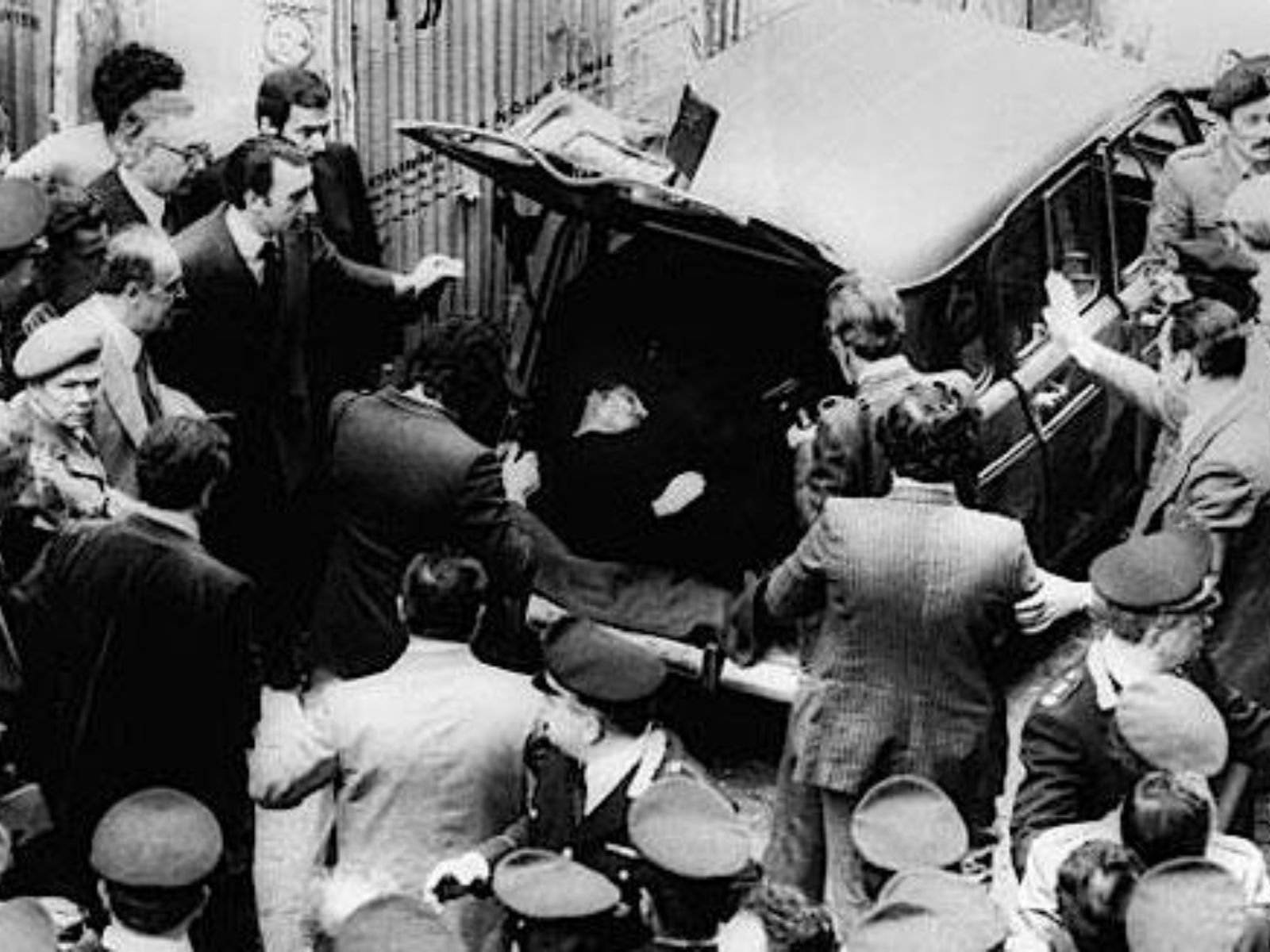
9 May 1978, Via Caetani, Rome. After 55 days of captivity, Aldo Moro’s body was found in the boot of a red Renault 4, killed by 11 shots to the chest, fired with the same weapon used to kill his bodyguards 55 days earlier.
On 9 May 1978, after 55 days of captivity, the Red Brigades announced that they had executed Aldo Moro. His body was found in the boot of a red Renault 4 on Via Caetani, a street symbolically located between the headquarters of Christian Democracy and those of the Communist Party. Moro had been killed by 11 shots to the chest. The choice of location was the terrorists’ final and most cynical message: to them, both parties were responsible for Moro’s death.
The autopsy revealed that Moro had lost significant weight during his captivity and showed signs of extreme stress. Italy plunged into mourning. Crowds gathered on Via Caetani, leaving flowers and weeping openly. Moro’s family, however, in an act of supreme dignity and protest, refused a state funeral. Eleonora Moro, his widow, declared that she did not want to see the faces of the politicians who had abandoned her husband. The funeral was held in a private ceremony at Torrita Tiberina, Moro’s home town, far from Rome and far from the politicians who, in her view, had condemned him to death.
The Bankruptcy of Terror: The Legacy of the Red Brigades
The murder of Aldo Moro was the climax of the Red Brigades’ violence, but also the beginning of their end. The act, far from inspiring a revolution, generated revulsion and isolated the terrorists from Italian society. The brutality of the kidnapping and the cruelty of the murder unmasked the emptiness of their ideology. Terrorism proved to be not a tool of liberation but a form of tyranny that destroys innocent lives in the name of a bloody utopia.
In the years that followed, the Italian state stepped up the fight against terrorism, and the Red Brigades, without popular support and hunted by the police, collapsed. The Moro affair is the definitive proof that revolutionary violence does not build a better world; it only destroys what is most precious in humanity: life, dignity and hope.
The Legacy of Aldo Moro: A Lesson for History
Aldo Moro remains a tragic figure in Italian history, a martyr of democracy. His kidnapping and murder marked the lowest point of the Years of Lead and a wound that has never fully healed. Yet his legacy is also one of hope. The firmness of the Italian state, however controversial, showed that democracy does not bow to terror. Society’s revulsion at Moro’s murder strengthened democratic values and isolated the extremists.
The story of Aldo Moro is a sombre reminder that politics, when stripped of humanity, can become a machine for grinding up lives. And that terrorism, in its arrogant claim to be the vanguard of history, is only a dead end, an ideology of death that in the end consumes itself. The memory of Aldo Moro is not only that of a murdered man, but that of an ideal of dialogue and compromise which, even in the face of death, proved superior to the barbarity of his executioners.
Read Also
Bibliographic References
- “The Dark 70s of Italy: Aldo Moro’s Last 55 Days.” Unplugged Routes. https://unpluggedroutes.com/en/the-dark-70s-of-italy-aldo-moros-last-55-days/.
- “Bitterness Is Evident in Moro Letters.” Tampa Bay Times. https://www.tampabay.com/archive/1990/10/22/bitterness-is-evident-in-moro-letters/.
- “Kidnapping and Murder of Aldo Moro.” Wikipedia, The Free Encyclopedia. https://en.wikipedia.org/wiki/Kidnapping_and_murder_of_Aldo_Moro.