“Aquí Radio Rebelde! Aquí Radio Rebelde!” Among the mountains of the Sierra Maestra, in eastern Cuba, a communication tool was born that would prove vital to the success of the Cuban Revolution: Radio Rebelde. Founded on 24 February 1958 by Commander Ernesto Guevara de la Serna, better known as Che Guevara, this clandestine radio station was the revolutionaries’ answer to the growing censorship of the press by the government of Fulgencio Batista.
Che Guevara and Radio Rebelde in the Sierra Maestra
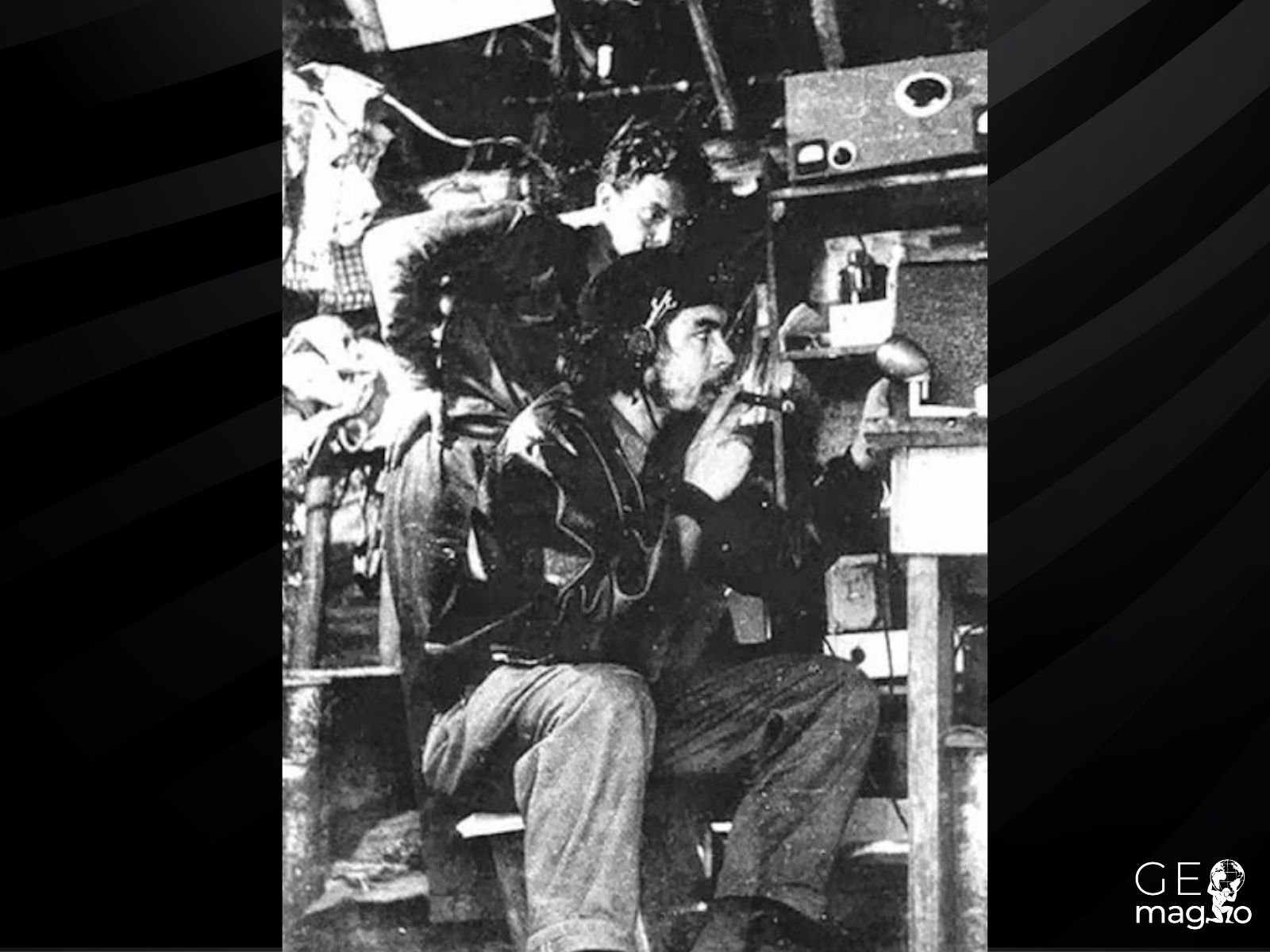
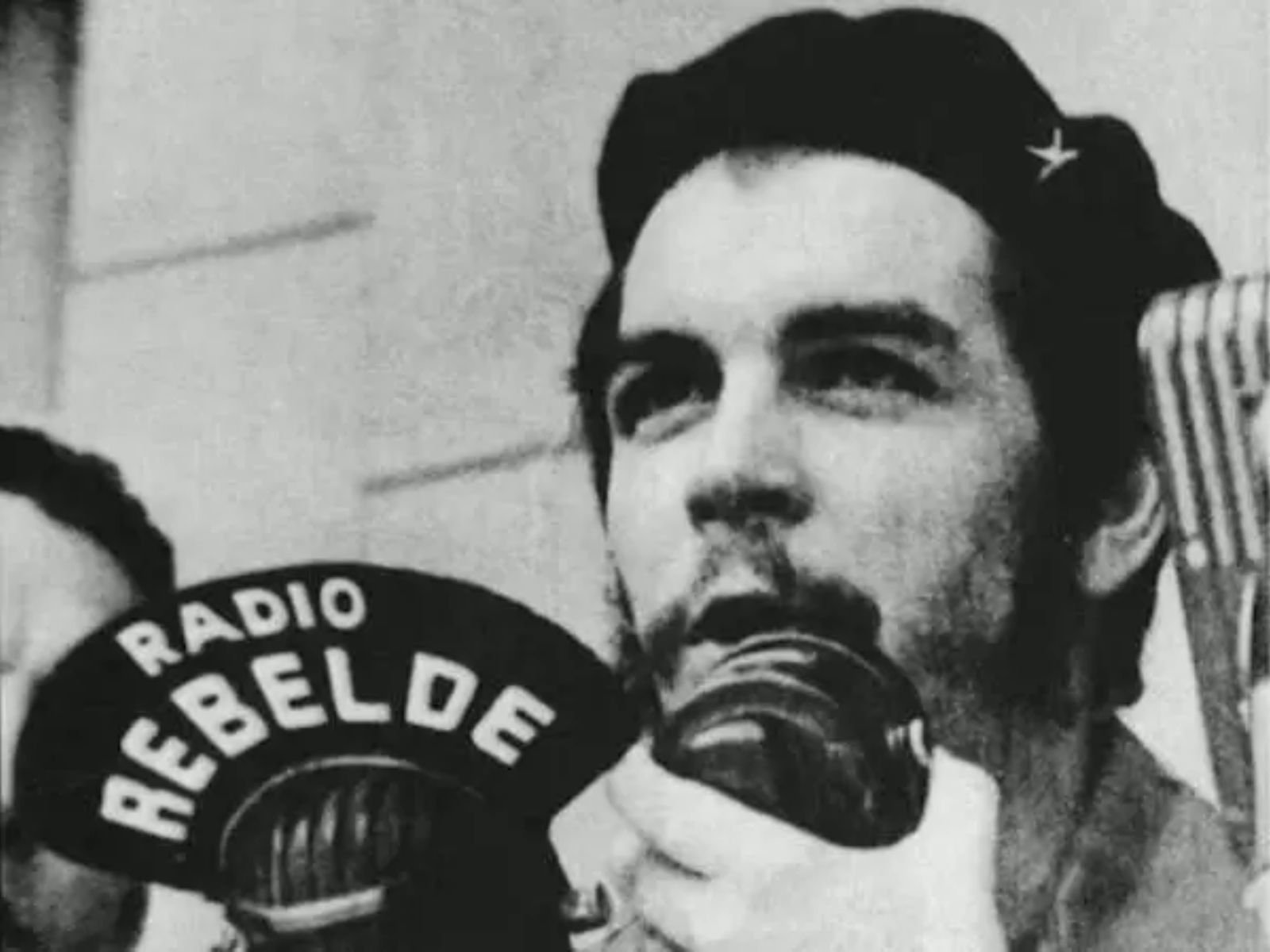
Che Guevara, who ran Radio Rebelde in the Sierra Maestra during the Cuban Revolution.
The clandestine station known as Radio Rebelde was founded on 24 February 1958 by Commander Ernesto Guevara de la Serna, Che Guevara, at Altos de Conrado, in the Sierra Maestra, in Cuba’s eastern province. The first broadcast lasted 20 minutes and was immortalised in Cuban broadcasting with the call “Aquí Radio Rebelde! Aquí Radio Rebelde! Transmitiendo desde la Sierra Maestra en territorio libre de Cuba“. Che Guevara is said to have been struck by the power of radio communication after studying the decisive role played by the clandestine station La Voz de la Liberación, set up by the CIA in Guatemala, in the fall of the government of Jacobo Árbenz in 1954.
Inspired by the impact of radio stations in earlier conflicts, Che and Fidel Castro saw broadcasting as the only effective way of speaking directly to the Cuban people, building trust and rallying support for the revolutionary cause. The first broadcast, marked by the slogan “Aquí Radio Rebelde! Transmitiendo desde la Sierra Maestra en territorio libre de Cuba”, opened an era in which radio became the main source of news and direction for Cubans, carrying Fidel’s speeches.
Radio Rebelde was essential to the success of the Cuban Revolution, since as the fighting intensified the government tightened censorship of the Cuban press. Fidel Castro, and above all Che Guevara, knew that a radio station was the only way to speak directly to the people. On Radio Rebelde, long speeches and interviews with Fidel Castro were broadcast to Cubans, who came to trust the station, driving its audience to enormous proportions. In towns and villages, people shut their windows to tune in to the programming aired between 5 and 9 in the evening.
On 9 April 1958, the clandestine station urged the workers of Havana to hold a general strike, with the aim of paralysing the country’s economy. The appeal had little effect among the people of Havana, however, and the attempted uprising was quickly crushed by government forces. The failure of the April rebellion convinced Fidel Castro that the revolution could only be won on the battlefield.
The Taking of Havana
On New Year’s Eve 1958, the station broadcast the first reports of the capture of Santa Clara by Che Guevara’s column. On the first day of 1959, Fidel Castro renewed his call for a general strike and rejected every attempt at negotiation by the military, who wanted a coup to replace President Fulgencio Batista with an army general. Fidel reinforced the order for his revolutionary force to enter Havana and take control. Radio Rebelde not only informed but also stirred, broadcasting the advances of the rebel troops, such as the capture of Santa Clara. Within hours the Cuban army surrendered, Batista fled and the Cuban Revolution triumphed.
Radio Rebelde’s Anniversary
During the celebration of the station’s fifteenth anniversary, Fidel said: “…Radio Rebelde truly became our means of mass communication, through which we spoke to the people, and it turned into a station with high ratings […] so that it was an extremely important centre of military communications, besides being a tool of enormous reach that played a very important political role throughout the war…”.
Today Radio Rebelde broadcasts 24 hours a day with essentially news programming, devoted mainly to national and international sporting events. The station is housed in the building of the Cuban Institute of Radio and Television (ICRT), in Havana, the capital of Cuba.
Read Also
Bibliographic References
- “Nuestra Historia.” Radio Rebelde. https://www.radiorebelde.cu/quienes-somos/.
- Moore, Don. “Revolution! Clandestine Radio and the Rise of Fidel Castro.” Patepluma Radio.