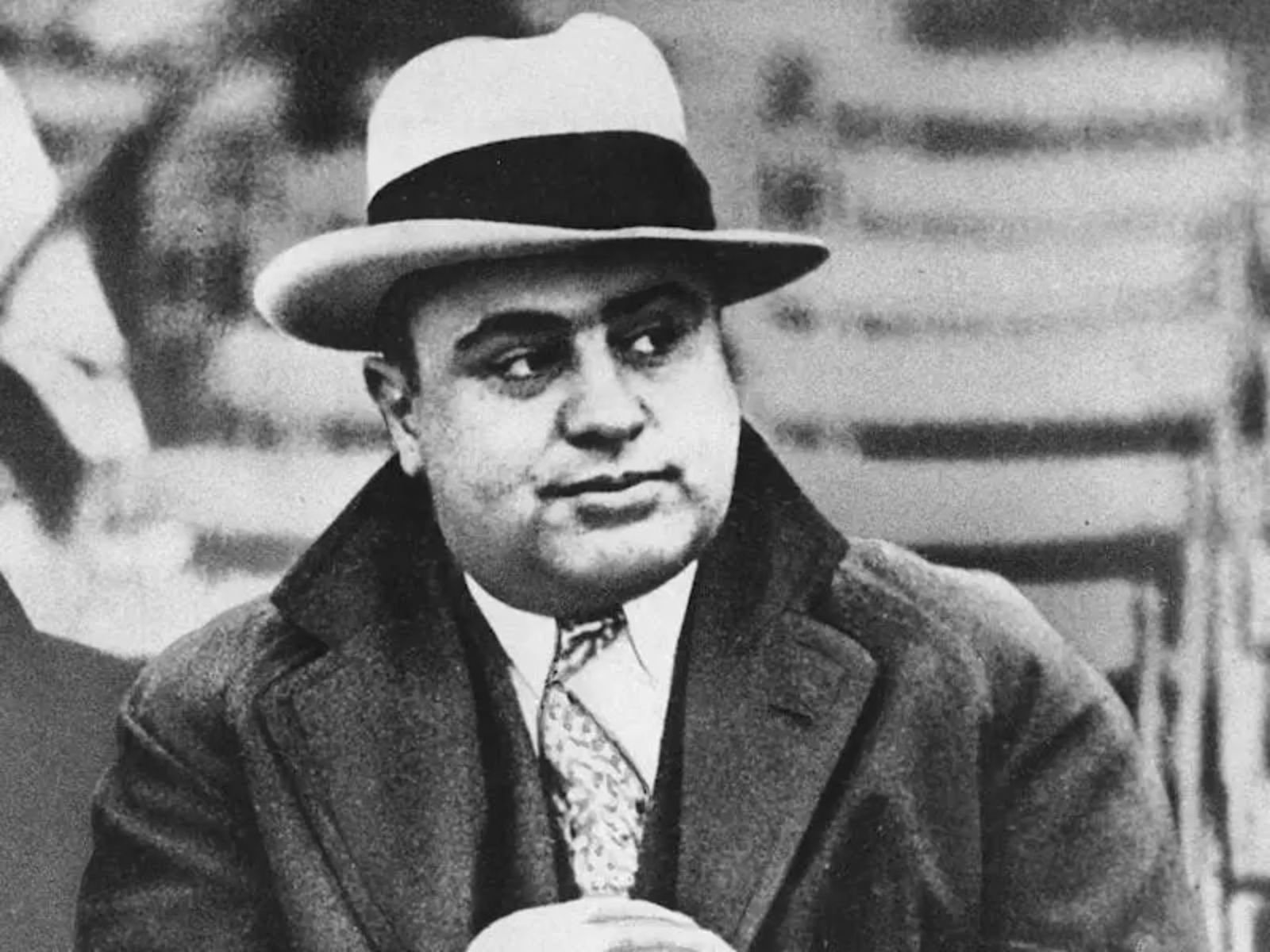
Al Capone, the greatest mobster in American history, led the Chicago Outfit at the height of Prohibition and was branded “Public Enemy Number One of the United States”. During his reign, “Scarface”, as he was known, bought politicians, police officers and judges, and ran gambling, brothels, speakeasies and dog racing, as well as monopolising the great forbidden business of alcohol.
The Origins of a Gangster: From Childhood to Organised Crime
Al Capone was the son of Italian immigrants, Gabriele and Teresina Capone. He grew up in a poor Brooklyn neighbourhood, where he became involved with youth gangs from an early age. At 14 he was expelled from school for striking a teacher, an early sign of his violent nature. Capone joined the notorious Five Points gang in Manhattan, where he worked for the gangster Frank Yale. In 1918 he married Mae Josephine Coughlin, of Irish descent, and they had a son, Albert Francis “Sonny” Capone.
The Move to Chicago and the Rise to Power
In 1919, Frank Yale sent Capone to Chicago, where he became the right-hand man of John “Terrible” Torrio. In 1925, Torrio was succeeded by Al Capone and withdrew from criminal life after being gravely wounded by the rival gang led by George “Bugs” Moran. Capone quickly proved a ruthless and efficient leader, expanding the criminal syndicate to other cities between 1925 and 1930. By the age of 26, Capone was already a feared and respected figure in the underworld, controlling an organisation of some 700 heavily armed members.
Scarface
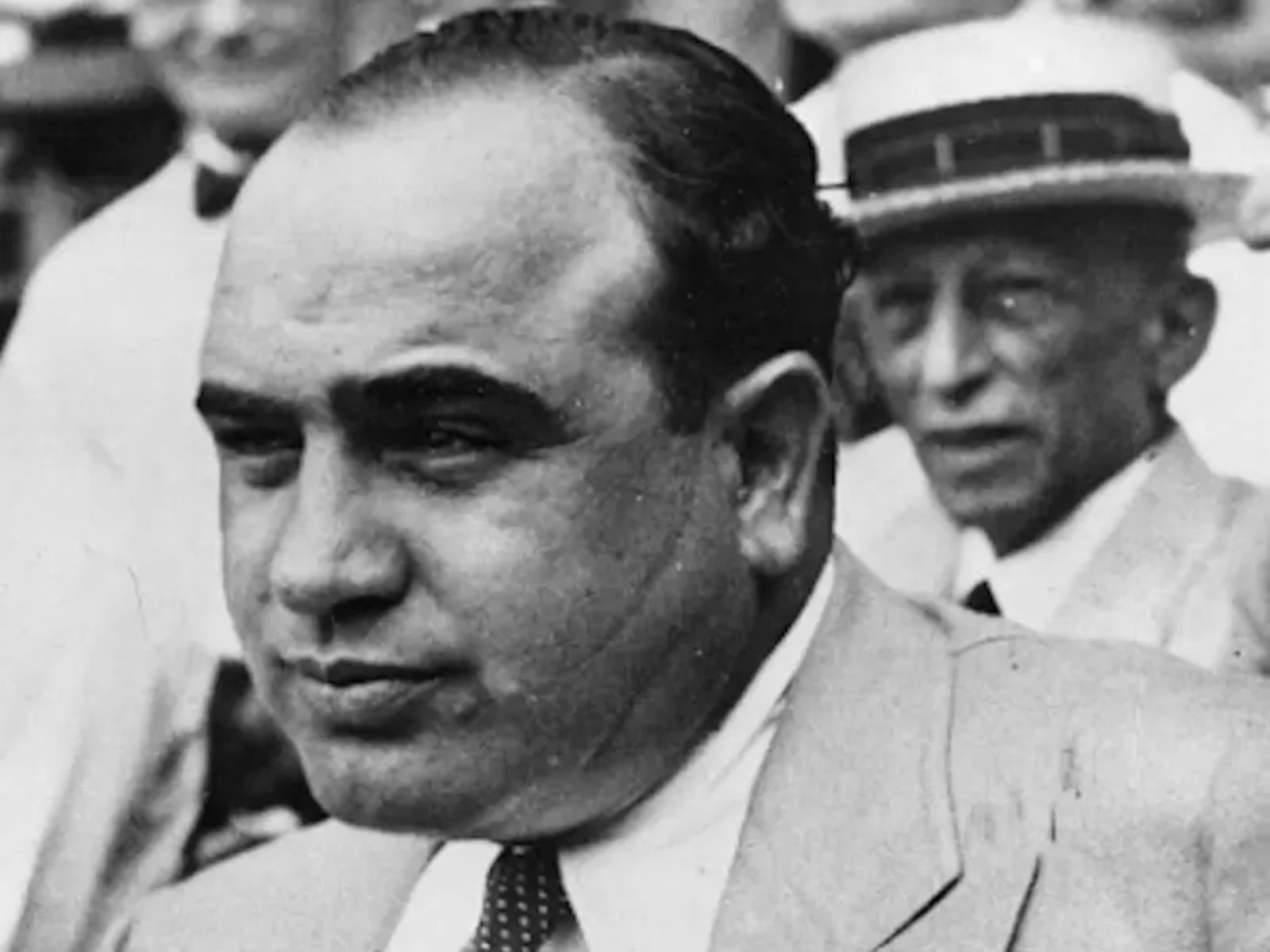
One of the rare photos of Al Capone showing the scars on his face, a mark he acquired in a fight in his youth. That scar earned him the famous nickname “Scarface”.
Al Capone was nicknamed Scarface because of a scar on the left side of his face acquired in a fight. The best-known version says that, as a young man, Al was working at an establishment on Coney Island when, one night, he made an inappropriate remark to a woman at the bar, whereupon her brother landed a punch that cut his face, leaving the famous scar that gave him his famous nickname.
The Empire of Crime: Profits in the Prohibition Era
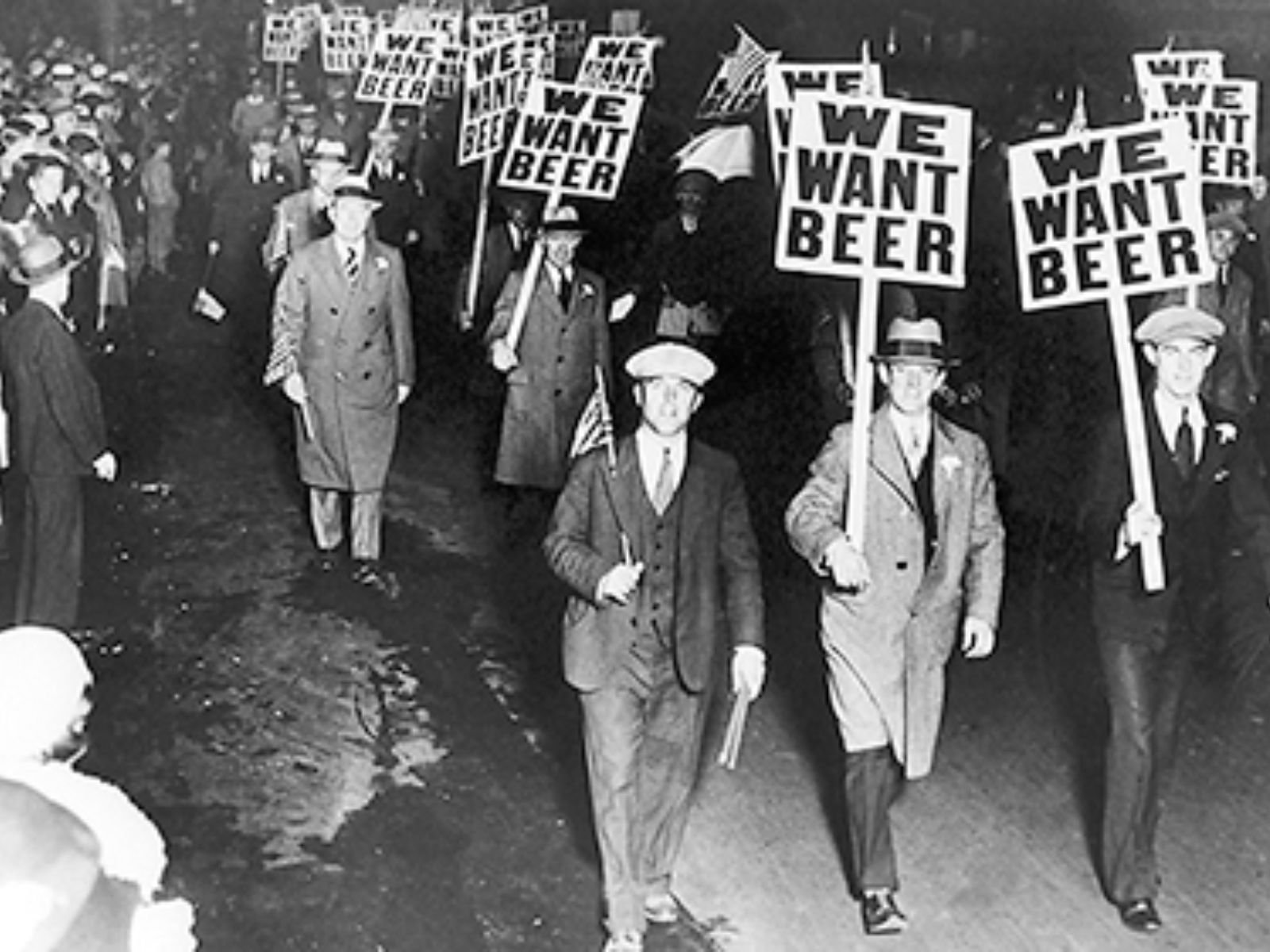
Demonstrators protest against Prohibition in the United States, holding signs reading “We Want Beer”. This image illustrates the popular discontent with the alcohol ban, a period Al Capone knew how to exploit to build his criminal empire. Source: Library of Congress Prints and Photographs Division Washington, D.C.
Prohibition, which banned the production and sale of alcohol, was a blessing for Al Capone’s business. He monopolised the bootlegging of alcoholic drinks, raking in millions of dollars a year. His empire also included gambling, brothels, horse-race betting parlours and nightclubs. Capone did not hesitate to use violence to protect his interests and eliminate the competition. He bribed politicians, police officers and judges, ensuring his illegal operations ran without major obstacles. His fortune was flaunted in luxury clothes, jewellery and entire theatre sections reserved for himself and his bodyguards.
The Philanthropic Side of Al Capone
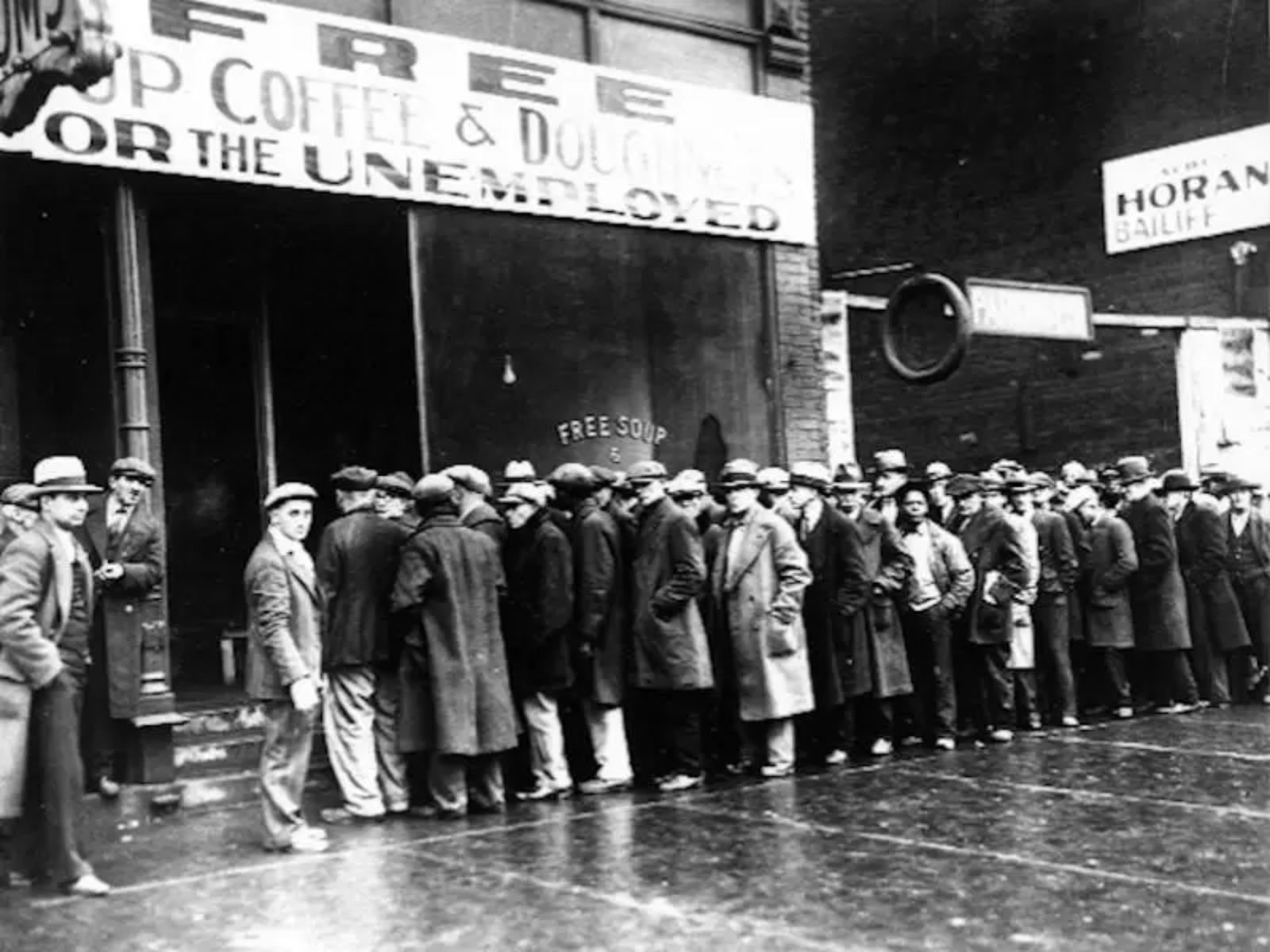
Unemployed workers queue for free food in Chicago during the Great Depression. The sign advertised “Free cups of coffee and doughnuts for the unemployed”. Al Capone was the first to open soup kitchens for unemployed workers, showing his philanthropic side.
When the stock market crashed and the Great Depression struck the United States in 1929, Al Capone was the first person to open soup kitchens for unemployed workers. He also set up a programme that provided free milk to schoolchildren across Chicago. In addition, he ordered shopkeepers to donate food and clothing to the poor at his own expense. Thanks to these generous gestures, some people regarded him as a “modern-day Robin Hood”.
The Favourite Car
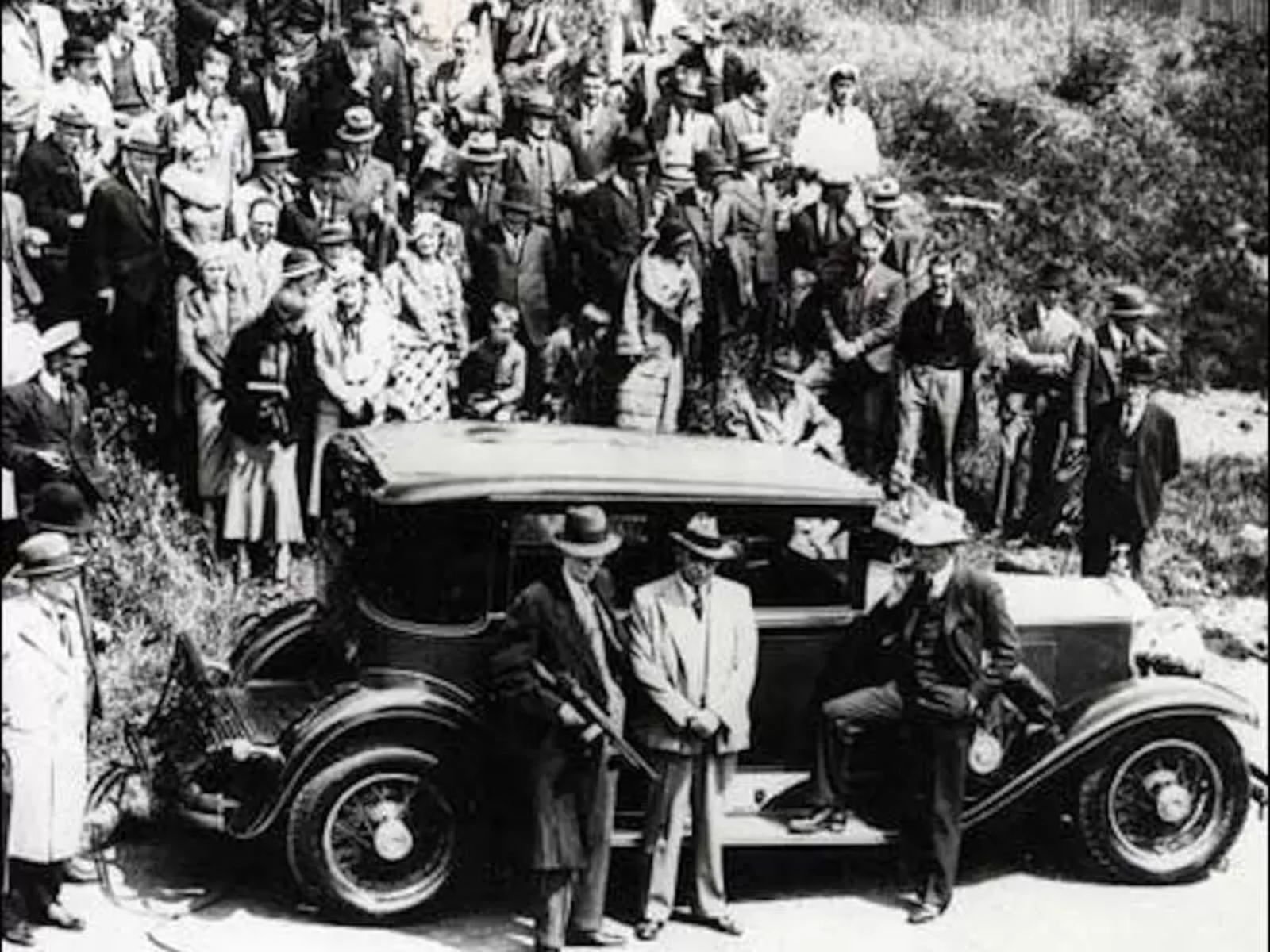
Mobsters beside one of the Chicago Outfit’s cars. Al Capone’s favourite car was a customised, armoured 1928 Cadillac V8 Sedan, a symbol of his wealth and power.
Al Capone’s favourite car was a 1928 Cadillac V8 Sedan customised by Joe Bergl. The model was armoured with steel plates and bulletproof windows. In 1971, one of the vehicles of this model that Al Capone had owned was sold at auction for $37,000. The winning bid was about $8,000 more than the price paid for the 1963 Lincoln Continental Sedan that had belonged to the President of the United States John F. Kennedy.
The Saint Valentine’s Day Massacre
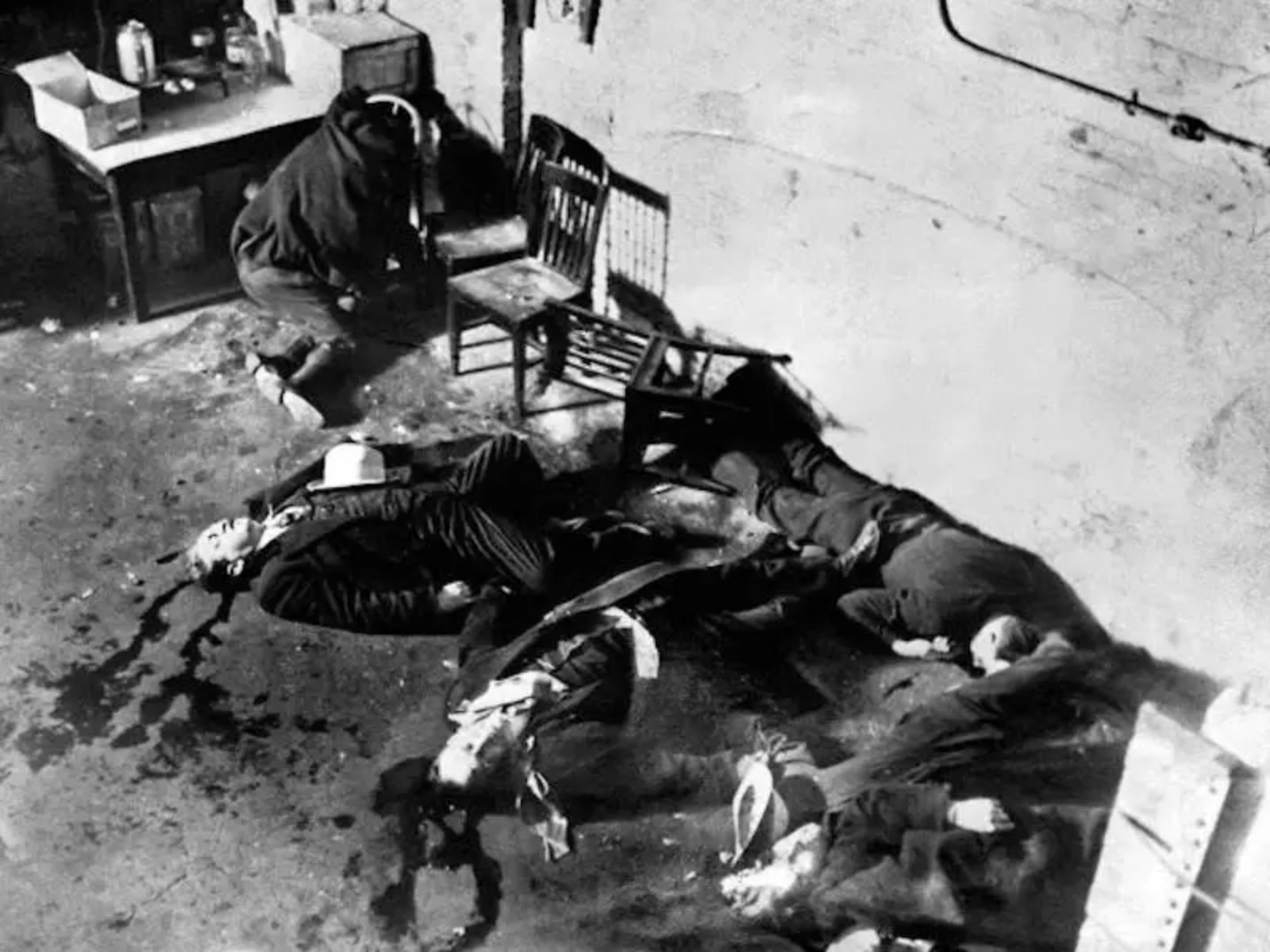
Bodies strewn on the floor on the day of the Saint Valentine’s Day Massacre. In 1929, Al Capone’s gunmen, disguised as police officers, machine-gunned 7 members of the rival gang at point-blank range, one of the most brutal events of the Prohibition era.
In 1929, on Saint Valentine’s Day, Al Capone’s gunmen went to a clandestine warehouse in Lincoln Park, Chicago, belonging to the rival mobster George “Bugs” Moran. Disguised as police officers, they staged a fake “police raid” and machine-gunned 7 members of the rival gang at point-blank range. Only a German Shepherd dog was spared in the slaughter. No one was ever tried or even held criminally responsible for the notorious “Saint Valentine’s Day Massacre”.
The Fall of an Empire
Despite his influence and power, Al Capone was not untouchable. The federal government, under public pressure, intensified its efforts to bring him down. In March 1929, Capone was arrested for contempt of court. In May of that year he was detained in Philadelphia for carrying a concealed weapon and sentenced to a year in prison. He was transferred to the Eastern State Penitentiary in Philadelphia and, in 1930, was named “Public Enemy” number one by the Chicago Crime Commission.
Arrest for Contempt
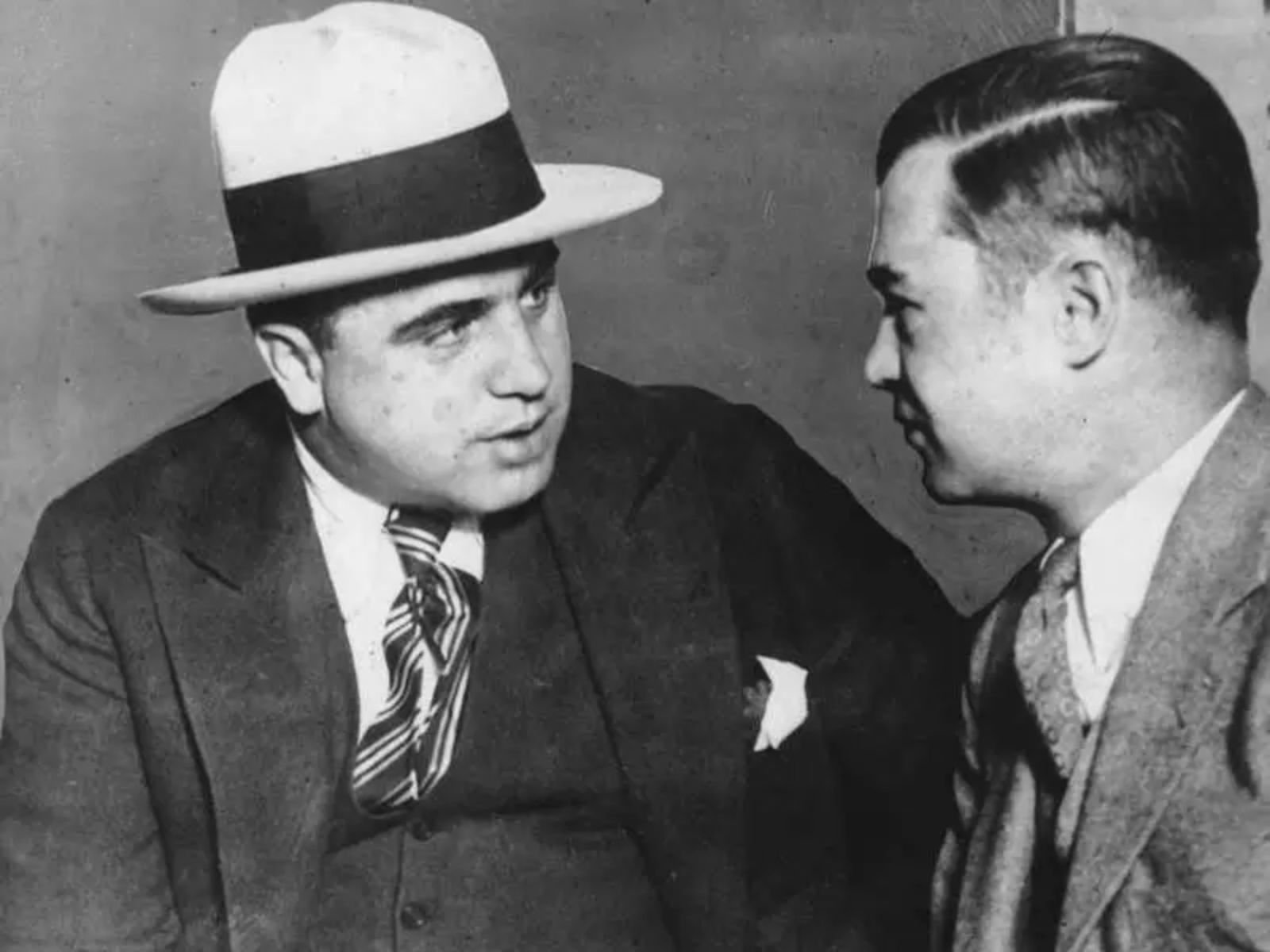
Al Capone talks to a man before appearing before the grand jury in March 1929. He was subpoenaed by the Bureau of Investigation and later arrested for contempt of court.
In March 1929, Al Capone was subpoenaed by the Bureau of Investigation (later renamed the Federal Bureau of Investigation – FBI – in 1935) to appear before a Federal Grand Jury in Chicago. After postponing his appearance on health grounds, Scarface appeared before the jury on 20 March 1929; on leaving the courthouse, however, he was arrested for contempt of court. The mobster was arrested and released shortly afterwards, and a hearing on his contempt was scheduled for a future date.
Al Capone: Cover of Time Magazine
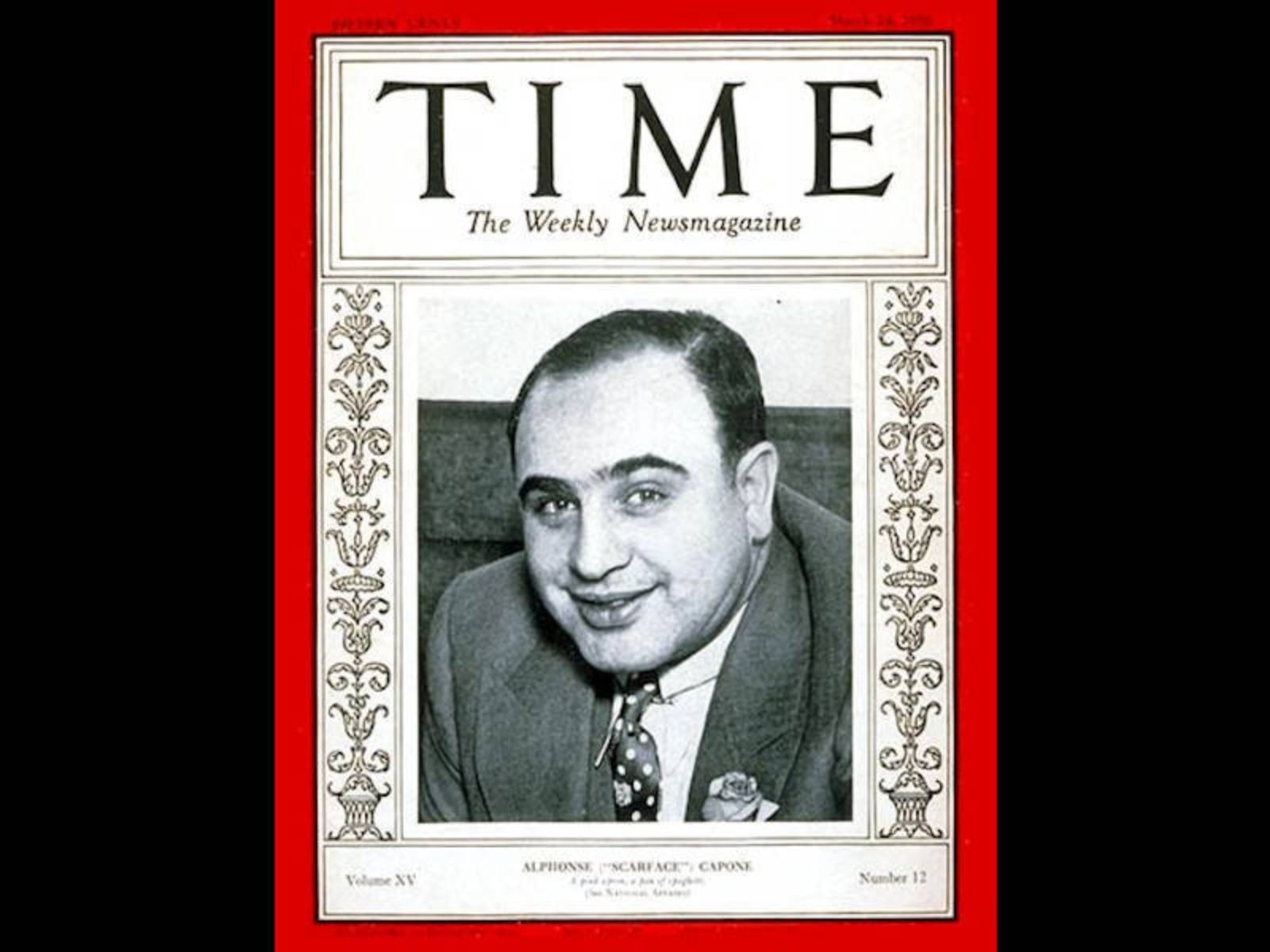
Cover of Time magazine of 24 March 1930. Al Capone became a celebrity in the United States, appearing on the cover of the weekly magazine Time, which showed his influence and notoriety.
Al Capone became a celebrity in the United States, and his photograph appeared on the cover of the weekly magazine Time on 24 March 1930. Scarface had many friends in artistic, business and political circles. Despite his violent reputation and his ties to organised crime, he assumed an air of respectability as a legitimate businessman and philanthropist.
The Tax Evasion Conviction and Alcatraz
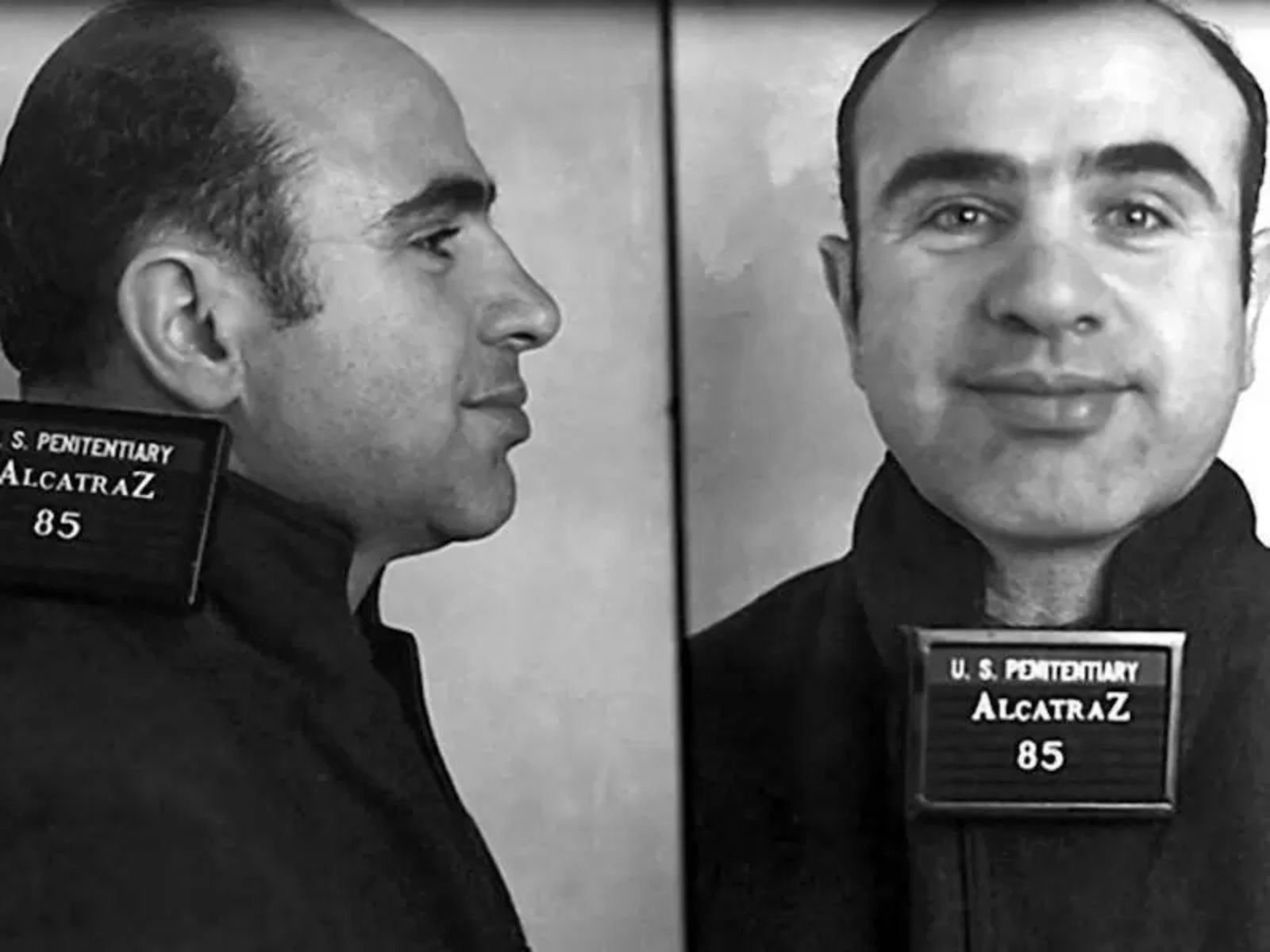
Al Capone is convicted of tax evasion in 1931 and serves time in Alcatraz. This image shows the moment of his conviction, which marked the beginning of his fall and the end of his criminal empire.
The final blow against Capone came in 1931, when he was convicted of tax evasion. That was the government’s successful strategy for putting him behind bars, since his other crimes were hard to prove. Capone was sentenced to 11 years in prison. He served part of his sentence at the Federal Prison in Atlanta and, in 1934, was transferred to the infamous prison of Alcatraz, in San Francisco Bay. During his time in prison, his health deteriorated significantly owing to a long-standing case of syphilis, tuberculosis and mental disorders.
The Death of Al Capone
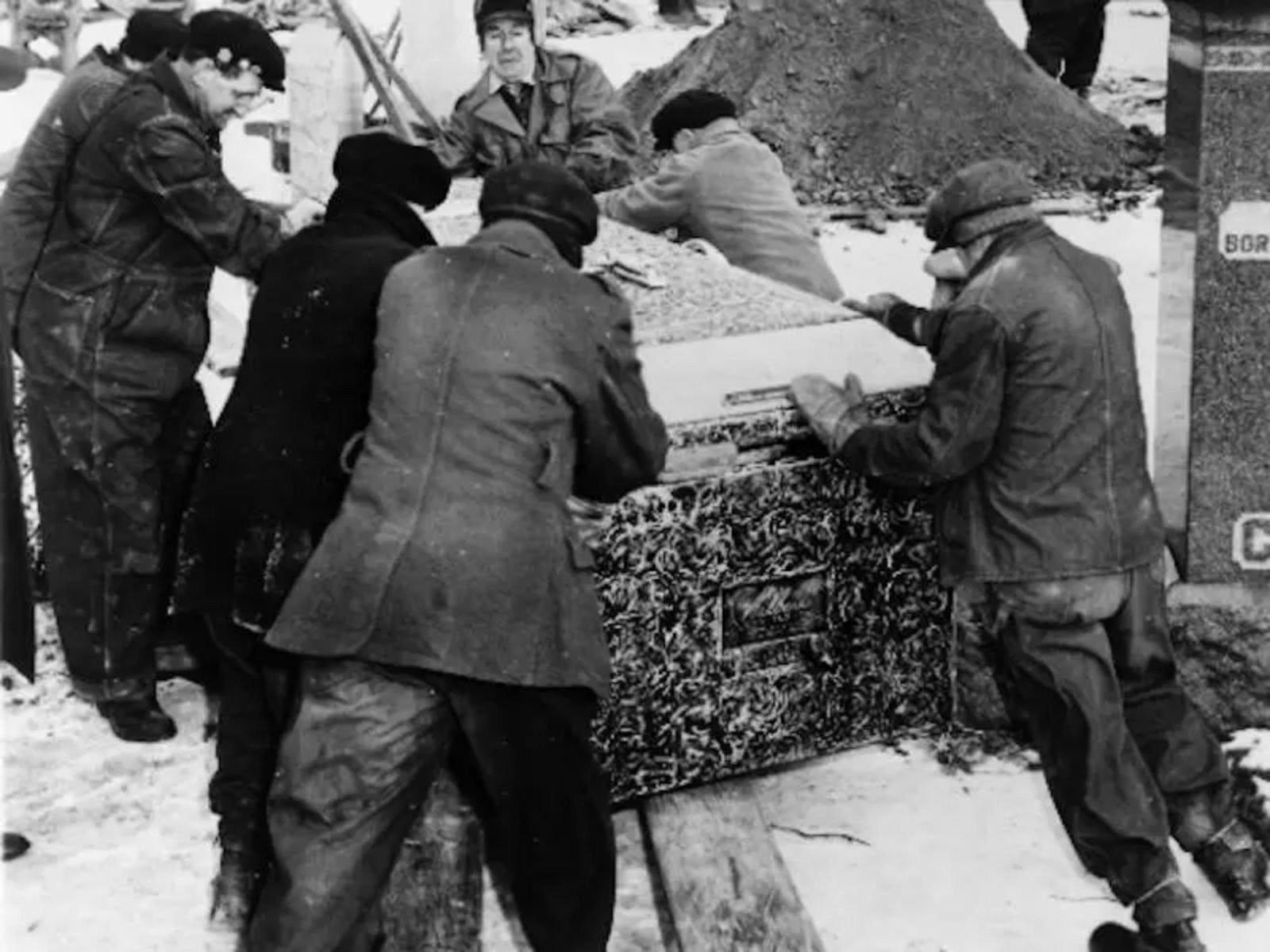
Al Capone’s funeral. The notorious gangster died on 25 January 1947 at his home in Florida, the victim of a stroke and pneumonia. He was buried in a simple ceremony in Chicago.
The notorious gangster Al Capone died on 25 January 1947 at his home in Florida, the victim of a stroke and pneumonia. He was buried in a family plot at Mount Olivet, a Chicago cemetery, in a simple ceremony conducted by the family’s priest (the archbishop forbade a grand funeral).
Monsignor William Gorman told reporters: “The Church never condones evil… this brief ceremony serves to acknowledge his penitence and the fact that he died fortified by the sacraments of the Church”. Al Capone’s remains were later transferred to a grave at Mount Carmel cemetery, in Cook County, Illinois.
Al Capone in Popular Culture
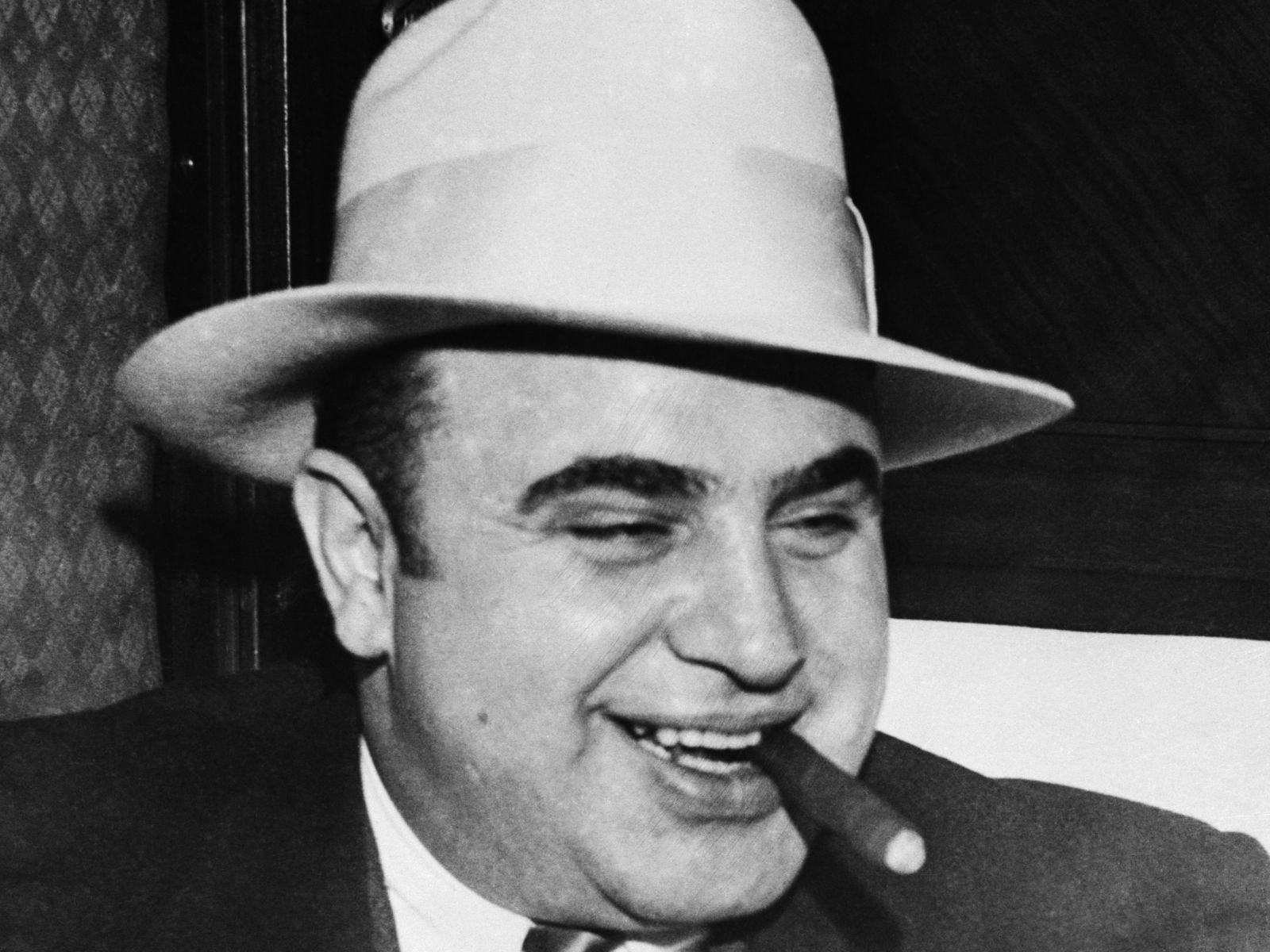
A classic portrait of Al Capone, one of the most notorious gangsters of the Prohibition era.
Al Capone’s legacy transcended the world of crime, immortalising him in popular culture. He has been portrayed in countless films, played by renowned actors such as Robert De Niro and Tom Hardy. The character Augusto in Federico Fellini’s film “Il Bidone” was inspired by his figure. In 2011, a 1929 Colt .38 revolver that had belonged to Capone was auctioned for $110,000, demonstrating the enduring fascination with his story. Al Capone remains a symbol of the Prohibition era and of the power of organised crime in the United States.
The Auctioned Revolver
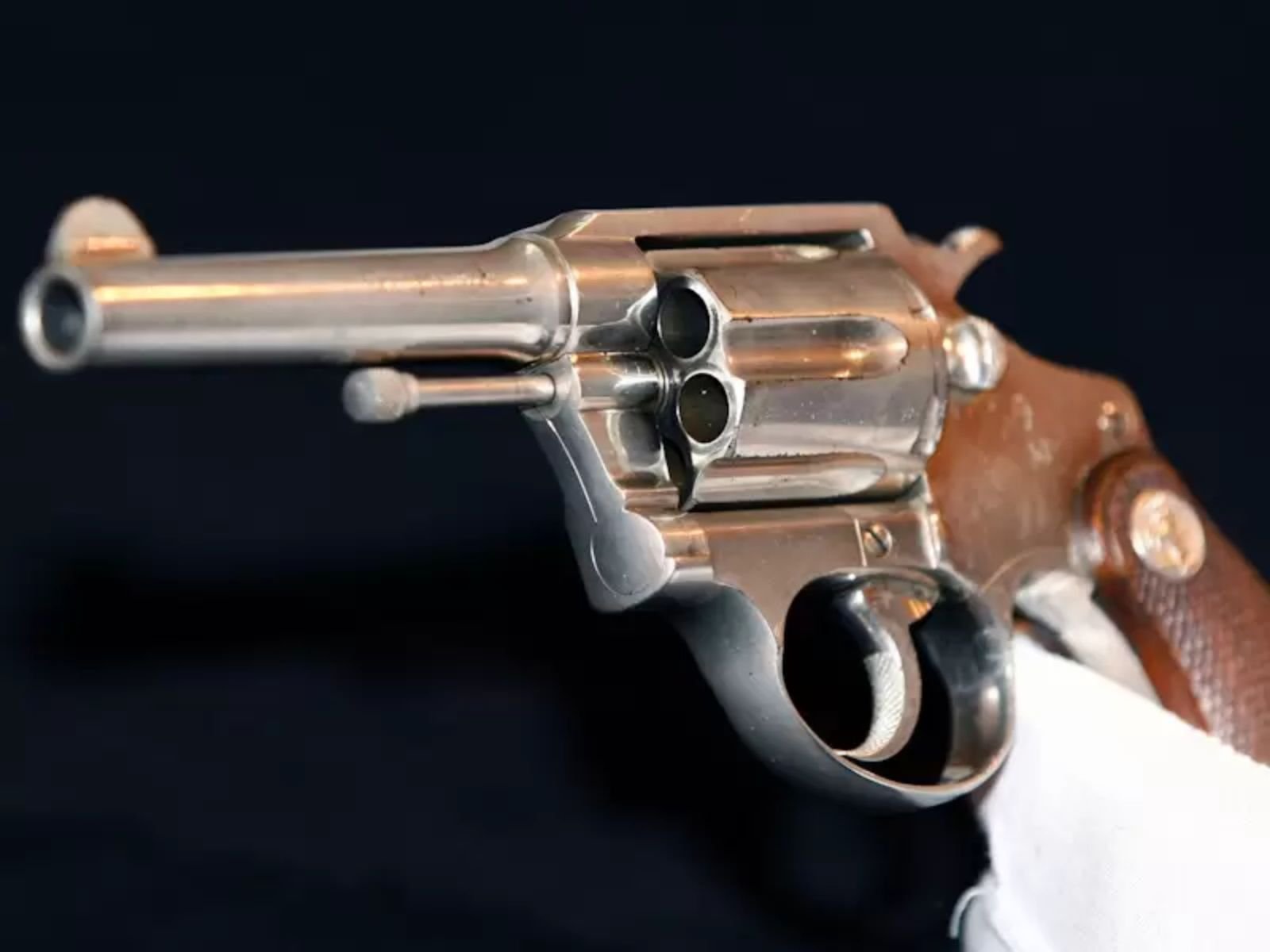
Al Capone’s auctioned Colt revolver. In 2011, the nickel-plated Colt .38 revolver, which belonged to the mobster and was manufactured in May 1929, was sold in London for $110,000, demonstrating the enduring fascination with his story.
In 2011, the nickel-plated Colt .38 revolver that belonged to the mobster, manufactured in May 1929 (just three months after the Saint Valentine’s Day Massacre), was sold in London by the auction house Christie’s to a private collector for $110,000.
Read Also
Bibliographic References
- “Biography of Al Capone, Prohibition Era Crime Boss.” ThoughtCo. https://www.thoughtco.com/al-capone-1779788.
- “Al Capone.” Federal Bureau of Investigation (FBI). https://www.fbi.gov/history/famous-cases/al-capone.
- “15 Fascinating Facts about Al Capone.” YurTopic. https://www.yurtopic.com/society/people/al-capone-facts.php.
- “Al Capone Facts.” American Historama. https://www.american-historama.org/1929-1945-depression-ww2-era/al-capone-facts.htm.
- “Tamerlan Tsarnaev Is Buried in Virginia: Where Other Notorious Criminals Were Laid To Rest.” TIME. https://ideas.time.com/2013/05/07/unwanted-bodies-where-terrorists-serial-killers-and-assassins-are-buried/.
- “Al Capone’s Handgun Sells for $110,000 at Auction.” TIME. https://newsfeed.time.com/2011/06/23/al-capones-handgun-sells-for-110000-at-auction/.