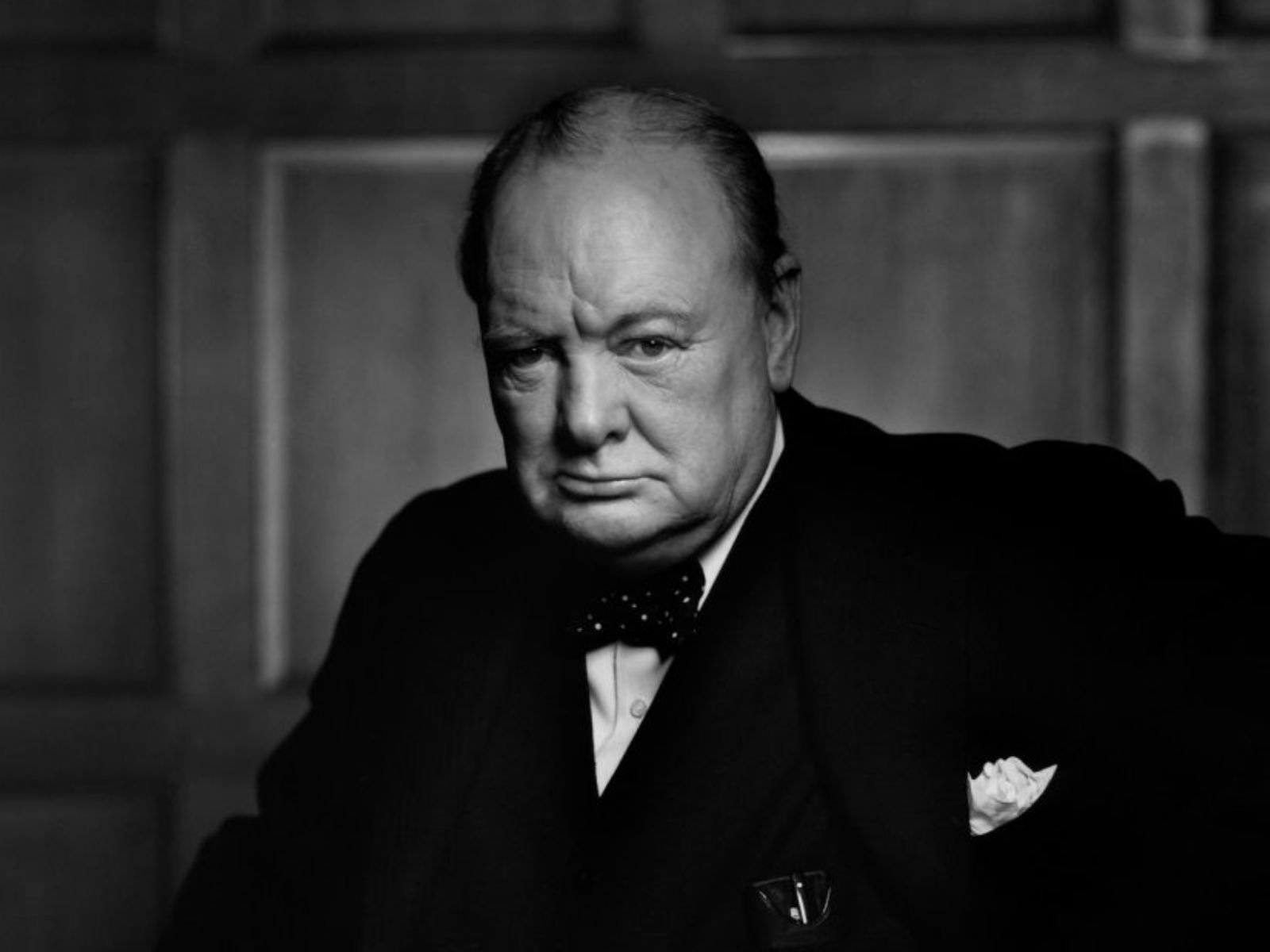
In the summer of 1940, Europe stood on the edge of the abyss. The Nazi Blitzkrieg had swept across the continent, and Britain found itself alone, an island of resistance against the seemingly unstoppable tide of totalitarianism. It was in that moment of existential despair that one man, Winston Churchill, with unshakeable resolve and blazing rhetoric, embodied a nation’s will to fight to the end.
And it was in the skies over England that a small group of Royal Air Force pilots, “the Few”, fought a battle that decided the fate of their country and changed the course of the Second World War. This is the story of how the leadership of one man and the courage of a few saved the world from darkness.
The Darkest Hour: Britain Alone
When Churchill took office as Prime Minister in May 1940, the situation was catastrophic. France was about to fall, the British Expeditionary Force was trapped at Dunkirk, and the threat of a German invasion was imminent. Many within the British establishment, including former Prime Minister Neville Chamberlain and Lord Halifax, argued for seeking a peace settlement with Hitler.
Churchill, however, flatly refused to consider any form of surrender. In his first speech as Prime Minister, he promised the British people nothing but “blood, toil, tears and sweat”. On 4 June, after the evacuation of Dunkirk, he delivered one of his most famous addresses, declaring: “We shall fight on the beaches, we shall fight on the landing grounds, we shall fight in the fields and in the streets, we shall fight in the hills; we shall never surrender.” This was not merely rhetoric. It was the embodiment of a leader’s determination not to yield.
The Battle of Britain: The Duel in the Skies
The invasion of Britain, code-named Operation Sea Lion, depended on one absolute prerequisite: German air superiority. The Luftwaffe, under the command of Hermann Göring, was tasked with destroying the RAF and clearing the way for the landings. The battle began in July 1940 with attacks on shipping convoys and ports, and intensified on 13 August with “Adlertag” (Eagle Day), a massive offensive against British airfields.
The RAF, outnumbered but with the advantage of fighting over its own territory and equipped with the Hawker Hurricane and Supermarine Spitfire fighters, resisted with a ferocity that took the Germans by surprise. The British radar system, Chain Home, proved a decisive advantage, allowing RAF fighters to intercept German bomber formations before they reached their targets.
Winston Churchill: “Never Was So Much Owed by So Many to So Few”
At the height of that desperate battle, on 20 August 1940, Churchill delivered his most iconic speech in the House of Commons. Acknowledging the sacrifice and courage of the RAF pilots, he declared:
The gratitude of every home in our Island, in our Empire, and indeed throughout the world, except in the abodes of the guilty, goes out to the British airmen who, undaunted by odds, unwearied in their constant challenge and mortal danger, are turning the tide of the World War by their prowess and by their devotion. Never in the field of human conflict was so much owed by so many to so few. All hearts go out to the fighter pilots, whose brilliant actions we see with our own eyes day after day.
Churchill’s words immortalised the RAF pilots as “the Few” and captured the essence of their monumental contribution. The phrase was not merely a tribute; it was a powerful instrument of inspiration that galvanised the nation and the free world. As the Member of Parliament Josiah Wedgwood put it, “That was worth 1,000 guns and the speeches of 1,000 years.”
Churchill’s Qualities as a Leader: Courage, Inspiration and Vision
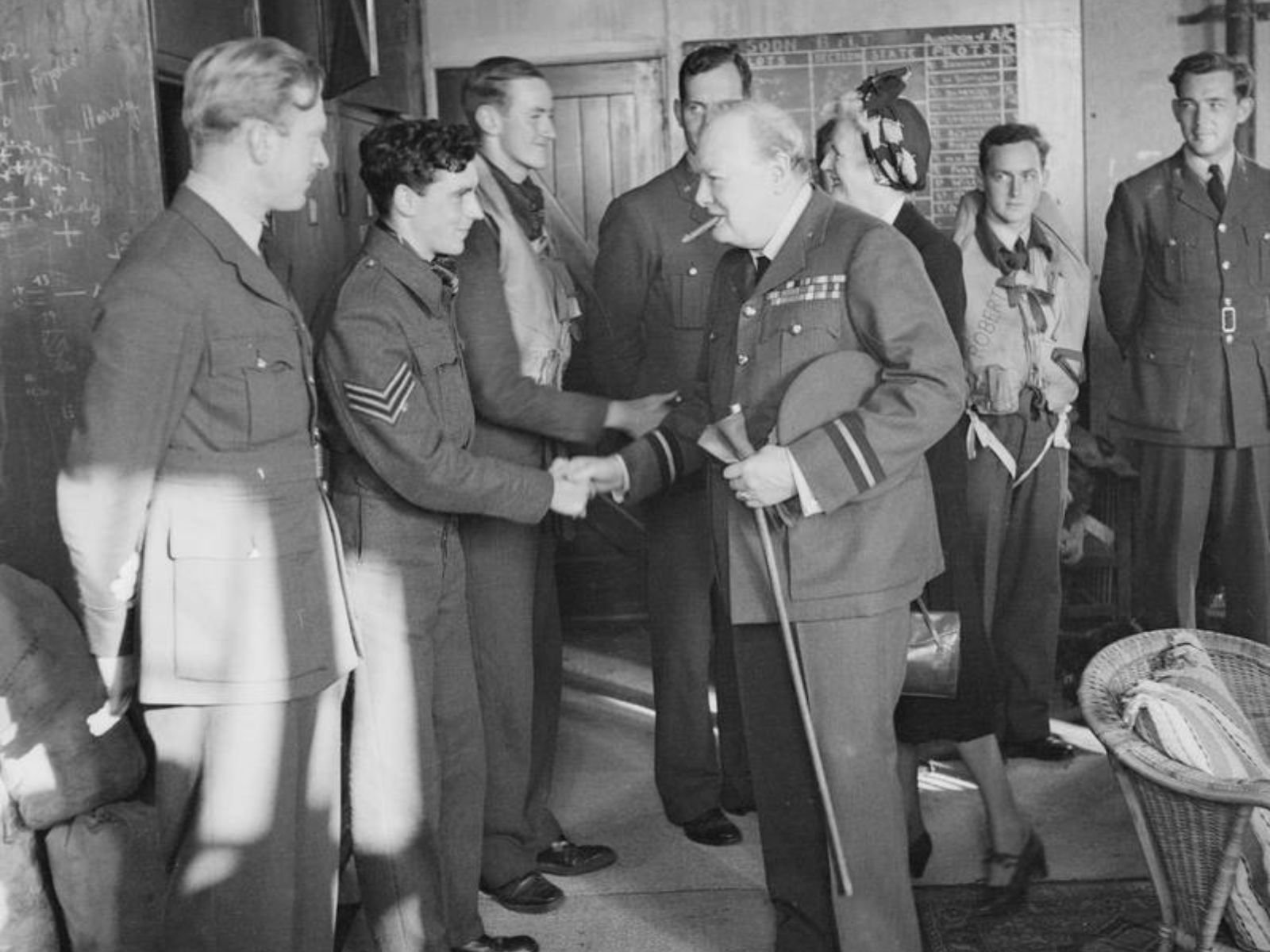
Churchill inspecting troops and facilities at Manston air base, just eight days after his famous speech about “The Few”. Manston was one of the most important air bases during the Battle of Britain, located in south-east England, on the front line against the German attacks. RAF Manston, Kent, England. 28 August 1940.
Churchill’s leadership during the Battle of Britain was a case study in courage, inspiration and strategic vision. His refusal to negotiate with Hitler, his defiant rhetoric and his constant presence among the people, visiting bombed sites, showed a courage that proved contagious. His ability to inspire was not confined to speeches: the Prime Minister embodied British resistance with his cigar, his “V” for victory sign and his personal motto, “KBO, Keep Buggering On“.
Beyond the charisma, Churchill possessed a sharp strategic vision. He had warned about the Nazi threat years before the war and, as First Lord of the Admiralty, had prepared the Royal Navy for the conflict. During the Battle of Britain he understood that Britain’s survival was the key to Hitler’s eventual defeat. His leadership was not only about fighting, but about creating the conditions for final victory.
Victory in the Battle of Britain and Its Legacy
In September 1940, frustrated by his failure to destroy the RAF, Hitler postponed Operation Sea Lion indefinitely and turned his attention east, towards the Soviet Union. The Battle of Britain had been won. It was Hitler’s first major defeat and a crucial turning point in the Second World War. The victory ensured that Britain remained an impregnable base for Allied operations, from which the liberation of Europe would eventually be launched.
The legacy of the Battle of Britain and of Churchill’s leadership is immeasurable. The courage of “the Few” showed that the Nazi war machine was not invincible. Churchill’s determination inspired a generation to resist tyranny. Together, they saved Britain and kept the flame of freedom alive in a world that came dangerously close to being swallowed by darkness. As Churchill predicted, it was Britain’s “finest hour”, a moment when the courage of one leader and the bravery of a few genuinely saved the world.
Read Also
Bibliographic References
- “Churchill: Leader and Statesman.” International Churchill Society. https://winstonchurchill.org/the-life-of-churchill/life/churchill-leader-and-statesman/.
- “Battle of Britain.” Britannica. https://www.britannica.com/event/Battle-of-Britain-European-history-1940.
- “8 Things You Need To Know About the Battle of Britain.” Imperial War Museums. https://www.iwm.org.uk/history/8-things-you-need-to-know-about-the-battle-of-britain.