In June 1979, Poland was a nation in suspense, a Catholic country chained for more than three decades to an atheist communist regime imposed by Moscow. The air was heavy with the resignation of a people censored, discouraged and watched. Yet beneath the grey surface of daily life, a spark of hope refused to go out. In that setting, the figure of Pope John Paul II would prove decisive in reaching the hearts and minds of the Poles.
The most illustrious son of that land, Karol Wojtyła, had been elected Pope eight months earlier, and now, against all odds and to the government’s dread, he was coming home. Not as an ordinary citizen, but as John Paul II, the spiritual leader of hundreds of millions. The visit was a calculated risk for the regime, which feared the power of a man whose only weapon was faith. They could not have been more right. Those nine days in June would not merely be a pilgrimage; they would be the fuse of a revolution that would change the course of history.
Silent Confrontation: A Pope in Hostile Territory
The decision to allow the papal visit was a desperate gamble by the Polish communist regime led by Edward Gierek. The authorities expected that, by controlling media coverage and limiting access, they could use the visit to legitimise their own power. It was a monumental miscalculation. From the moment the LOT Polish Airlines aircraft landed in Warsaw on 2 June 1979, it was clear who really governed Polish hearts.
To the sound of every church bell in the country, John Paul II came down the steps, knelt and kissed the soil of his homeland. The gesture, broadcast live, was a powerful declaration of faith and identity, an act of allegiance to an authority higher than that of the Communist Party. The official reception, led by head of state Henryk Jabłoński, was cold and formal, in stark contrast to the explosion of joy waiting for him in the streets.
Victory Square: The Stage of History
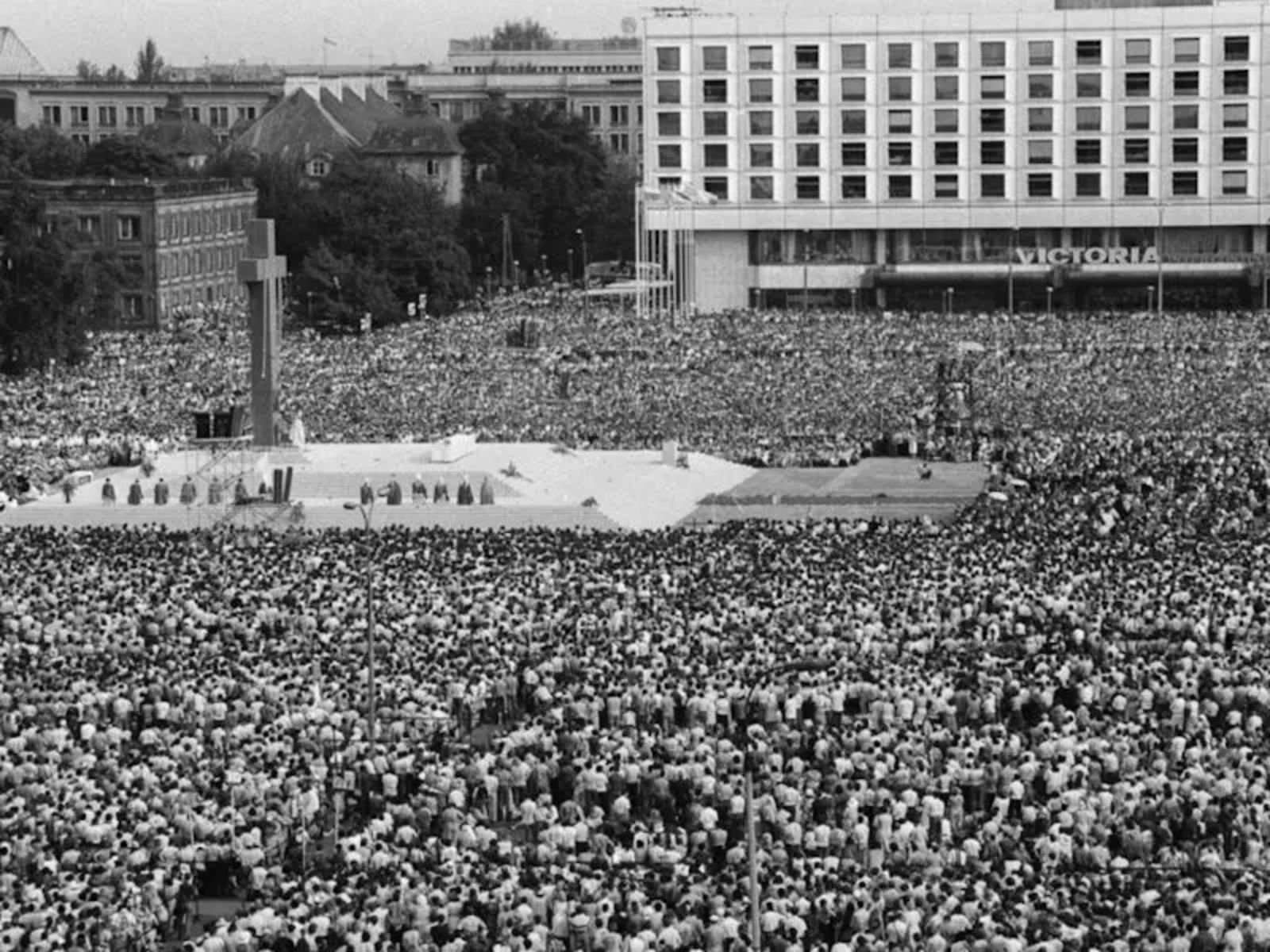
John Paul II addresses a crowd in Victory Square on 2 June 1979.
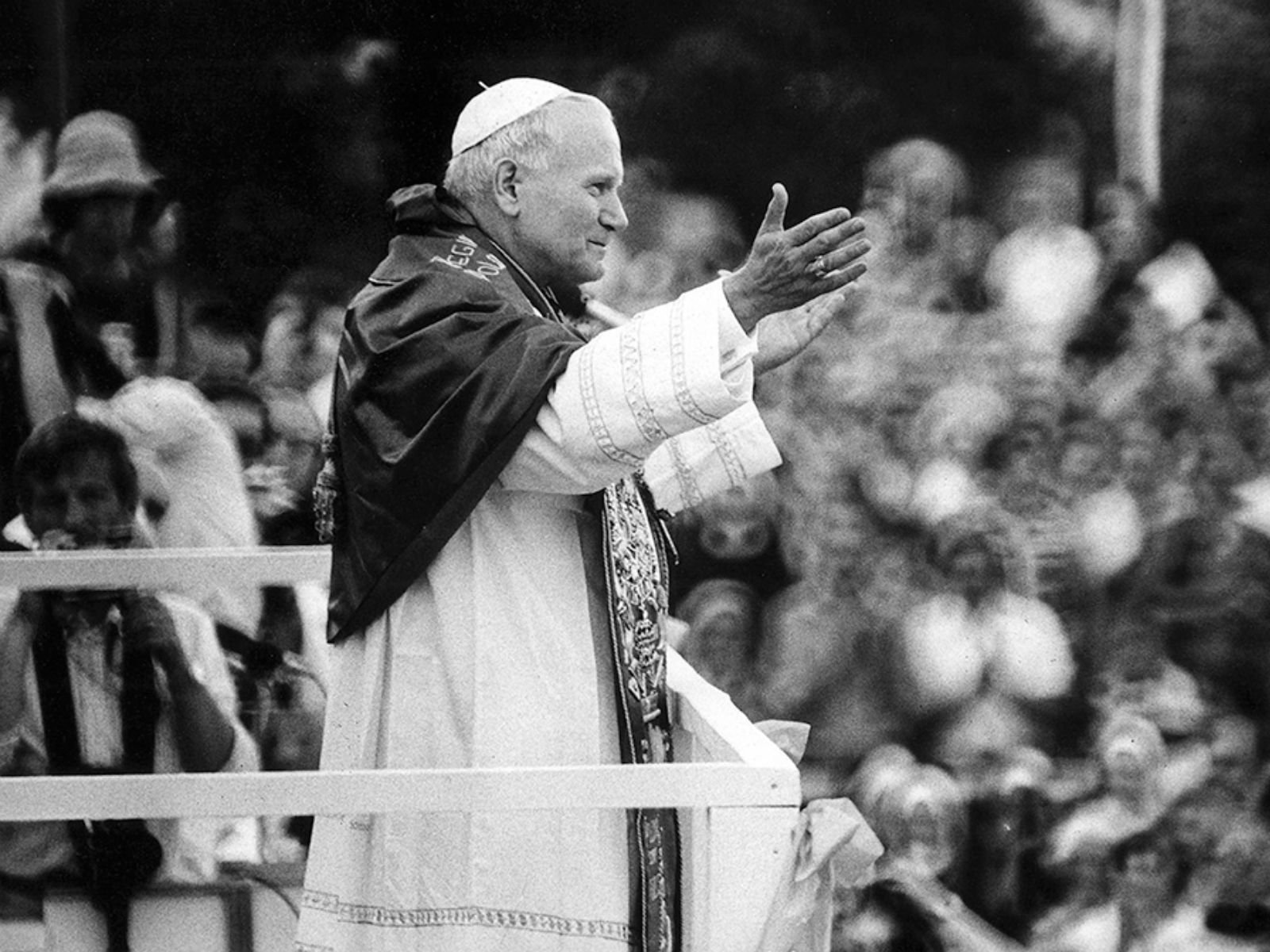
At four in the afternoon, in a stifling 32°C, John Paul II arrived at Victory Square, a place heavy with symbolism, where the Tomb of the Unknown Soldier stood as a memorial to the heroes who died for Poland’s freedom. Around 300,000 people were waiting for him, many having stood there for hours. In the centre of the square, an immense wooden cross eleven metres high defied the official atheism of the state. It was there, before that dense and moved crowd, that the Pope began the Holy Mass. The atmosphere was electric.
During the homily, in one of the most spontaneous and revealing moments of twentieth-century history, the crowd, united as a single body, began to sing an old hymn of resistance: “Chcemy Boga!” (“We want God!”). The cry echoed across the square, a collective assertion of an identity the regime had tried to erase for thirty years.
“Be Not Afraid”: The Spark of a Revolution
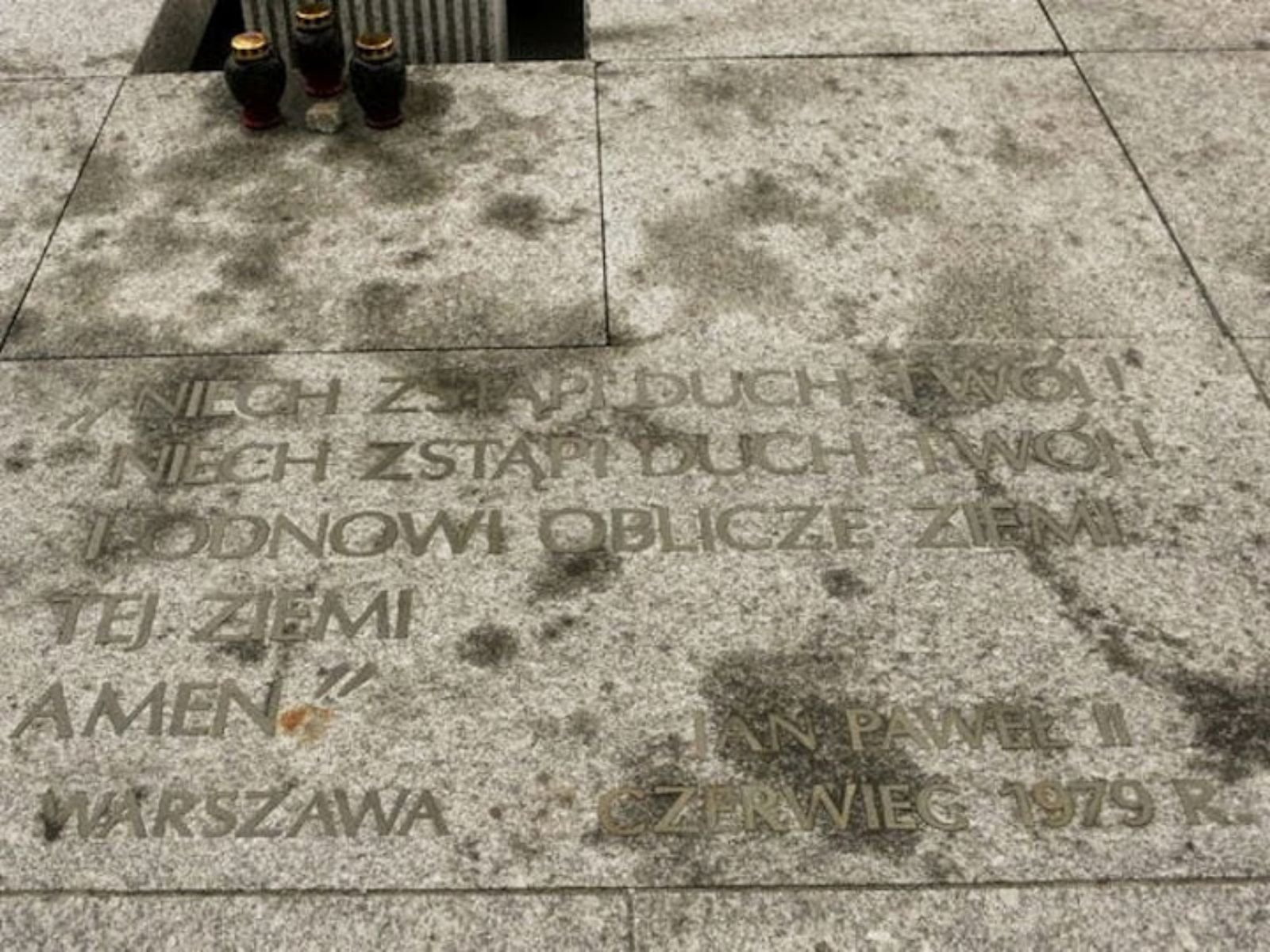
“Niech zstąpi Duch Twój! Niech zstąpi Duch Twój! I odnowi oblicze ziemi. Tej ziemi! Amen. (Let your Spirit descend! Let your Spirit descend! And renew the face of the earth. The face of this land!)”. Photo: Italo Magno Jau, 2012.
The climax of the address came with his closing words, a prayer that would become the manifesto of a generation. His voice thick with emotion, the Polish Pope cried out: “And I cry, I who am a son of the land of Poland and who am also Pope John Paul II, I cry from all the depths of this millennium, I cry on the vigil of Pentecost: Let your Spirit descend! Let your Spirit descend! And renew the face of the earth. The face of this land!”
The final phrase, “Tej ziemi!” (“This land!”), was stressed with a force that pierced the soul of the nation. What followed was a cathartic explosion. The crowd broke into applause that lasted, according to witnesses, around fourteen unbroken minutes. Thousands wept openly. It was not merely applause; it was a roar of freedom, a collective awakening. As the biographer George Weigel put it, in that moment everyone understood that “Poland was not a communist country; Poland was a Catholic nation saddled with a communist state”. The lie had been exposed.
The Awakening of a Nation and the Fall of an Empire
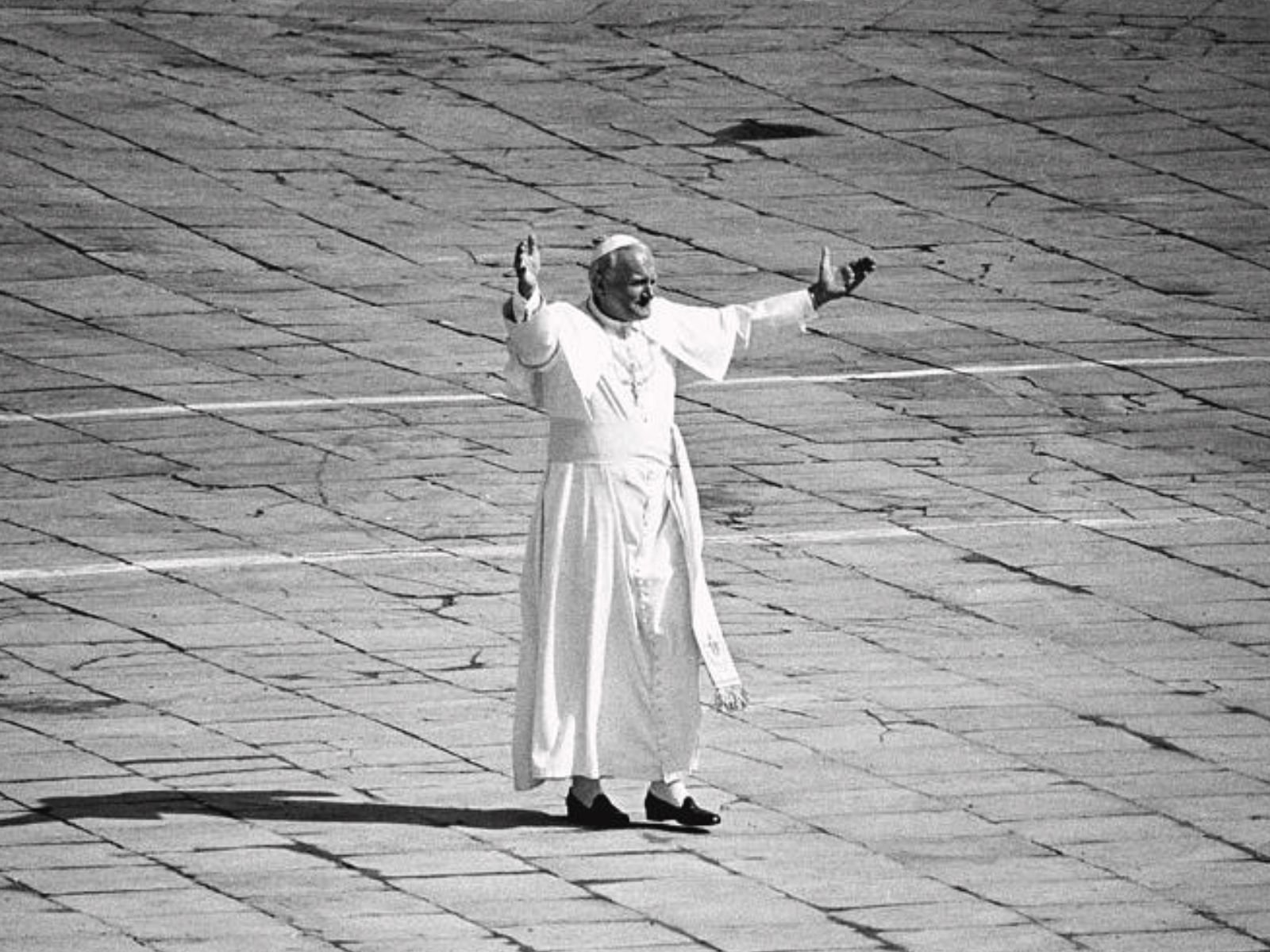
Iconic photograph of Pope John Paul II during the historic Mass. Bettmann Archive, 2 June 1979.
That night, state television, controlled by the government, showed only a few seconds of the Mass, with manipulated images that avoided revealing the size of the crowd. It was already too late. The millions who had been there, and the millions who watched live, could compare reality with propaganda. The regime’s credibility was destroyed in a single day.
The nine-day visit, which drew a total of 11 million people, worked as a spiritual census, showing Poles that they were not alone in their opposition. Fear, the chief weapon of totalitarianism, had been broken. A year later, in August 1980, the Solidarity trade union movement (Solidarność) was born in the shipyards of Gdańsk, led by Lech Wałęsa, who would famously sign the agreements with the government using a pen bearing the Pope’s image. The seed planted in Victory Square had germinated.
The Legacy of John Paul II: A Revolution of Conscience
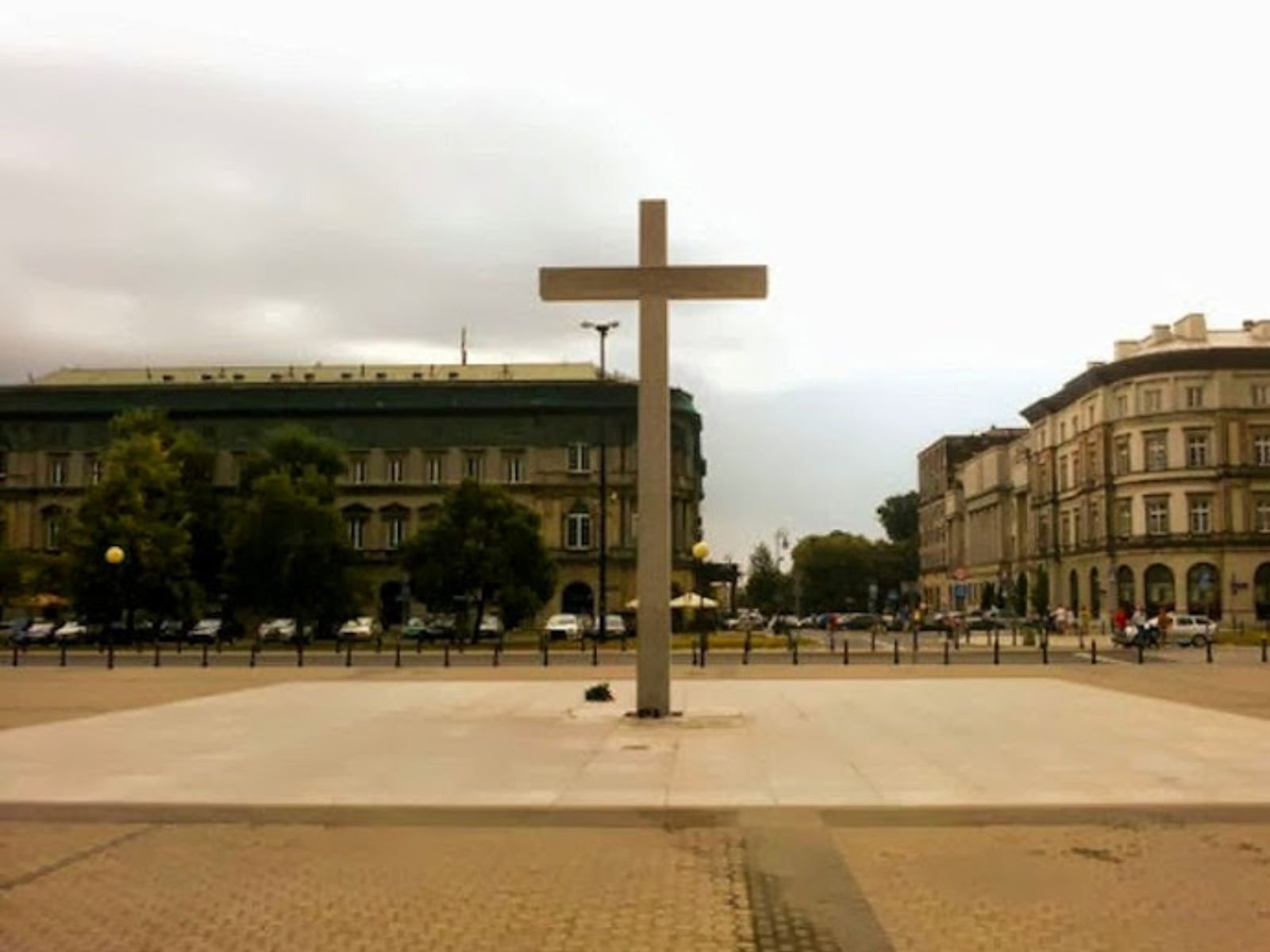
Victory Square (Plac Marszałka Józefa Piłsudskiego). Inscription found at the foot of the cross in Victory Square, Warsaw. Photo: Italo Magno Jau, 2012.
John Paul II’s 1979 pilgrimage is today widely recognised by historians as the catalyst that accelerated the fall of communism in Europe. The Yale historian John Lewis Gaddis stated that “when John Paul II kissed the ground at the Warsaw airport, he began the process by which communism in Poland, and ultimately everywhere else, would come to an end”. The message of courage and identity spread to other captive nations of the Soviet bloc, such as Lithuania, Czechoslovakia and Ukraine.
Ten years later, in 1989, Poland held the first partially free elections in the bloc, and the Berlin Wall fell. The “bloodless revolution” that followed was, in essence, a revolution of conscience, begun not by tanks or armies but by the words of a man who dared to tell a nation not to be afraid and reminded it of its true identity. The face of that land was, indeed, renewed.
Read Also
Bibliographic References
- Gaddis, John Lewis. The Cold War: A New History. Penguin Books, 2006. https://www.penguinrandomhouse.com/books/293667/the-cold-war-by-john-lewis-gaddis/.
- Weigel, George. Witness to Hope: The Biography of Pope John Paul II. Harper Perennial, 2005. https://www.harpercollins.com/products/witness-to-hope-george-weigel.
- Mazurczak, Filip. “First Visit to Poland Led to Iron Curtain’s Fall, Historians Say 45 Years after St. John Paul II Landmark Trip.” Detroit Catholic, 31 May 2024. https://www.detroitcatholic.com/news/first-visit-to-poland-led-to-iron-curtains-fall-historians-say-45-years-after-st-john-paul-ii-landmark-trip.
- Chern, Jim. “WE WANT GOD.” Homily on the Spot, 22 Jan. 2022. https://homilyonthespot.com/2022/01/22/we-want-god/.
- Warsaw Rising Museum (Muzeum Powstania Warszawskiego). Warsaw. Museum visit, July 2012. https://www.1944.pl/en.