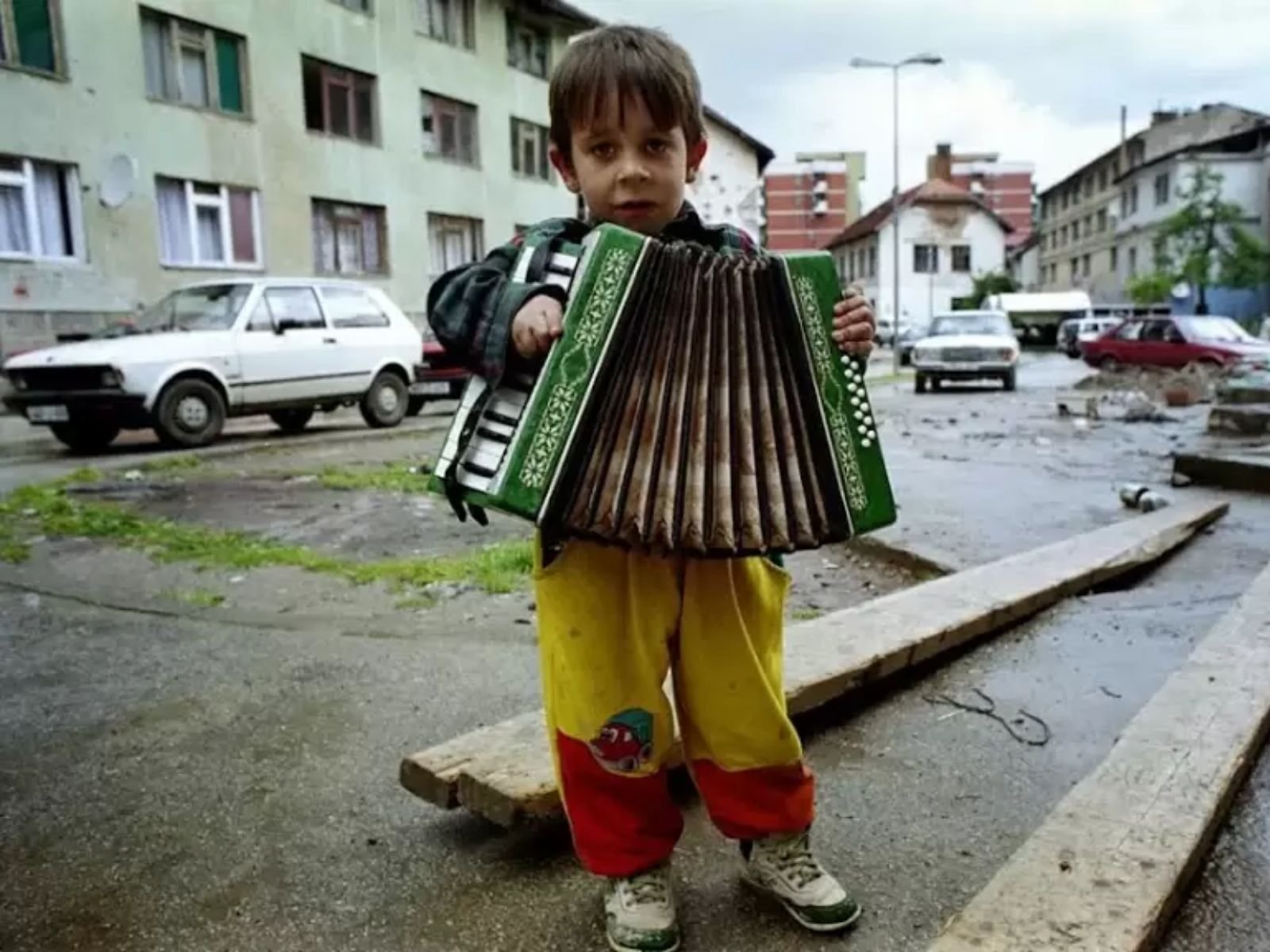
To grasp the magnitude of the Srebrenica Massacre it is essential to go back to the turbulent state of the Balkan peninsula in the early 1990s. The former Yugoslavia, a mosaic of ethnicities and religions held together by the firm grip of the communist regime, began to disintegrate after the death of its leader, Josip Broz Tito, in 1980. The power vacuum, compounded by a severe economic crisis, opened the way for the rise of inflamed nationalist rhetoric.
In 1991 Croatia and Slovenia declared independence, setting off a domino effect that would inevitably reach Bosnia and Herzegovina, a republic with an ethnically diverse population made up mainly of Bosnian Muslims (Bosniaks), Catholic Croats and Orthodox Serbs. In March 1992, after a referendum boycotted by most Bosnian Serbs, Bosnia and Herzegovina also declared independence, an act that lit the fuse for one of the most brutal wars in European history.
The Largest Genocide on European Soil Since the Second World War
The Srebrenica Massacre is regarded by many Western authorities and human rights groups as the worst war crime committed in Europe since the Second World War, with a civilian death toll of more than 8,000, mostly Bosniak Muslim men and boys. The International Criminal Tribunal for the former Yugoslavia (ICTY) and the International Court of Justice (ICJ) formally classified these events as an act of genocide, a ruling that cemented the gravity of the massacre in international law and in the collective memory of humanity.
The “Safe Area” and the Cry for Help That Went Unanswered
On the afternoon of 10 July 1995, soldiers of the Bosnian Serb army, under the command of General Ratko Mladić, launched an attack on Srebrenica, a “safe area” created by the United Nations (UN) to protect civilians displaced by the war. A UN officer on the ground sent a desperate message to UN headquarters in Geneva:
“Urgent! Urgent! Urgent! The Bosnian Serb Army is entering the town of Srebrenica. Will someone stop this immediately and save these people? Thousands of them (civilians) are gathering around the hospital. Please help.”
No one stopped it. Coldly and methodically, Muslim men and boys were separated from their families, taken by the thousand in lorries to isolated places near the river Drina, where they were lined up in rows and shot. The mass executions took place over several days at sites such as warehouses, open fields and schools, in a carefully planned and executed operation of extermination.
The Srebrenica Massacre called into question the conduct of the UN, the United States and NATO (the North Atlantic Treaty Organisation) in the Balkans. The genocide was carried out in territory under international protection, and many authorities consider it the low point of Western policy in the Balkans.
The Complicit Inertia of the International Community
Colonel Ton Karremans, commander of the Dutch peacekeeping force (Dutchbat), had warned senior United Nations officials the previous month that there were clear signs the Serbs were preparing an attack. For weeks the Serb army tightened its siege of the town. The peacekeeping force was already weakened, short of supplies, and had suffered raids on shipments of provisions and ammunition. On 6 July the Bosnian Serbs shelled a village south of Srebrenica and reinforced their positions in the area.
On 7 July the Dutch requested NATO air strikes on Serb attack positions in order to halt the offensive, but the UN rejected the request. The reasons given were the complexity of the authorisation process and the fear that air action might escalate the conflict and endanger the peacekeepers, as well as a reluctance to undermine the diplomatic efforts of Carl Bildt, the European negotiator who had just arrived in the region.
The Fall of Srebrenica and NATO’s Catastrophic Failure
On 9 July General Hervé Gobillard sent a fax to the Serb general Ratko Mladić warning of the grave consequences the Serb army would face if it did not halt its attack on the safe area. It was completely ignored. The following morning, 10 July, a single tank and around 100 Serb infantrymen approached the Dutch blocking position and were driven back under a hail of .50 calibre machine-gun fire. Once again the Dutch peacekeepers issued an ultimatum to Mladić and requested an air strike from high command, both without success.
On 11 July thousands of Serb infantrymen outflanked the Dutch armoured vehicles and entered the town. The air strike was finally authorised by the UN, but it was too late. Only two Dutch F-16s and two American F/A-18s managed a single pass, dropping bombs on Serb tanks and damaging one of them. The action was halted immediately when Mladić threatened to kill 32 Dutch peacekeepers he was holding hostage and to shell the UN compound at Potočari, where thousands of civilians had taken refuge. The threat worked, and NATO called off the counter-attack, sealing the fate of Srebrenica.
The Meeting of Karremans and Mladić
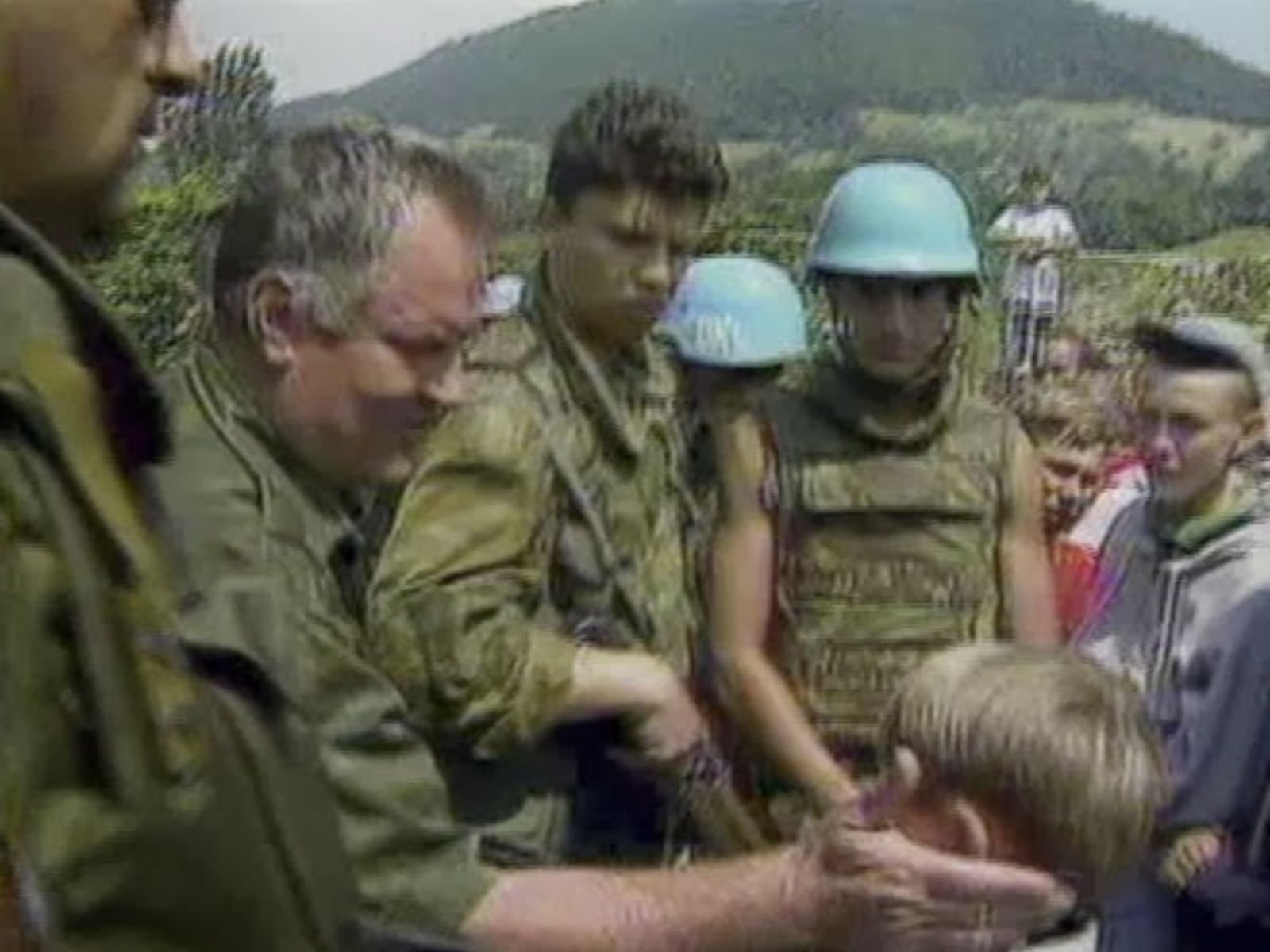
On 12 July 1995 Ratko Mladić touches a Muslim boy and assures the UN peacekeepers that the population of Srebrenica would be safe. AP Agency.
As night fell, General Mladić met Colonel Karremans. According to eyewitnesses, the general ordered one of his men to cut a pig’s throat and declared: “This is what we are going to do to the Muslims”. Karremans’s official report made no mention of the Serb general’s threat, but the document does reveal that the colonel said he was unable to defend those people. That meeting came to symbolise the humiliation and powerlessness of the UN peacekeepers in the face of Serb aggression.
The Death March and the Separation
Around 15,000 people, most of them men, gathered on the outskirts of Srebrenica and were forced to march through the night in a desperate attempt to reach safe territory. The column, known as the “death march”, stretched for kilometres and was relentlessly hunted by Serb forces in ambushes, leaving thousands dead. Meanwhile, at the camp in Potočari, women, children and the elderly were terrorised. Some women were abducted and raped by Serb soldiers.
On the morning of Wednesday the 12th, a convoy of around 40 lorries and buses arrived at the camp. Groups of men and boys of military age were systematically separated from the women and children. The refugees were supposedly to be taken to safe territory, as Mladić himself claimed on the spot, in a macabre performance for the television cameras.
Testimonies of the Horror
Christina Schmidt, a German nurse, led a Médecins Sans Frontières team in Srebrenica. She sent her account by radio to her organisation’s Belgrade office, which relayed it to the world’s press.
“Everyone should feel the violence in the faces of the Bosnian Serb army soldiers directing people like animals onto the buses. Everyone who could have stopped this mass exodus should be forced to feel the panic and despair of these people.”
Among the other atrocities she witnessed, Christina Schmidt also described the despair of a father who came to her with a one-year-old baby, weeping. The father was to be taken away by the Serb army and would have no one to care for his son. Schmidt saw in that man’s eyes the look of someone who would never see his child again.
Refugees who chose to flee on foot through the forests were hunted down by Serb soldiers and had their throats cut. No one knows exactly how many people died in the Srebrenica Massacre. Analysts estimate a figure of more than 8,000, mainly men and boys. The mass graves, discovered in the following years, revealed the industrial scale of the massacre. To hide the crimes, the bodies were later dug up with excavators and moved to secondary and even tertiary graves, hampering the identification of the victims and their families’ mourning. Ratko Mladić, the “Butcher of Bosnia”, was arrested on 26 May 2011 in Lazarevo, Serbia, after 16 years on the run.
The Genocide Trials
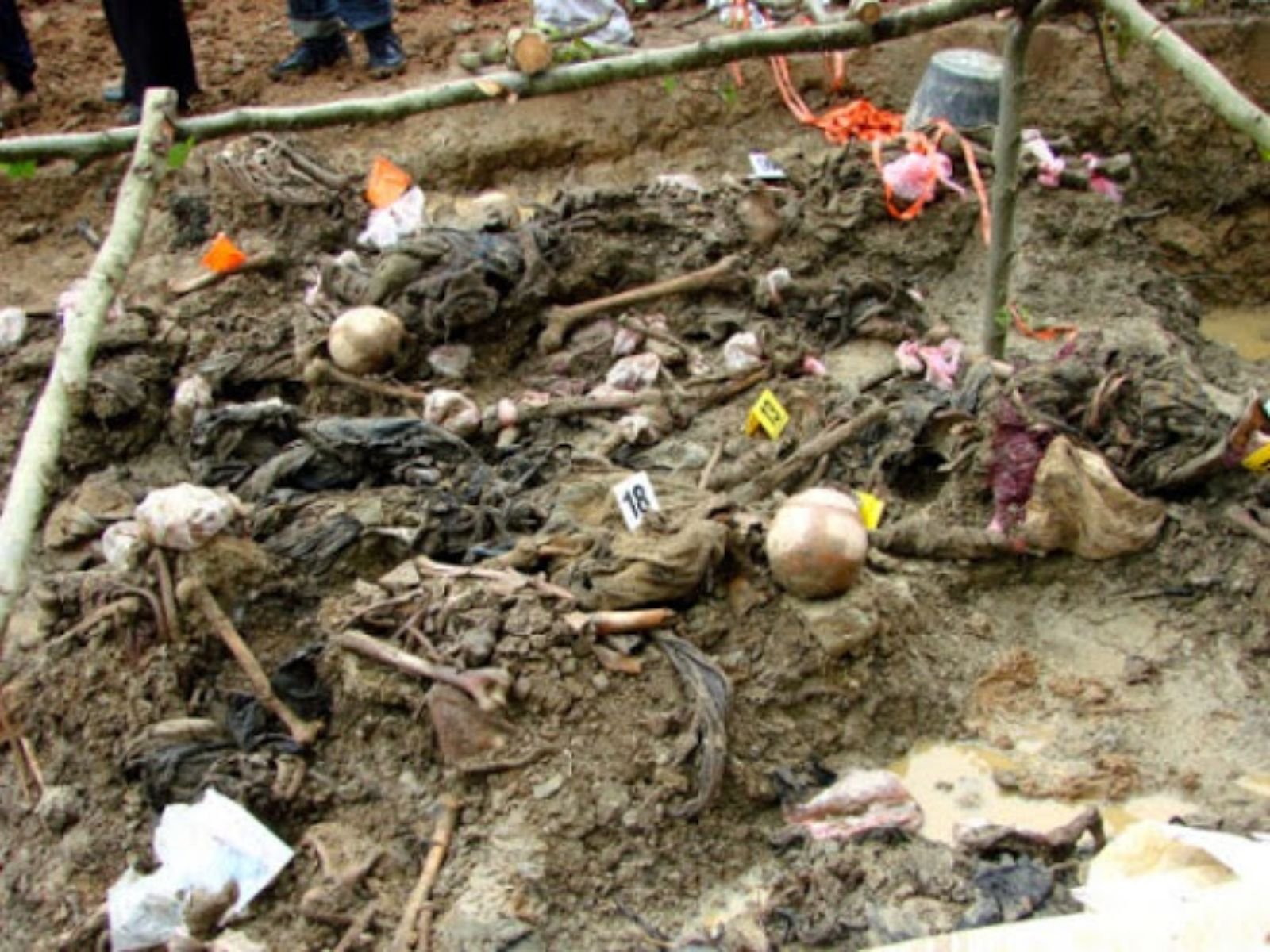
Mass grave in Srebrenica, exhumed in 2007. Photo: Adam Jones
In the aftermath of the massacre, the pursuit of justice became a priority for the international community. The International Criminal Tribunal for the former Yugoslavia (ICTY), based in The Hague, played a central part in holding the perpetrators to account. In 2001 General Radislav Krstić, one of the commanders of the Drina Corps of the Bosnian Serb army, became the first person to be convicted of genocide by the ICTY. His conviction was a landmark, setting a crucial legal precedent.
Years later the principal architects of the genocide, Radovan Karadžić, the political leader of the Bosnian Serbs, and General Ratko Mladić, were finally captured and brought to trial. Both were convicted of genocide, crimes against humanity and war crimes, and received life sentences. The ICTY indicted a total of 20 individuals for crimes committed at Srebrenica, resulting in 14 convictions that helped build a detailed and irrefutable judicial account of the events.
The Legacy of Srebrenica
The abject failure of the international community to prevent the genocide at Srebrenica, as in Rwanda a year earlier, prompted deep reflection on the mechanisms of collective security and state sovereignty. Srebrenica became the painful catalyst for a paradigm shift in international law, stressing the primacy of human life over political borders.
Out of that examination of conscience came the doctrine of the “Responsibility to Protect” (R2P), formally adopted by the UN General Assembly in 2005. This innovative principle holds that sovereignty is not an absolute right but a responsibility, and that if a state fails to protect its own population from mass atrocities (genocide, war crimes, ethnic cleansing and crimes against humanity), the international community has a responsibility to intervene.
The Responsibility of the Netherlands
On 6 September 2013 the Dutch Supreme Court ruled that the Netherlands was responsible for the deaths of three Bosnian Muslim men, because the blue helmets (the Dutch peacekeepers) had arbitrarily ordered those men to leave the United Nations compound during the Srebrenica Massacre. That ruling was later extended in 2019, when the same court found the Dutch state partly responsible (to the extent of 10%) for the deaths of around 350 men who were expelled from the UN base at Potočari and subsequently murdered by Serb forces.
The decision, though controversial, set an important precedent on the responsibility of states that contribute troops to peacekeeping missions. According to the victims’ lawyer, Liesbeth Zegveld, the ruling was a step forward because it “establishes that UN peacekeepers cannot operate in a legal vacuum, where there is no accountability or redress for the victims”.
The Mothers of Srebrenica
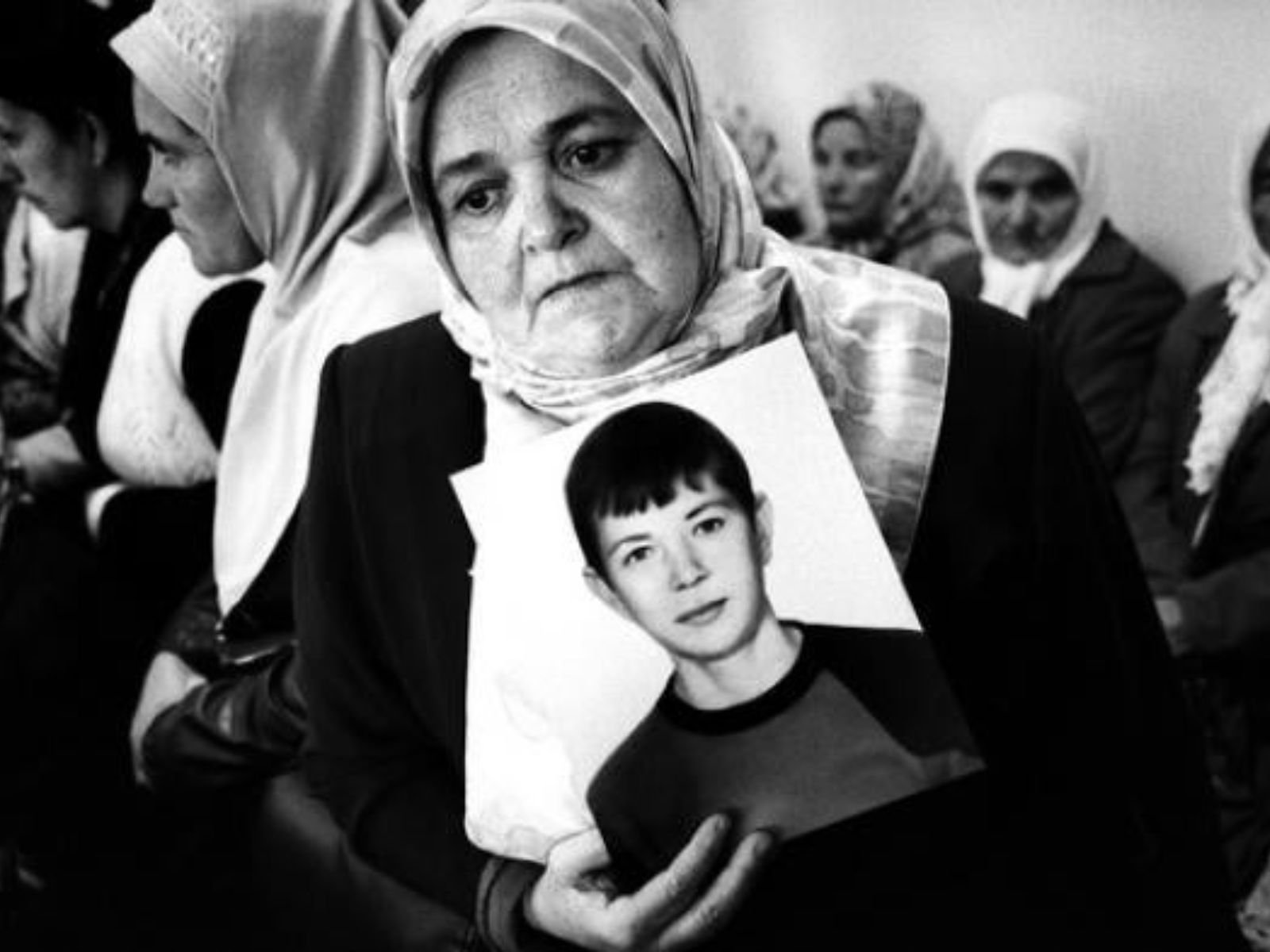
A Bosnian Muslim woman holds the photograph of her missing son, one of the thousands of men and boys killed in the Srebrenica genocide in July 1995. The black and white image captures the grief and the pursuit of justice of the “Mothers of Srebrenica”, an association of women who lost their loved ones in the massacre.
The “Mothers of Srebrenica” became a powerful symbol of the search for justice and truth after the genocide. These courageous women, many of them widows who lost not only sons but also husbands, brothers and fathers, devoted their lives to finding the remains of their loved ones and to ensuring that those responsible were brought to justice.
Organisations such as the Association of the Mothers of Srebrenica and Žepa fought tirelessly for decades. They pressed for the exhumation of mass graves, the identification of remains through DNA, the trial of war criminals and international recognition of the genocide. Many of those mothers died before finding their sons’ remains. Some buried only fragments. Others are still waiting, decades on, for any news at all.
The identification process is slow and painful. More than 8,000 men and boys were executed at Srebrenica, their bodies buried in mass graves that were later dug up and the remains redistributed among secondary graves to conceal the evidence. This means the remains of a single person may be scattered across several sites.
By 2024 more than 7,000 victims had been identified, but hundreds are still awaiting identification. The photograph this mother holds is probably from before the war: a smiling young man, full of life and future. Such photographs have become sacred relics, carried at protests, displayed at memorials, held at vigils. The image is a reminder that every statistic in the “8,372 dead at Srebrenica” stands for a real person, with a family, an identity, a name, a face and, above all, dreams that were cut short.
The Srebrenica-Potočari Memorial and Cemetery
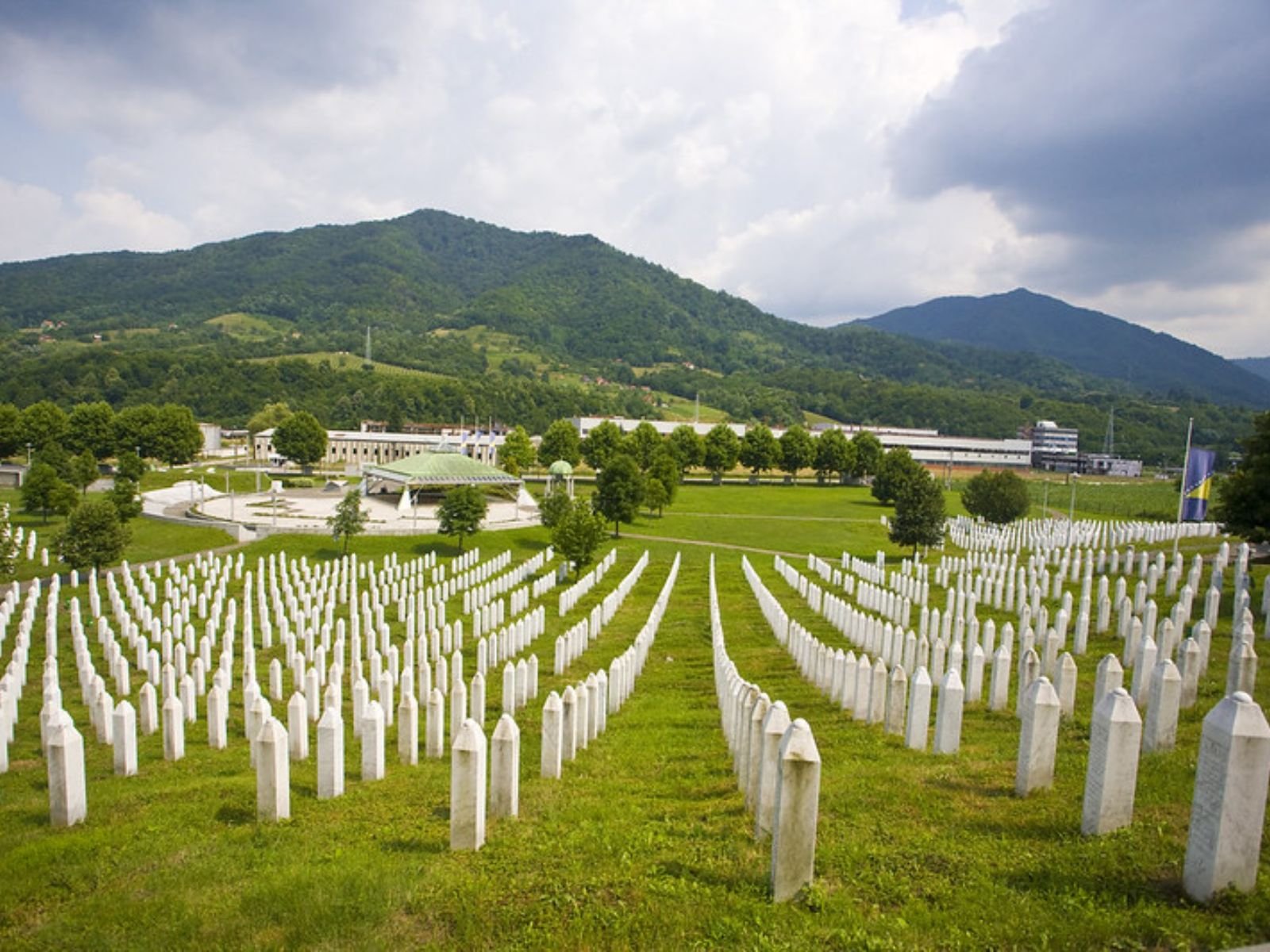
The Srebrenica-Potočari Memorial and Cemetery, where more than 6,600 identified victims of the July 1995 genocide are buried. This panoramic view captures the visual scale of the horror: thousands of white marble headstones stretch in perfectly aligned rows across the green lawn, contrasting with the verdant mountains of the Balkans in the background.
The Srebrenica-Potočari Memorial and Cemetery, where more than 6,600 identified victims of the July 1995 genocide are buried. It is the same landscape that witnessed one of the worst crimes against humanity on European soil since the Second World War. The memorial stands on the grounds of the former Potočari battery factory, which served as the base of the Dutch UN peacekeeping force during the massacre.
The headstones are uniform in design, but the stories behind them are devastatingly singular. The youngest victim buried here was just 12 years old. Many headstones bear the same date of death (11, 12, 13 July 1995), marking the days on which mass executions took place at sites such as the school at Kravica, the warehouse at Kozluk and the dam at Petkovci. Some headstones bear only a year of birth and “1995” as the year of death, because the remains were so fragmented that the exact date could not be determined.
Every year, on 11 July, a memorial ceremony is held at Potočari, where the newly identified victims are buried. Families travel from all over Bosnia and from around the world to attend. Coffins draped in green cloth (the colour of Islam) are carried in solemn procession and buried as prayers are recited and tears are shed. The memorial complex includes a museum, a wall bearing the names of all 8,372 victims identified so far, and the “Gallery 11/07/95” with photographs and personal belongings of the victims.
Memory and Denial: The Continuing Struggle
Denial of the genocide insults the memory of the victims, prevents genuine reconciliation and threatens a hard-won peace. Remembering Srebrenica is therefore not merely an act of homage but a perpetual warning. It is a grim reminder of the human capacity for barbarity and of the collective responsibility to say “never again”, not as a mere slogan but as an active and vigilant commitment to humanity.
Read Also
Bibliographic References
- “Bosnian War.” Britannica. https://www.britannica.com/event/Bosnian-War.
- “The Srebrenica Genocide: 20 Years On.” International Criminal Tribunal for the Former Yugoslavia. https://www.icty.org/x/file/Outreach/view_from_hague/jit_srebrenica_en.pdf.
- Human Rights Watch. The Fall of Srebrenica and the Failure of U.N. Peacekeeping. Human Rights Watch. https://www.hrw.org/report/1995/10/15/fall-srebrenica-and-failure-un-peacekeeping/bosnia-and-herzegovina.
- “ICTY Remembers: The Srebrenica Genocide (1995–2015).” United Nations International Residual Mechanism for Criminal Tribunals. https://www.irmct.org/specials/srebrenica20/.
- “Responsibility to Protect.” United Nations. https://www.un.org/en/genocide-prevention/responsibility-protect/about.
- “Massacre in Bosnia; Srebrenica: The Days of Slaughter.” The New York Times. https://www.nytimes.com/1995/10/29/world/massacre-in-bosnia-srebrenica-the-days-of-slaughter.html.
- “Dutch Peacekeepers Are Found Responsible for Deaths.” The New York Times. https://www.nytimes.com/2013/09/07/world/europe/dutch-peacekeepers-are-found-responsible-for-deaths.html.