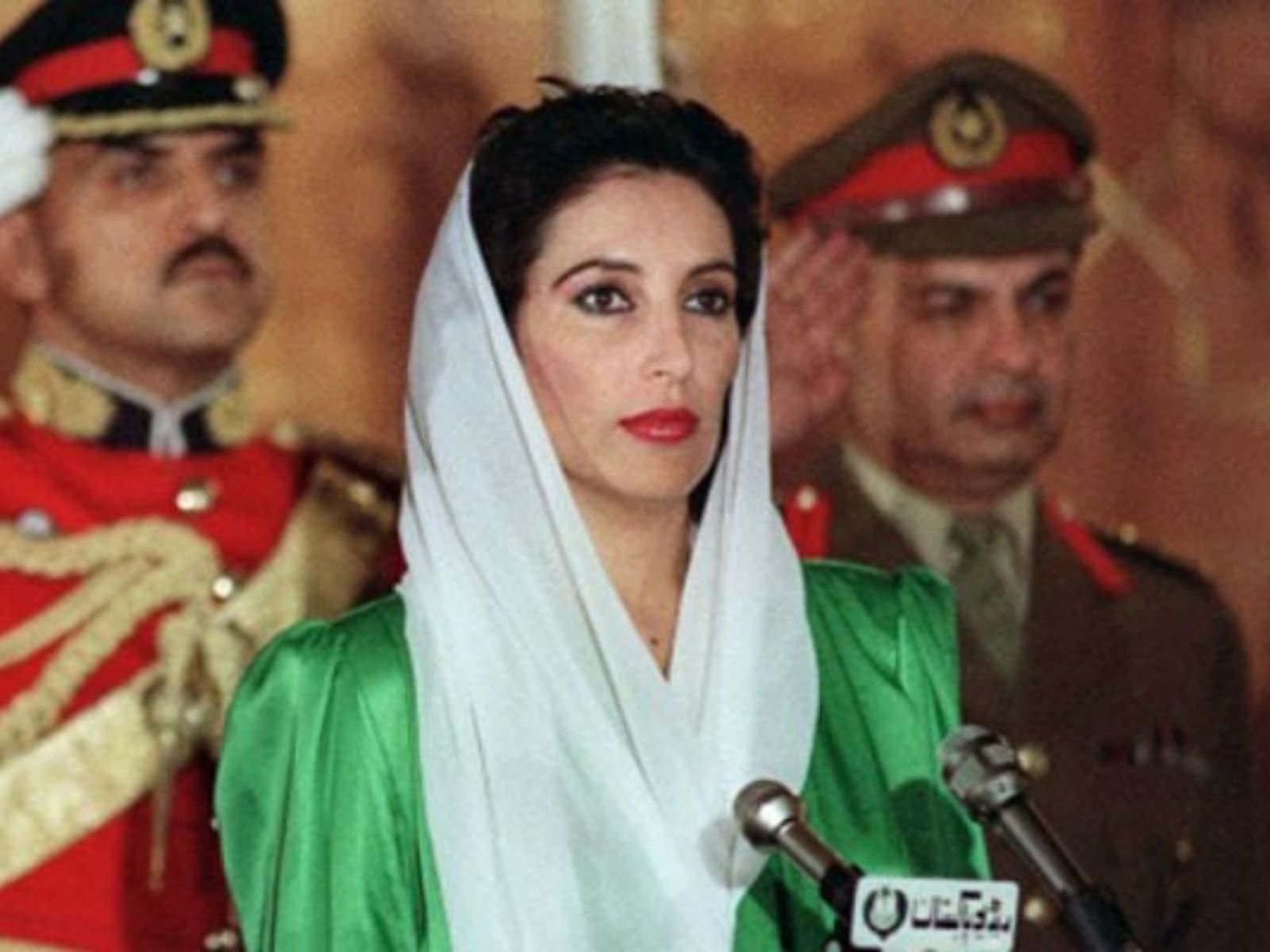
On 27 December 2007, the Pakistani city of Rawalpindi witnessed the brutal silencing of one of its most prominent voices. As she was leaving a rally, Benazir Bhutto, the first woman to lead a modern Muslim state, was shot and, moments later, a suicide blast sealed her fate and that of 23 other people. Al-Qaeda swiftly claimed responsibility but, more than a decade on, the truth about her assassination remains wrapped in a fog of conspiracy, cover-up and shadowy interests, revealing the complex web of power she fought against all her life.
The 2007 Attack on Benazir Bhutto
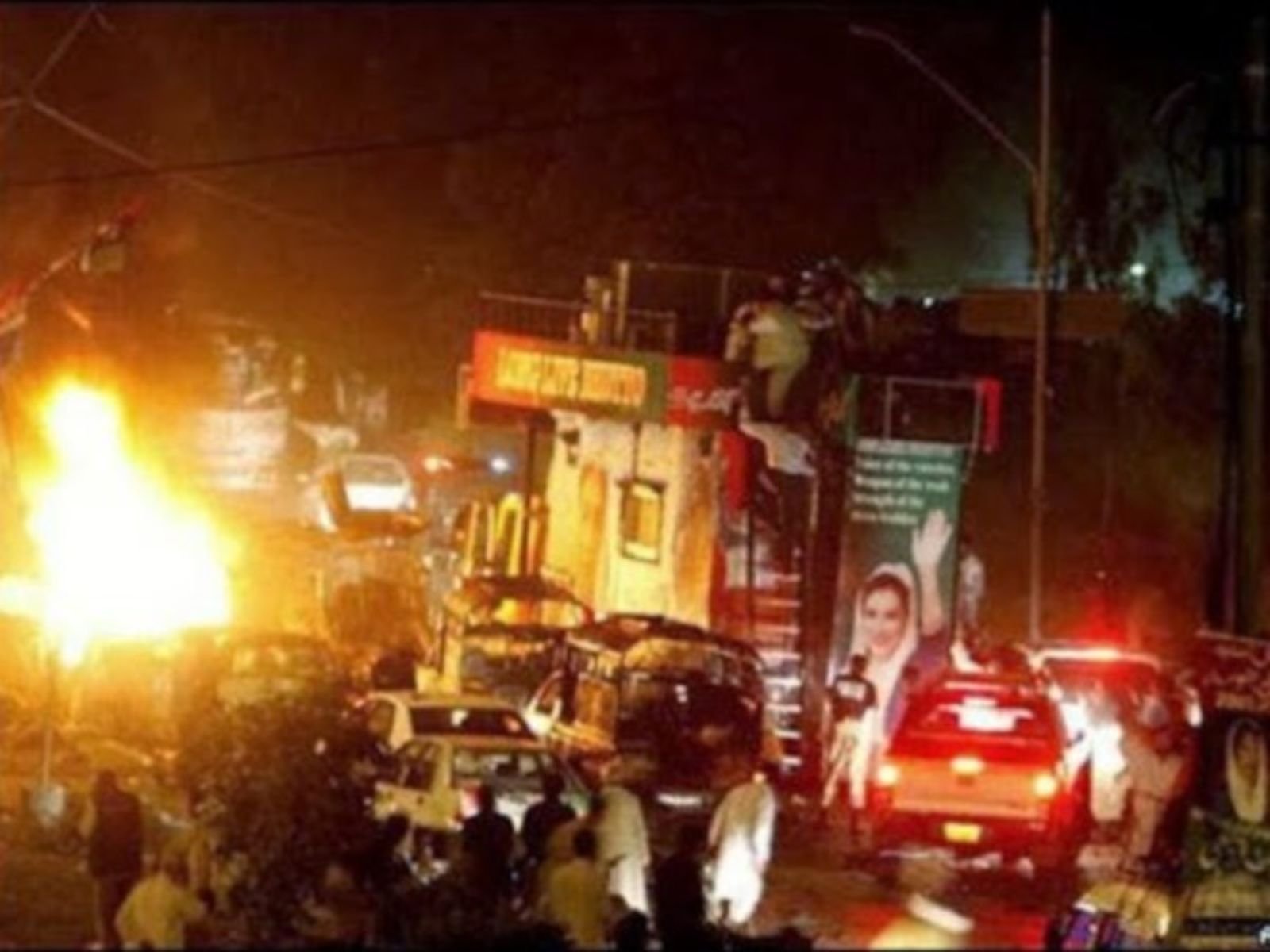
The exact moment of the explosion that fatally struck Benazir Bhutto in 2007. Photo: Associated Press.
On 27 December 2007, at 6.16 pm local time, the Pakistani city of Rawalpindi witnessed the brutal silencing of one of its most prominent voices. Benazir Bhutto had just finished an election rally at Liaquat National Bagh when her convoy was attacked by a youth of only 15 named Bilal. The teenager, sent by the Pakistani Taliban, first fired shots at Bhutto’s armoured vehicle and then detonated the explosives strapped to his body. The blast killed not only the first woman to lead a modern Muslim state but also 23 other people.
What should have been another day of campaigning for the January 2008 elections became the most shocking political crime in Pakistan’s recent history. Bhutto was declared dead at Rawalpindi General Hospital, ending a life devoted to the struggle for democracy in one of the most dangerous countries in the world.
Bhutto’s death was not merely the end of a political leader; it was an attack on the heart of Pakistani democracy and a grim reminder of the virulence of Islamic fundamentalism. To understand her legacy one has to look past the image of the martyr and examine the complex figure she was: the heir to a political dynasty, a liberal reformer, a leader accused of corruption and, above all, a woman who dared to challenge the status quo in one of the most dangerous countries in the world.
Benazir Bhutto: From Aristocratic Heir to Democratic Icon

Born into an influential aristocratic family, Benazir Bhutto had access to an elite education that prepared her for the challenges of leadership. Her training at Harvard and Oxford, where she became the first Asian woman to preside over the prestigious Oxford Union, was fundamental in shaping her liberal, secular political outlook.
Born in 1953 into a wealthy aristocratic family, Benazir Bhutto had a privileged education, graduating from Harvard and Oxford, where she presided over the prestigious Oxford Union. Her path seemed destined for the elite, but her family’s fate was bound up with Pakistan’s turbulent politics. Her father, Zulfikar Ali Bhutto, founder of the Pakistan People’s Party (PPP) and prime minister, was deposed in a military coup in 1977 and executed two years later by the regime of General Muhammad Zia-ul-Haq.
That personal tragedy forged Benazir’s political career. Together with her mother, Nusrat, she took over the leadership of the PPP and of the Movement for the Restoration of Democracy. She was repeatedly imprisoned by Zia’s regime and forced into exile in 1984. Despite the threat, she did not bow. On her return in 1986 she transformed her father’s socialist platform into a liberal, secular ideology influenced by Thatcherite economics.
Bhutto led the PPP to victory in the 1988 elections, becoming, at 35, the first woman to head a democratic government in a Muslim-majority country.
A Legacy for Women and Minorities: An Unfinished Struggle
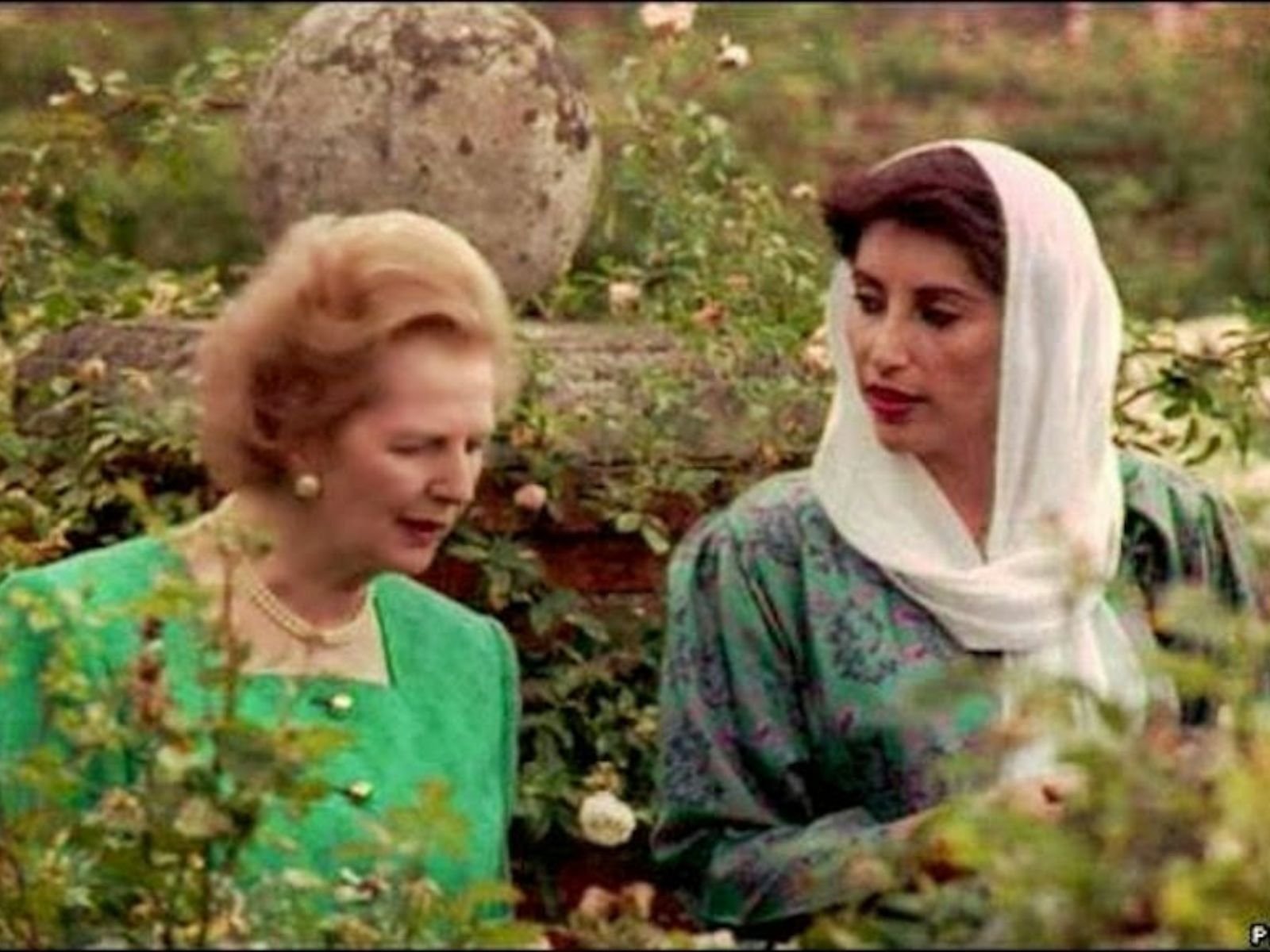
Bhutto was prime minister of Pakistan twice. Her first term, between 1988 and 1990, coincided with the final years of Margaret Thatcher’s government in the United Kingdom.
Bhutto saw herself as a modernising force, and her government pursued policies aimed at defending women and minorities, groups systematically oppressed in Pakistan. In her platform she pledged to “protect the weak from the strong” and to “undo laws that are discriminatory against minorities, women and children”.
During her terms she promoted universal female literacy, created centres of excellence in education and championed access to technology as a tool of empowerment. She also established police stations staffed exclusively by women and appointed female judges to the higher courts, breaking barriers in a deeply entrenched patriarchal system.
Her legacy, however, is ambiguous. Critics point out that, for all her intentions, the structural changes were limited. Most Pakistani women went on living in conditions of oppression and poverty. Discriminatory laws such as the controversial Hudood Ordinances, which criminalised adultery and rape, were not repealed during her governments, largely because of the fierce opposition of Islamist forces and of the conservative elite who constantly blocked her reforms.
The Paradox of Corruption: Accomplice or Victim?
No analysis of Benazir Bhutto can ignore the persistent corruption allegations that haunted both her terms and ultimately brought her down on both occasions. Her husband, Asif Ali Zardari, earned the nickname “Mr 10%” for allegedly taking commissions on government contracts. Investigations in Switzerland led to a money-laundering conviction in 2003, with orders for the couple to return millions of dollars to Pakistan.
The question is nonetheless more complex than it appears. Bhutto always maintained that the accusations were politically motivated, a tool used by the military establishment and by rivals such as Nawaz Sharif to undermine her democratically elected governments. Many of the cases were indeed later dropped for lack of evidence, and there is evidence that the Pakistani intelligence services rigged elections and funded campaigns to ensure her defeat.
The Cancer of Fundamentalism and the Conspiracy Behind Her Death
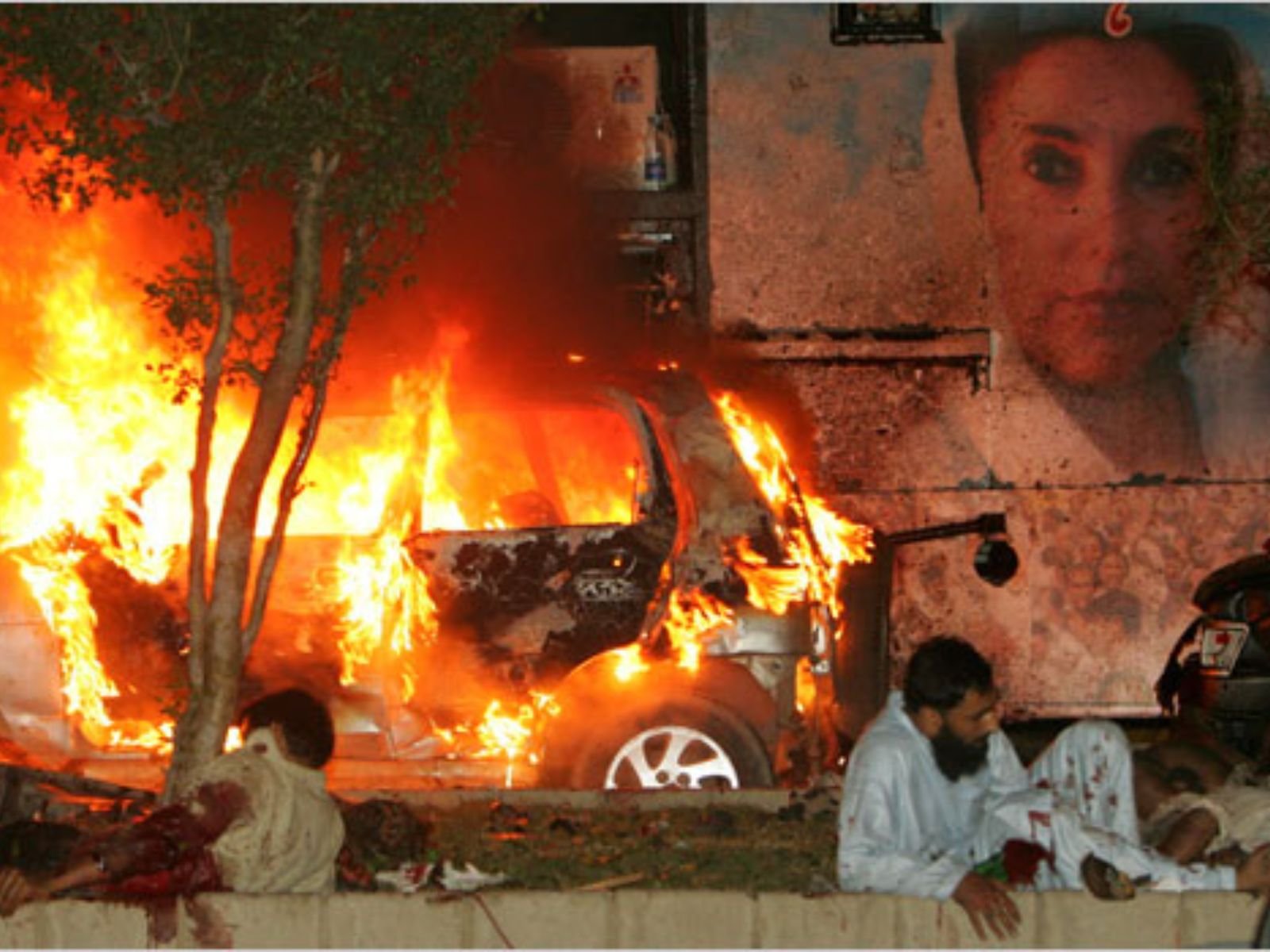
The scene of the suicide attack that targeted Benazir Bhutto’s convoy in Karachi on the day of her return. More than 140 people died, but Bhutto survived, narrowly escaping the attack.
Bhutto’s true enemy, and the ultimate cause of her death, was the rising Islamic fundamentalism she opposed openly. Her secular stance and her defence of women’s rights were anathema to extremist groups such as Al-Qaeda and the Pakistani Taliban. It is crucial to note, in an ironic and controversial twist, that her own government in the 1990s supported the rise of the Taliban in Afghanistan, a geopolitical decision she would later publicly regret.
On her return to Pakistan in 2007 her platform was clear: civilian oversight of the military and total opposition to Islamist violence. Benazir Bhutto knew the risks. An attack on her convoy in Karachi, on the day of her return, had already killed more than 140 people. Benazir survived, but the threat was palpable.
Investigations into Benazir Bhutto’s Death
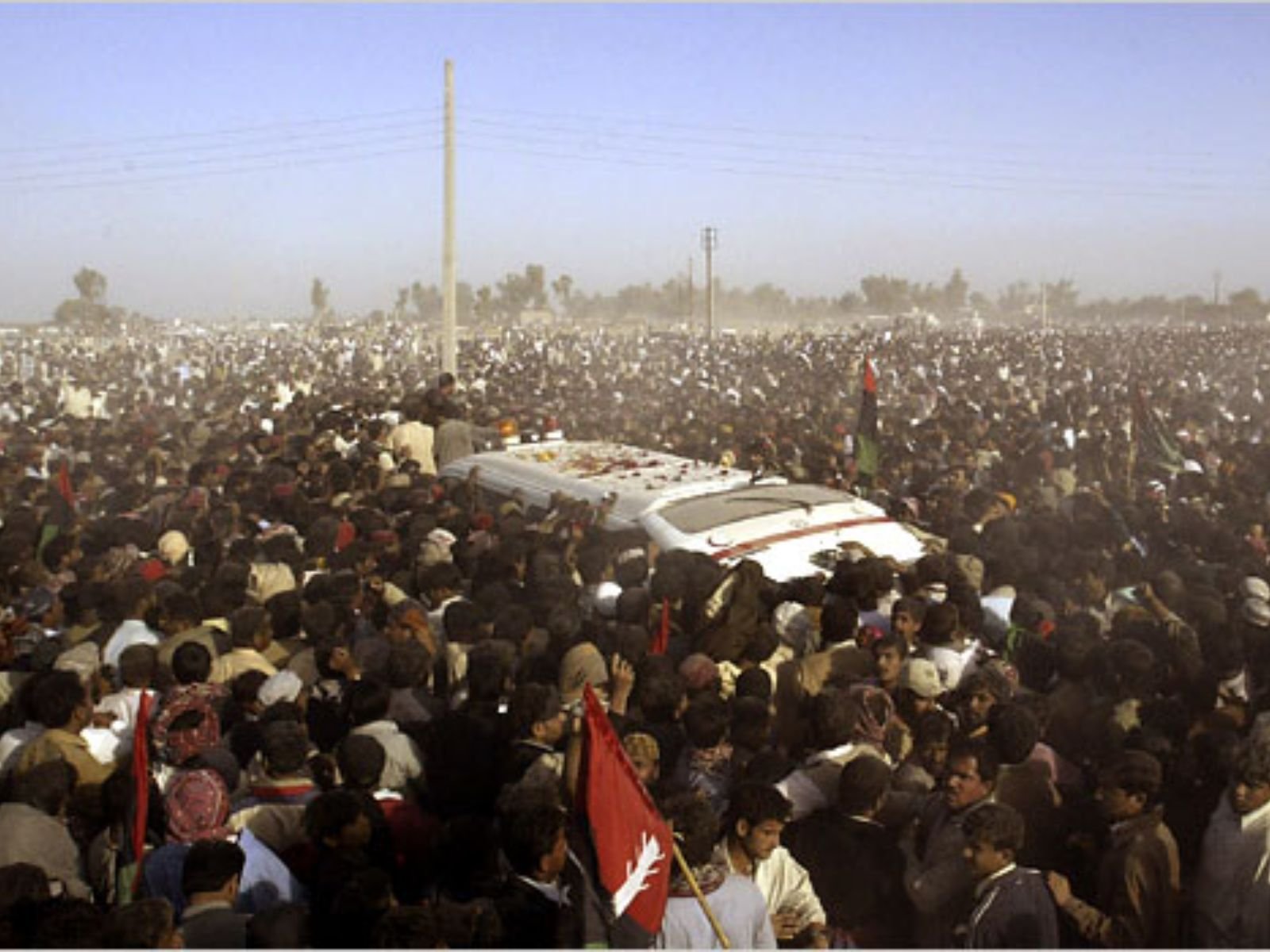
Supporters carry Benazir Bhutto’s coffin during her funeral at Garhi Khuda Bakhsh on 28 December 2007. Her death set off a wave of protest and instability across Pakistan.
The assassination of Benazir Bhutto was carried out with military precision, revealing a level of planning far beyond an improvised terrorist attack. Five men had confessed their involvement in the plot: Aitzaz Shah, who was to be the reserve bomber; Rasheed Ahmed and Sher Zaman, mid-level organisers; and the cousins Hasnain Gul and Rafaqat Hussain, who provided accommodation for Bilal the night before the attack.
The investigations into her assassination revealed a conspiracy far deeper than a simple terrorist attack. A UN report of 2010 concluded that her death could have been prevented and criticised the government of Pervez Musharraf for failing to provide her with adequate security. The crime scene was hosed down within hours, destroying crucial evidence. The chief prosecutor in the case, Chaudhry Zulfikar Ali, was murdered in 2013. In 2017 five Taliban suspects were acquitted, while two senior police officers were convicted, not of the murder but of negligence and of tampering with the crime scene. Musharraf himself was declared a fugitive in the case.
DNA Testing
The DNA collected from Bilal’s remains, tested in American laboratories, matched perfectly a cap, a pair of trainers and a shawl he had left at Hasnain’s house when he put on the explosive vest. But there was a second attacker: Ikramullah, another young man assigned as reserve bomber. When Bilal completed his mission, Ikramullah simply walked away, unharmed. For years the Pakistani authorities lied, claiming he had died in a drone strike. The truth is that Ikramullah is alive and has become a mid-level commander of the Pakistani Taliban in eastern Afghanistan.
Benazir Bhutto: A Manifesto for the Present
Benazir Bhutto’s legacy is a mosaic of contradictions: an aristocrat who fought for democracy, a secular leader in an Islamic nation, a champion of women’s rights with a record of limited reform, and a politician tainted by corruption allegations. Bhutto was no saint, but she was, undeniably, a woman of extraordinary courage.
Her story serves as a powerful manifesto, especially for those in the West who, through naivety or ideological bias, romanticise fundamentalist movements as forms of “resistance”. Benazir Bhutto lived and died fighting the very ideology that some defend on university campuses and at protests. Benazir Bhutto understood, at first hand, that Islamic fundamentalism is, in essence, an anti-democratic, misogynistic and totalitarian “cancer”. Her life is testimony that there can be no compromise with those who use religion to justify tyranny.
The Legacy of Pakistan’s Daughter
Remembering Benazir Bhutto is not merely honouring a martyr. It is recognising the brutal and often solitary struggle of women in positions of leadership in the Muslim world. It is understanding that the battle for democracy and human rights is constant and demands vigilance. And, above all, it is reaffirming that the vision of a modern, tolerant and democratic Pakistan, for which she gave her life, is a cause that must never be forgotten.
Read Also
Bibliographic References
- “Her Policies.” Benazir Bhutto Official Website. https://benazirbhutto.com/her-policies/.
- “Benazir Bhutto.” Wikipedia, The Free Encyclopedia. https://en.wikipedia.org/wiki/Benazir_Bhutto.
- “UN Report Blames Benazir Bhutto’s Assassination on Pakistan Government Lapses.” The Christian Science Monitor. https://www.csmonitor.com/World/Asia-South-Central/2010/0416/UN-report-blames-Benazir-Bhutto-s-assassination-on-Pakistan-government-lapses.
- “Musharraf Declared Fugitive in Ex-PM Bhutto’s Murder.” Al Jazeera. https://www.aljazeera.com/news/2017/8/31/musharraf-declared-fugitive-in-ex-pm-bhuttos-murder.
- “Bhutto’s Mixed Legacy for Women’s Rights.” CBS News. https://www.cbsnews.com/news/bhuttos-mixed-legacy-for-womens-rights/.
- “World Report 2008: Pakistan.” Human Rights Watch. https://www.hrw.org/world-report/2008/country-chapters/pakistan.